Madrid’s famous day trips go south to Toledo and north to Segovia, and both deserve their reputations. The one almost nobody makes goes east, takes about forty minutes on an ordinary suburban train, and lands you in a UNESCO-listed university town that produced the Spanish language as an academic discipline and, allegedly, the man who wrote Don Quixote. Here is why Alcala de Henares is worth a morning.
The easiest excursion from Madrid
The practical case for Alcala is strong before you get to the sights. The Cercanias suburban rail network runs there frequently from the main Madrid stations, the journey is roughly forty minutes, and there is no advance booking, no reserved seat and no premium fare of the kind the fast trains to Toledo and Segovia involve. You decide over breakfast and you go.
Two Cercanias lines serve the town, running from Atocha and Chamartin among other central stations, and between them departures are frequent enough through the day that a timetable is barely worth consulting. Fares are zonal and inexpensive, and the ticket is bought at the machine on the day. From the station it is about a fifteen minute walk into the historic centre. The centre itself is small and flat, which is a meaningful difference from Toledo, where a good part of the day is spent climbing.
One thing to check before setting out is the day of the week. Like most Spanish towns of its size, Alcala closes a good deal on Mondays, the university tours and the theatre run on set schedules rather than continuously, and Sunday afternoons are quiet to the point of being shut. A weekday morning or a Saturday gets you the town with everything open.
The university, and the facade
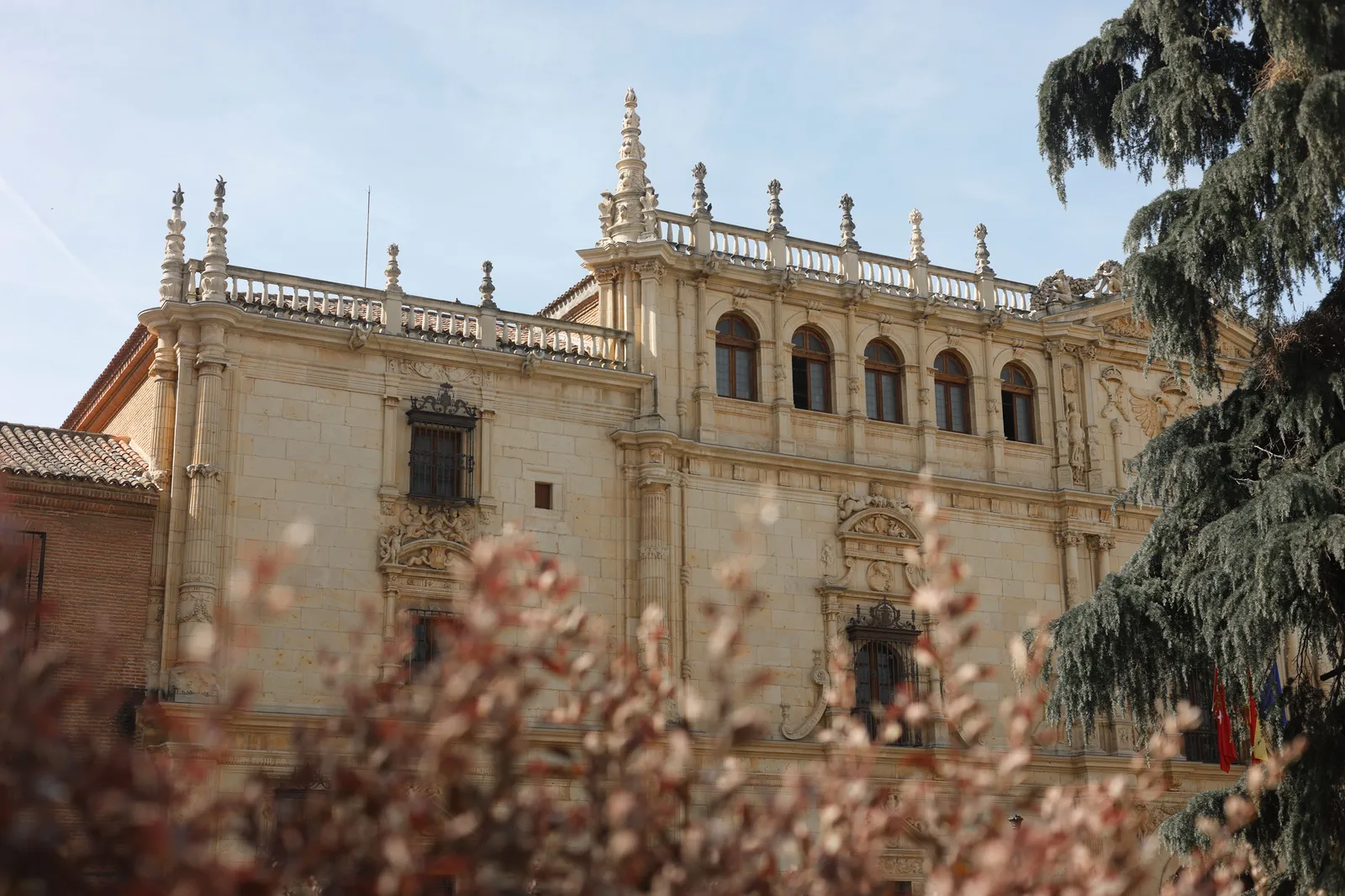
The reason the town has a UNESCO listing is the university, founded at the very end of the fifteenth century and for a long period one of the most important in Spain. Its main building carries one of the defining facades of the plateresque style, in which flat stone is covered with carving so fine it was compared to silverwork.
Inside, the historic complex includes courtyards and a hall used for one of the country’s most prestigious literary ceremonies. Access to the interior is generally by guided tour with set times, so check the schedule if you want more than the facade.
The town’s other claim is linguistic: this is where some of the earliest systematic work on Spanish as a language was done, and where a landmark multilingual bible was produced in the early sixteenth century.
Calle Mayor, and lunch
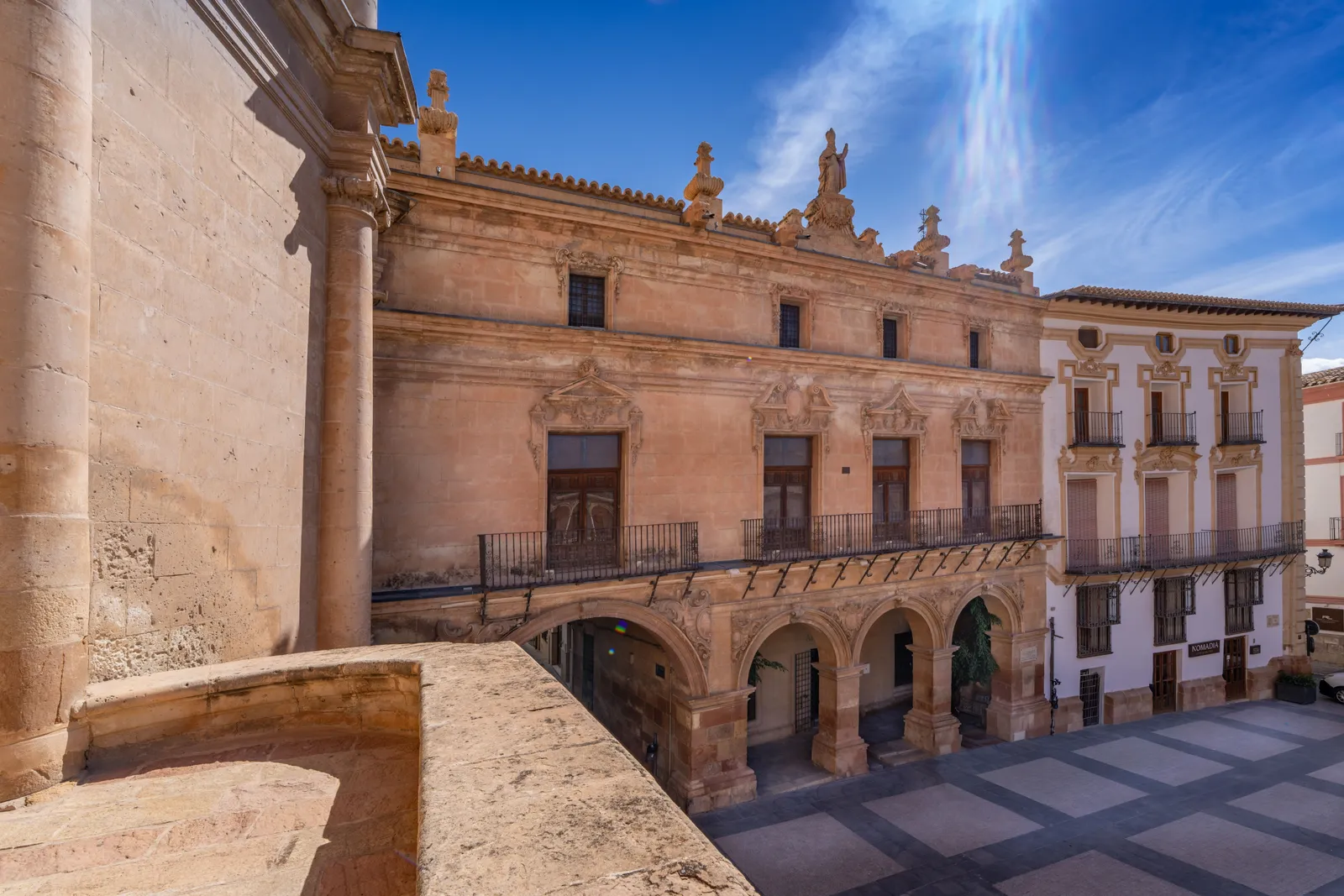
The Calle Mayor is the spine of the old town and among the longest arcaded streets in Spain, a continuous run of columns and covered walkway lined with shops and restaurants. It is the most pleasant place in the town to be, shaded in summer and sheltered in winter, and it is where the day naturally slows down.
It is also where you eat. Alcala is a university town rather than a tourist one, prices are noticeably below central Madrid, and the local habit of serving a substantial free tapa with a drink is alive here in a way it is not in the middle of the capital. That alone is worth structuring the trip around lunch.
Prefer the story told to you?Guided day trips from Madrid cover the university interior and the theatre without you juggling three separate tour schedulesCervantes, and the house
Halfway along the Calle Mayor is the house presented as the birthplace of Miguel de Cervantes, furnished as a household of his period and standing would have been. Two honest caveats: it is a reconstruction rather than a surviving original, and whether he was born on precisely that spot is a question historians have argued over.
Taken as a well-made period house museum rather than an authenticated shrine, it is genuinely good, and it is usually free or close to it. The bronze figures of Don Quixote and Sancho Panza on the bench outside are the town’s most photographed object.
A short walk away is the Corral de Comedias, a courtyard playhouse from the early seventeenth century, among the oldest surviving theatres of its kind in Europe and still staging performances rather than sitting as a ruin. Visits run on limited guided tours.
The storks
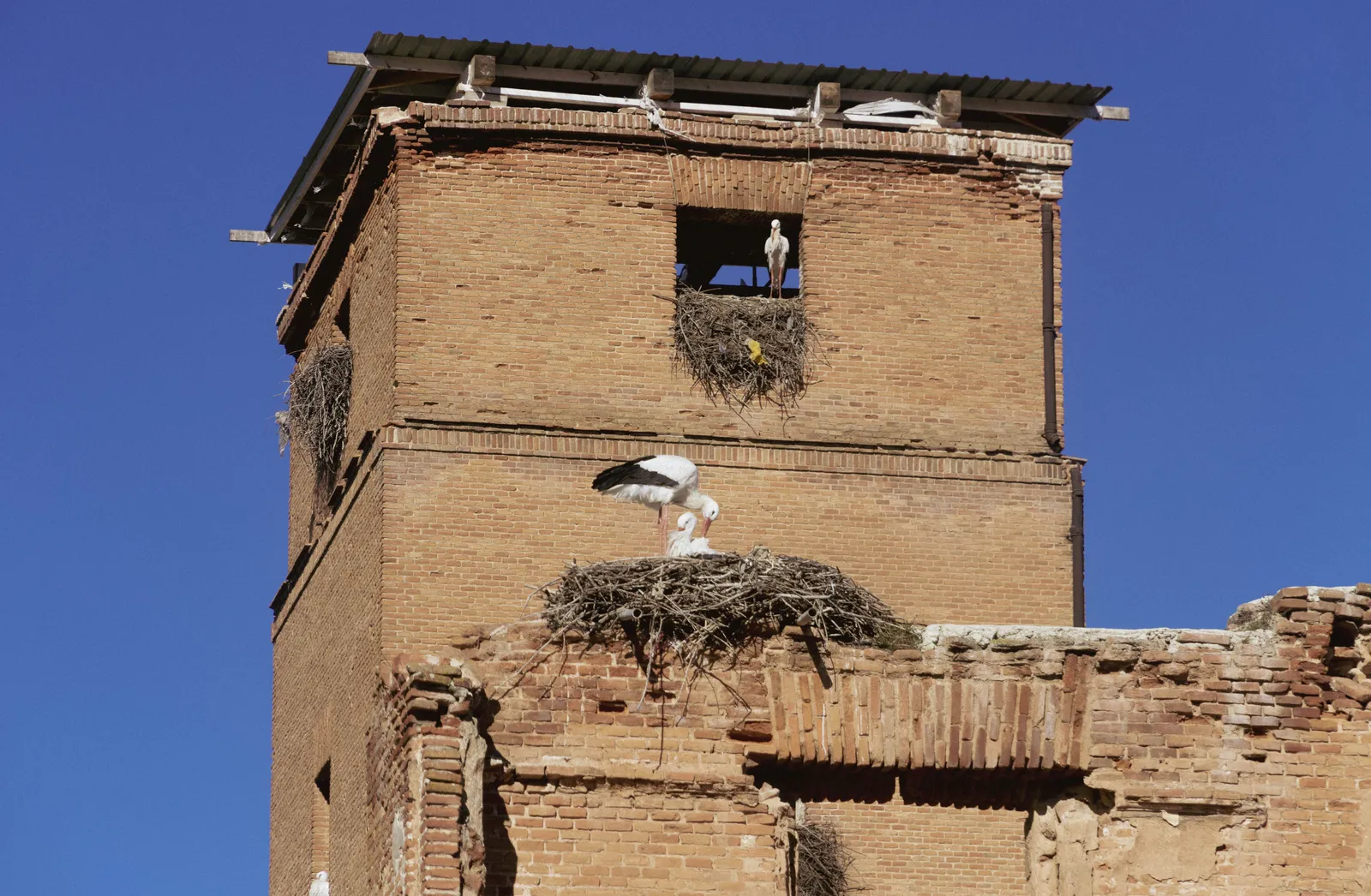
Nobody mentions this in advance and everybody remembers it. Alcala has one of the best-known urban populations of white storks in Spain, with enormous nests on the towers, church roofs and university buildings right across the historic centre. They are impossible to miss, they clatter their bills audibly from the rooftops, and they give the town a character no amount of architecture would on its own. The nests are at their most obviously occupied in spring.
Where it fits
Alcala is the half-day option. It does not have the drama of Toledo’s gorge or the shock of the Segovia aqueduct, and it is not competing on those terms. What it offers is a genuinely beautiful, largely unvisited historic centre reachable on a commuter train, with better lunch and a fraction of the crowds.
If you are choosing between the famous two, our comparison of Toledo and Segovia is the place to start, and our guide to day trips from Madrid covers the full range. Alcala belongs on that list, and it belongs on it for a second visit or for a day when you want an excursion without an expedition.