Most visitors to Madrid do the Royal Palace and leave. That is a shame, because the palace sits in the middle of a cluster of buildings and gardens that between them tell the whole story of royal Madrid, and several of them cost nothing. The catch is that they are scattered, they keep different hours, and one of them needs booking. Here is what is there and the order that makes it work as a morning.
The cathedral nobody expects
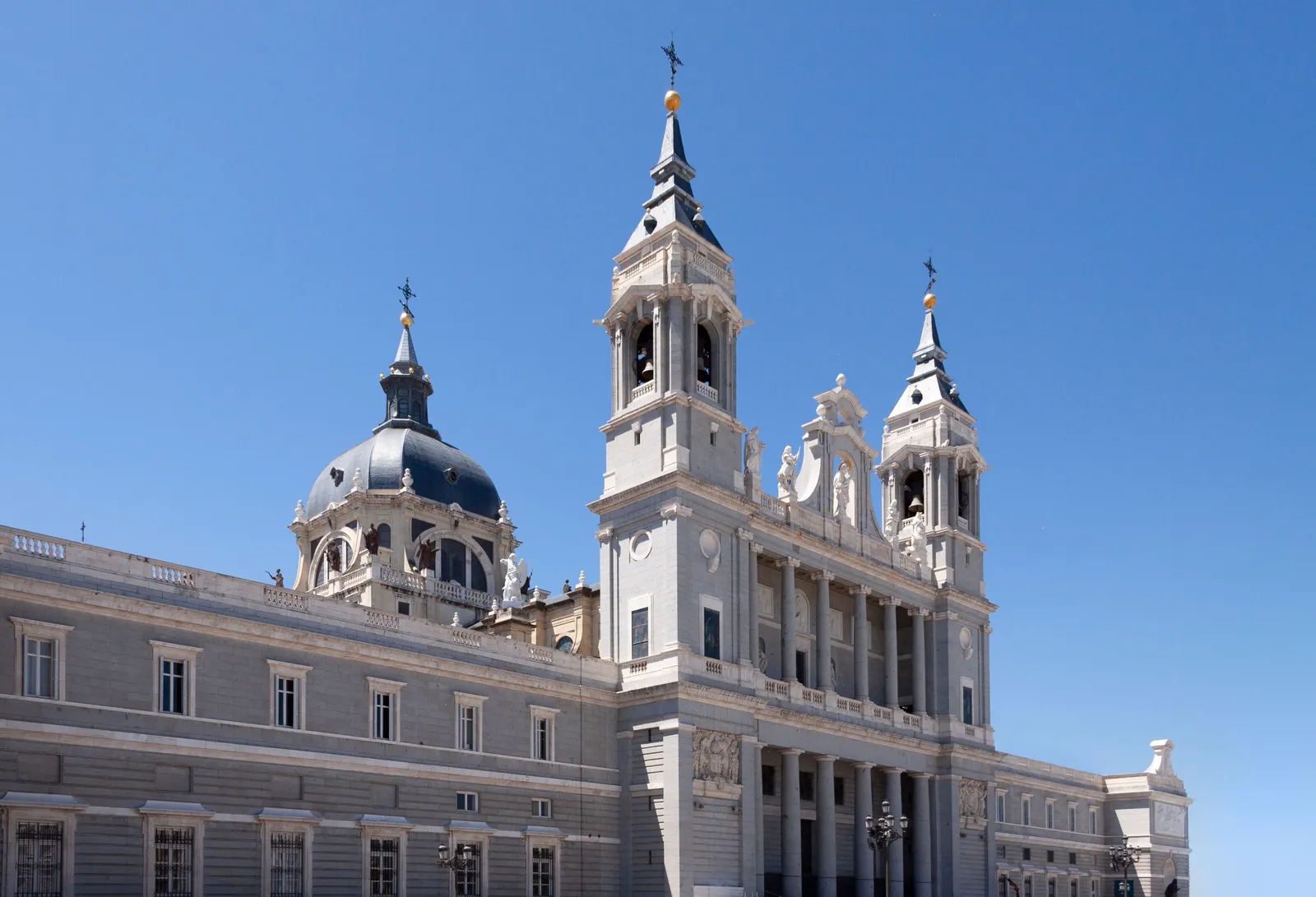
Almudena Cathedral faces the palace across a courtyard and looks, from outside, like a building of roughly the same age. It is not. Plans were drawn in the nineteenth century, construction stretched across more than a hundred years through war and repeated redesign, and it was consecrated only in 1993.
The exterior was deliberately built to harmonise with the palace beside it. The interior was finished in a strikingly contemporary idiom: brightly coloured geometric ceiling panels, modern stained glass, and a chapel decorated in a style closer to the late twentieth century than to anything else in the historic centre. People walk in expecting a medieval cathedral and stop dead. It is worth going in for exactly that reason.
Two parts are easy to miss. The crypt has its own entrance on the street below, is not reached from inside the church, and is entirely different in character: a dense forest of stone columns in a neo-Romanesque style, much older in feel than the building above it. And the cathedral museum and dome walkway offers views over the palace and the rooftops from a vantage point almost nobody uses, with limited hours and a good many stairs.
The gardens, which are free
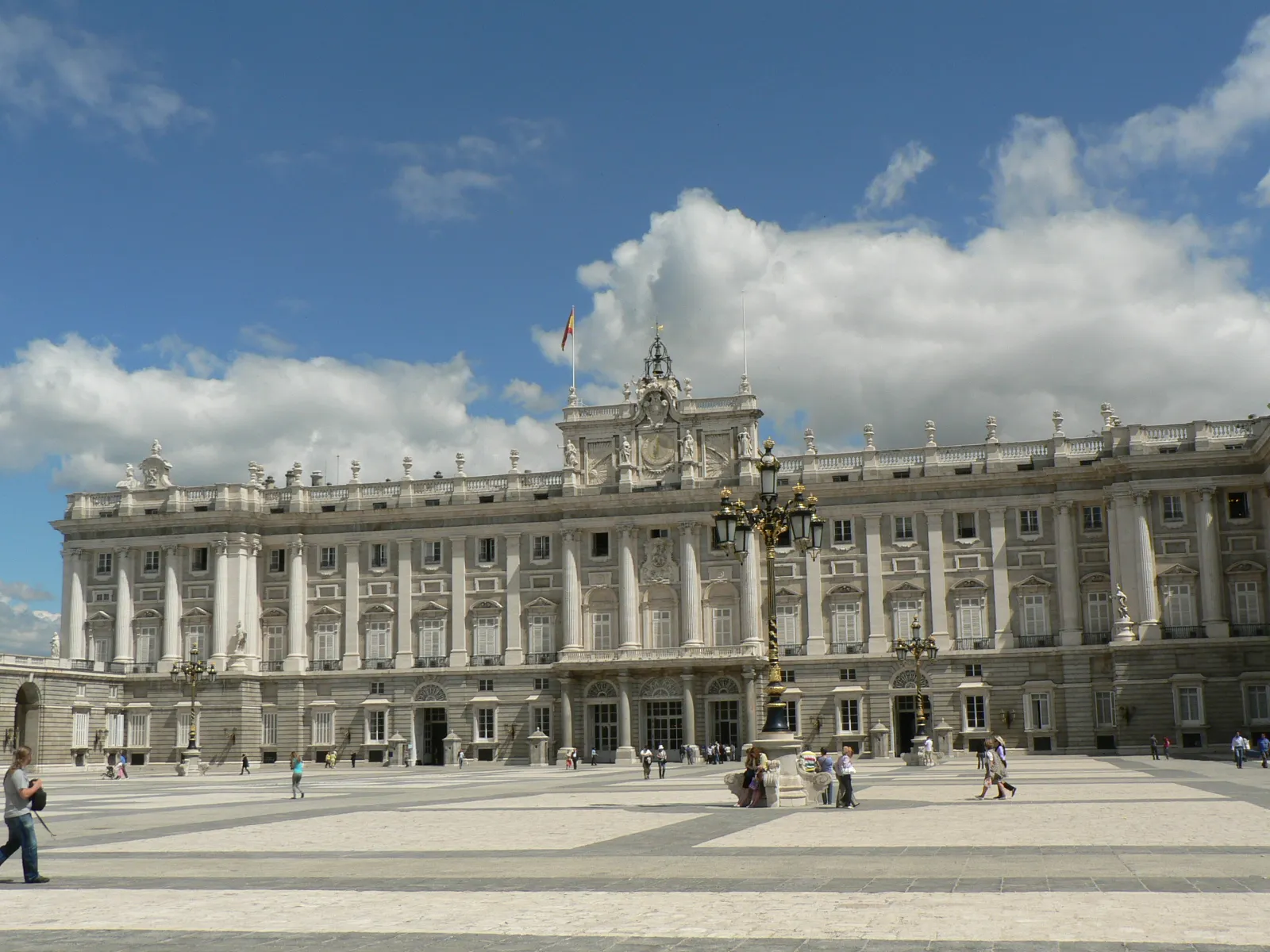
The palace interior is ticketed and covered in our Royal Palace guide. The gardens around it are not.
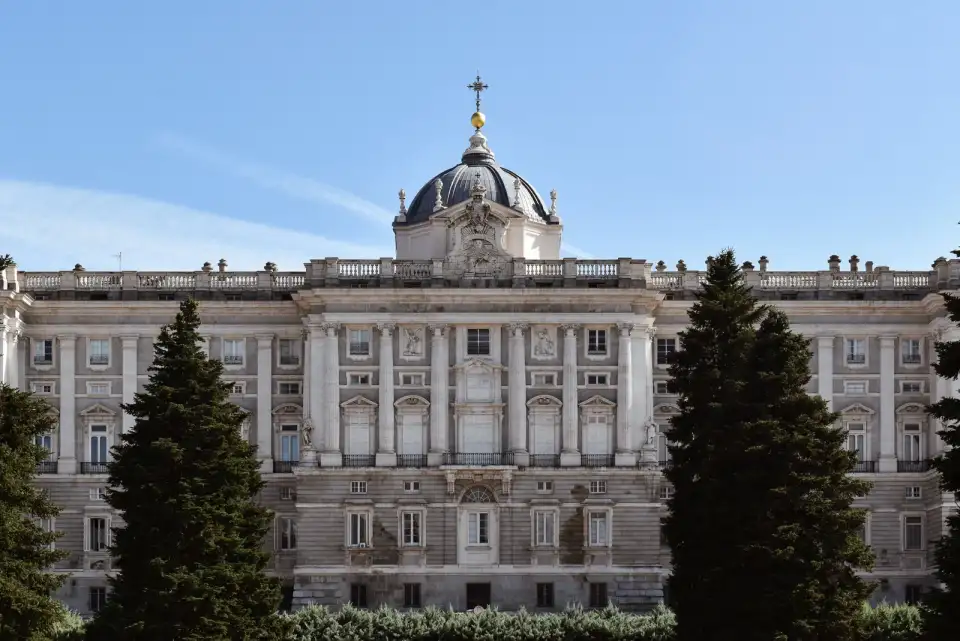
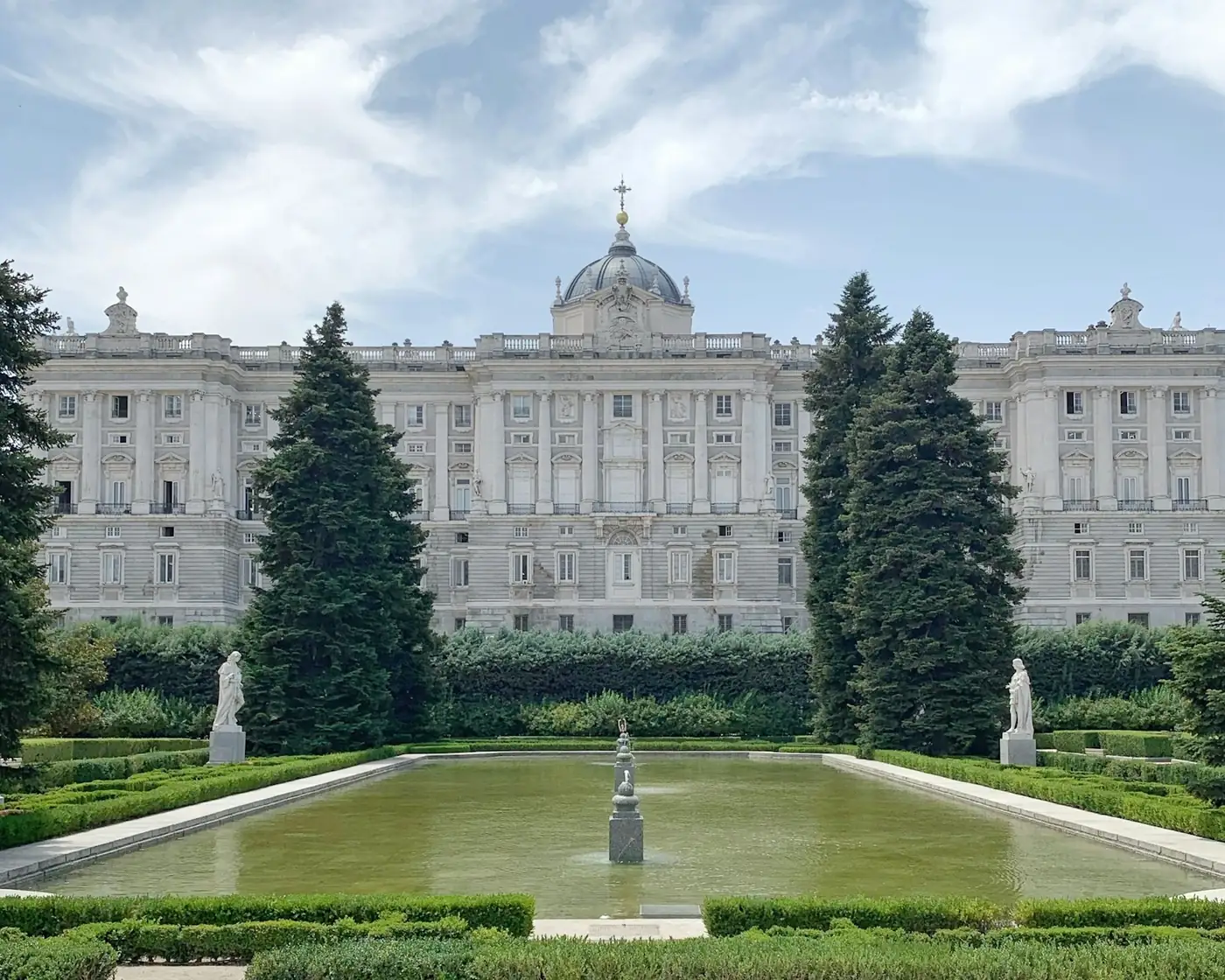
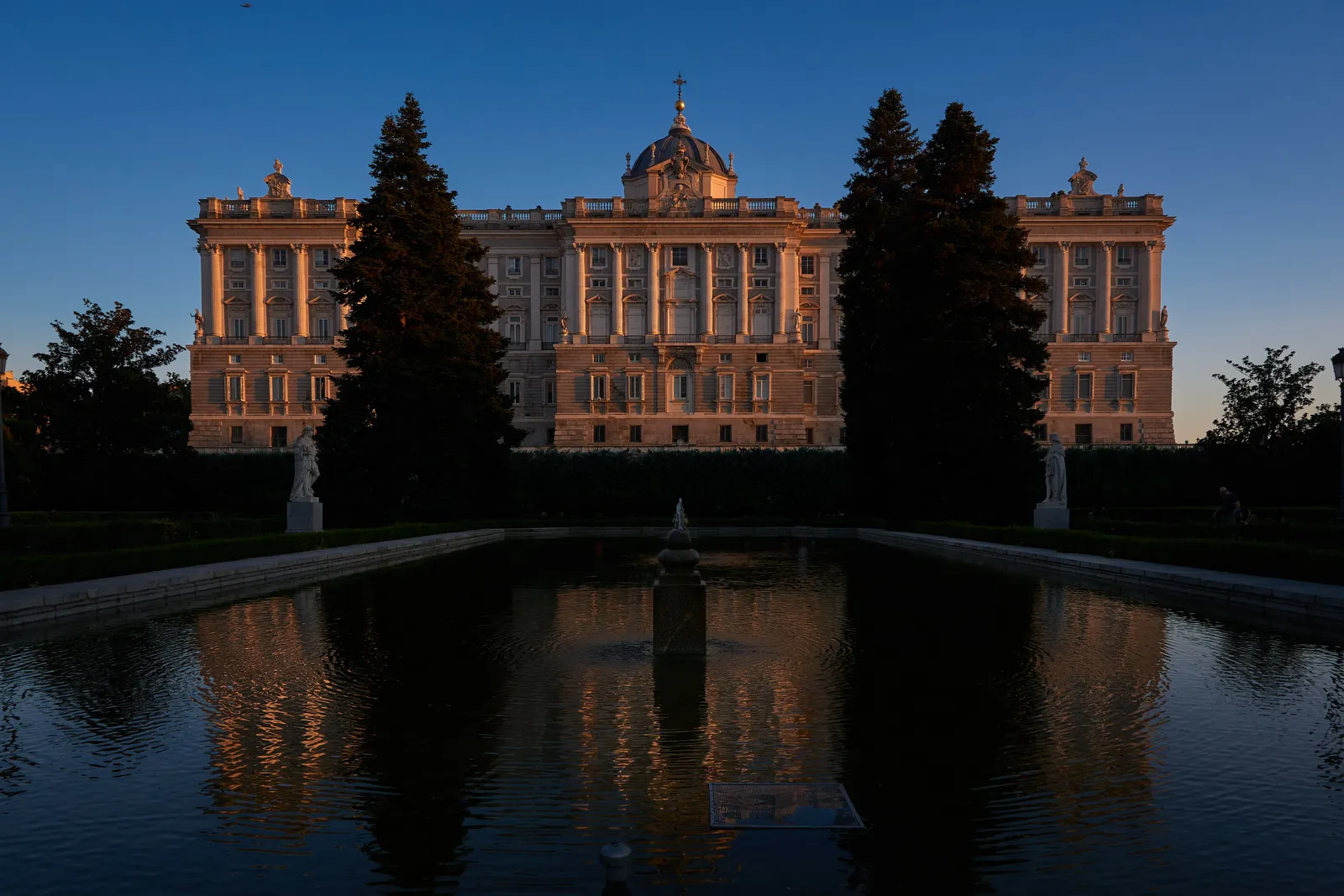
The Sabatini gardens on the north side are formal, geometric and small, and they give the postcard view of the palace facade that you cannot get from inside it. The Campo del Moro below the palace on the west is much larger and more wooded, sloping down from the building with the best single view of it in the city.
Both are free, both keep their own hours which shorten in winter, and Campo del Moro has an entrance on the far side from the palace that regularly catches people out. Check the gate before walking round.
An Egyptian temple, and the sunset
A short walk west sits the Templo de Debod, which is exactly what it sounds like: a genuine ancient Egyptian temple, dismantled stone by stone and given to Spain by Egypt in the late 1960s in thanks for Spanish help rescuing monuments from the flooding behind the Aswan High Dam.
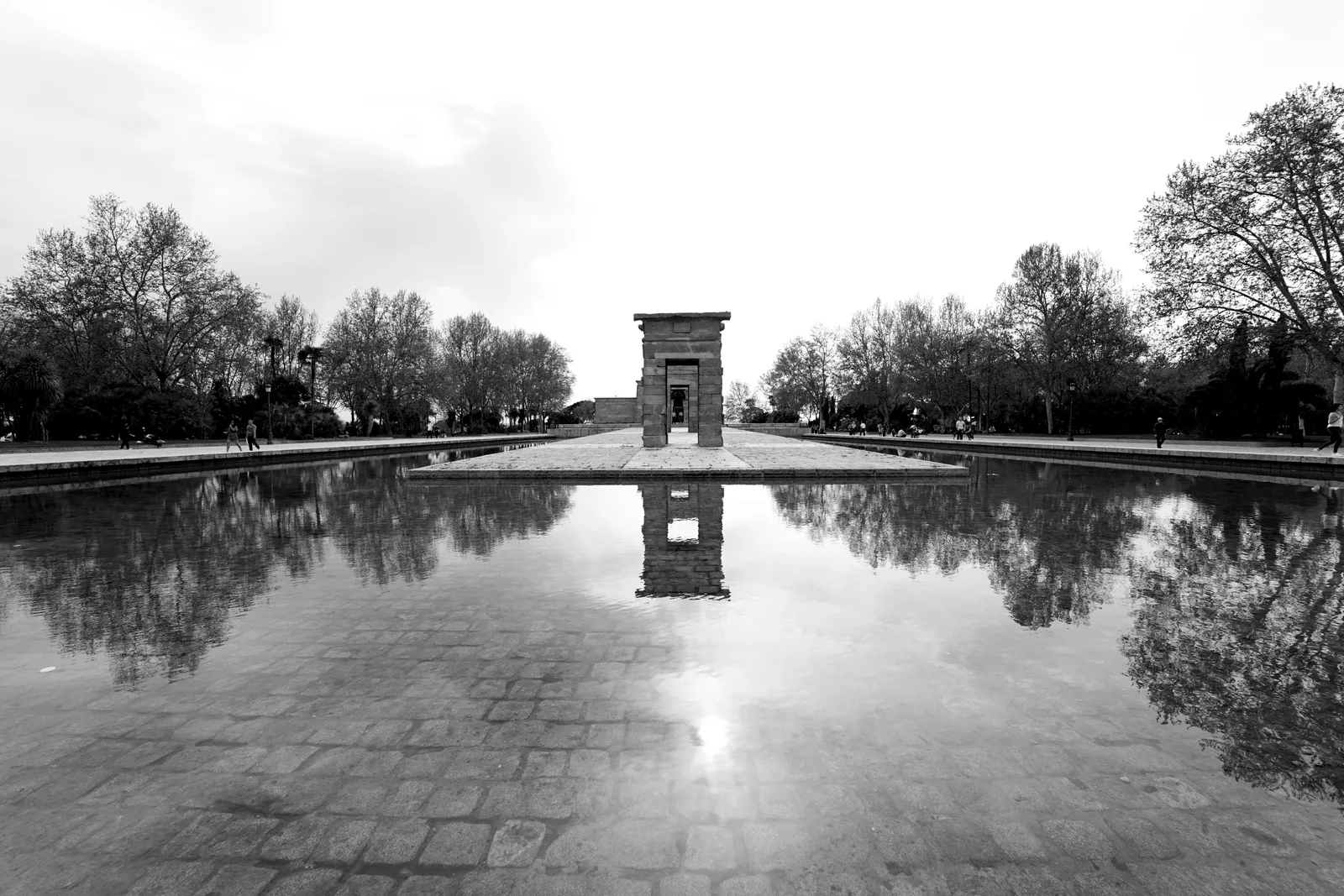
It was rebuilt in a park on high ground west of the palace, on a small artificial lake that reflects it. That combination, an Egyptian silhouette above water with the sun going down behind the Casa de Campo, has made it the most photographed sunset in Madrid, and our guide to Madrid viewpoints covers where it sits among the alternatives. The park is free and open; the temple interior has limited hours and a capacity limit.
The convent is the one that needs organisingDescalzas Reales runs on limited guided tours, and it is the site in this group most people fail to get intoThe convent almost nobody sees
The Monasterio de las Descalzas Reales, a few minutes east towards the shopping streets, is a working royal convent founded in the sixteenth century and still in use. It holds a remarkable collection of paintings, sculpture and Flemish tapestry accumulated from the noblewomen who entered it.
It is also the hardest of these to visit, and that is why it stays empty. Access is by guided tour only, group sizes are capped, and tours have generally run in Spanish with limited availability otherwise. Turning up on spec frequently fails. If you have an interest in the period, it is the most rewarding hour in this whole group and worth the administrative effort.
An order that works
Start at the cathedral when it opens, while it is quiet, and add the crypt and the dome walkway if the hours line up. Cross to the palace next, since the timed entry slots concentrate in the morning. Come out into the Sabatini gardens, then walk down through Campo del Moro if it is open.
From there it is a short walk northwest to Debod, which you can either do immediately or save for the end of the day when the light is worth the return trip. The Descalzas Reales sits in the opposite direction and is better treated as a separate booking rather than squeezed in.
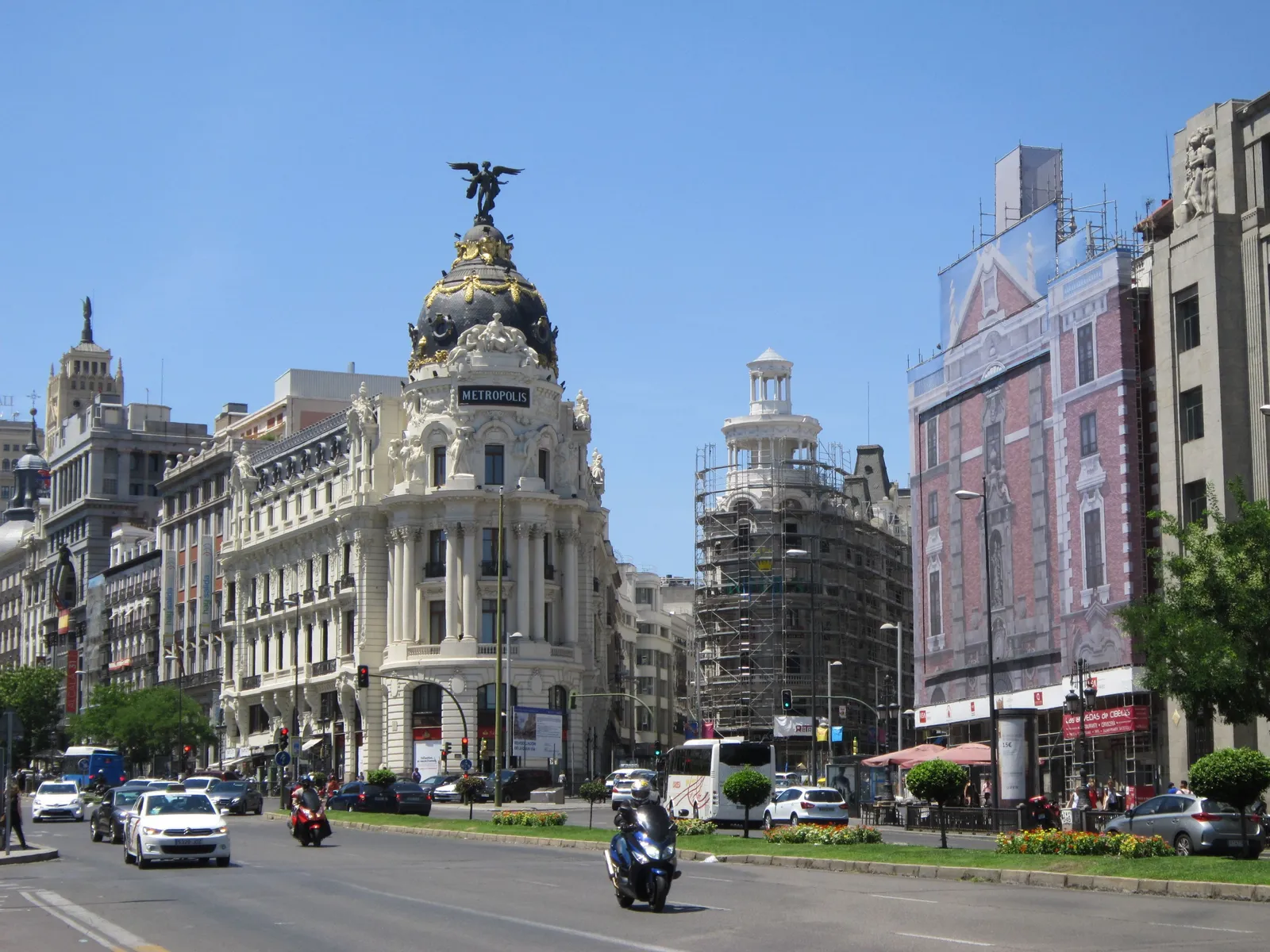
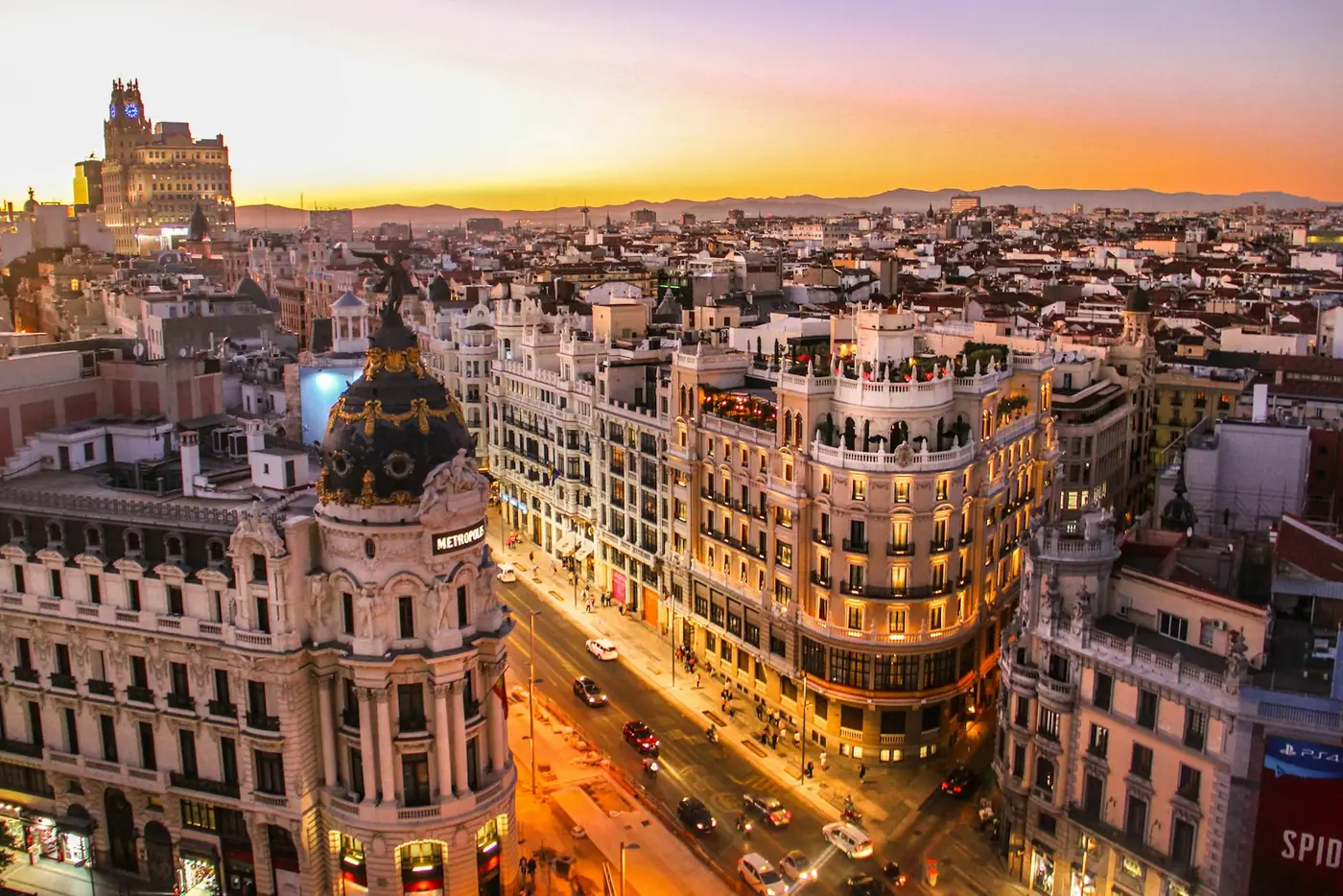
If you would rather see all of this as part of a longer walk through the old royal quarter, our Gran Via and Austrias walk threads the palace area into the historic centre and covers the ground between them.