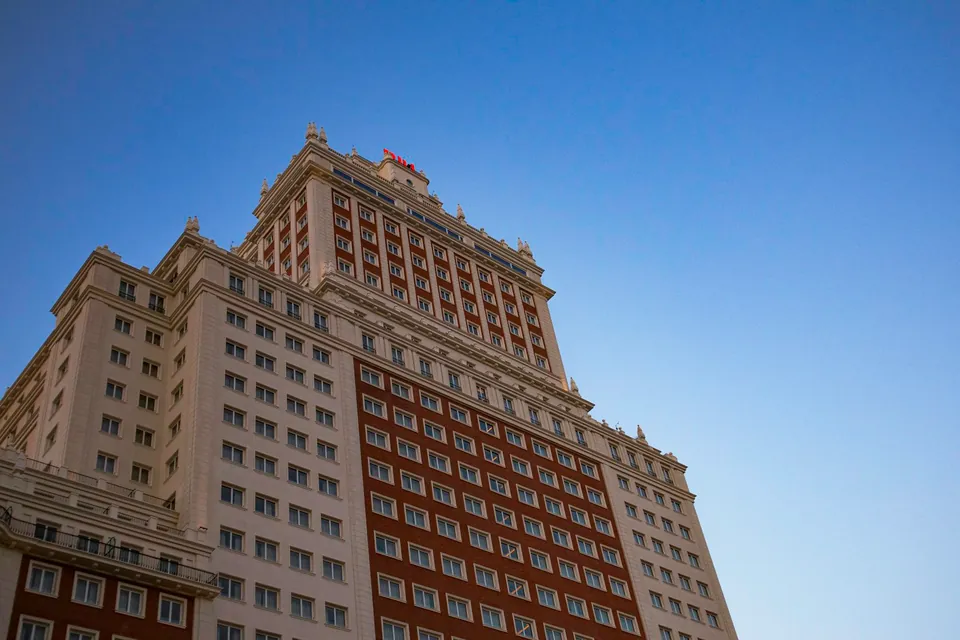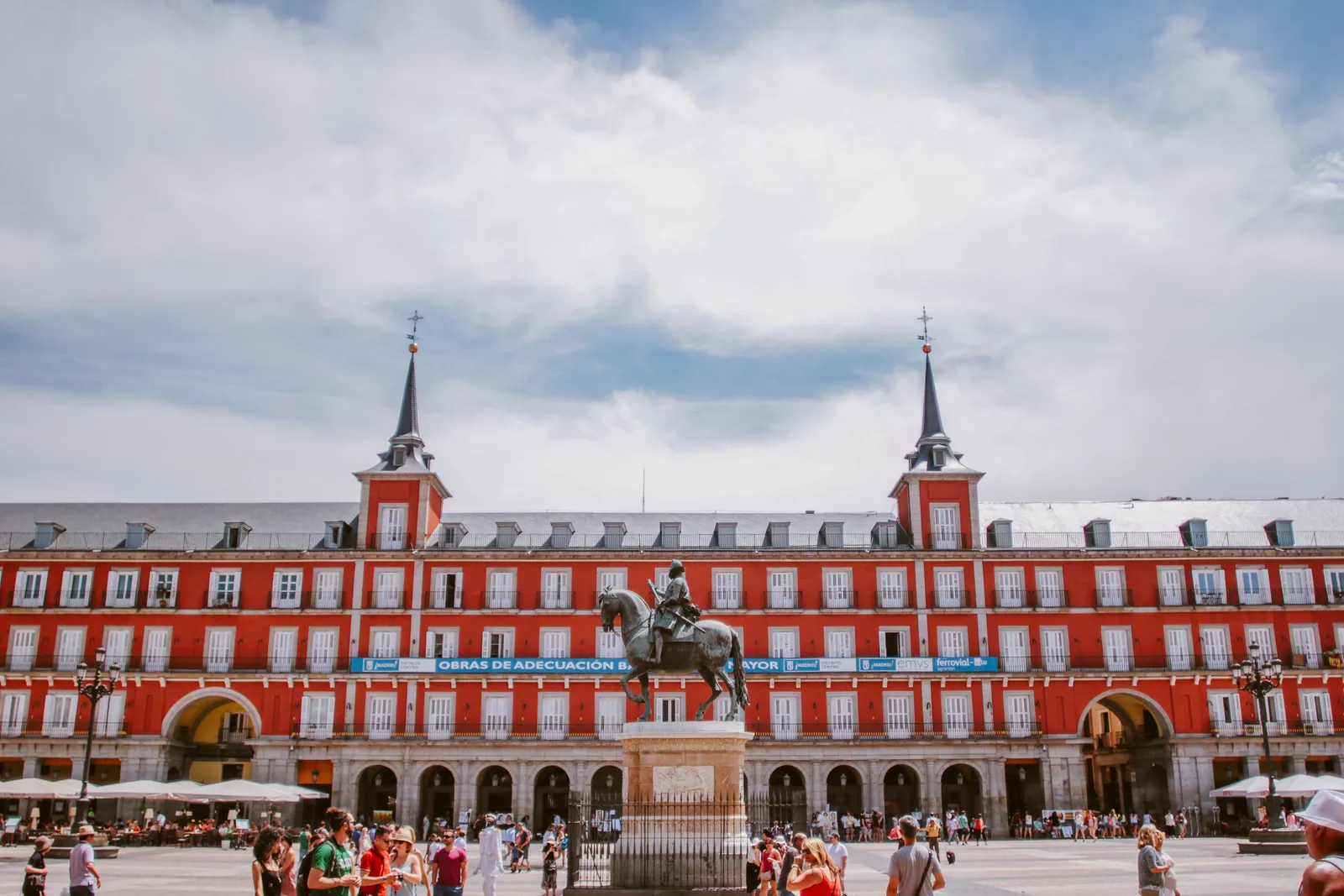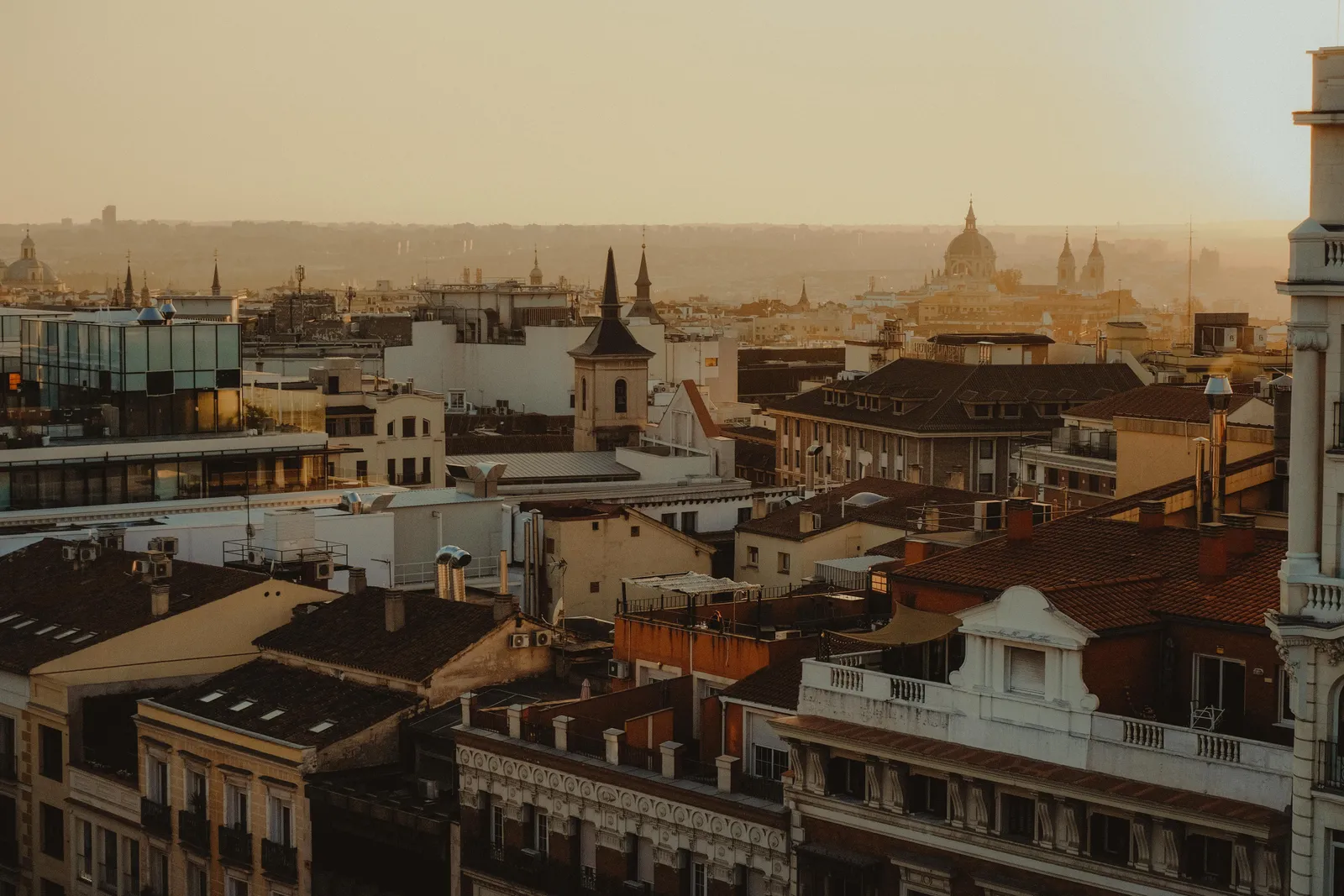
Madrid sits high and dry on a plateau, the light in the last hour of the day is unusually clean, and the centre is low enough that six or seven floors puts you above almost everything. That combination is why the city has more rooftop terraces than most European capitals its size, and why the good ones are booked out in summer.
It is also why a rooftop here is a seasonal thing rather than a permanent fixture, which is the first practical point.
What you are paying for
A drink on a Madrid terrace costs several times what the same drink costs at a bar in the street below. That is the arrangement everywhere terraces exist: you are renting a position, and the glass is the ticket.
Whether it is worth it depends on what the terrace faces and how much of it you can see. Some rooftops have a genuine three-hundred-and-sixty degree outlook across the tiled roofs, the slate spires and the sierra beyond. Others technically qualify while looking mostly at the building opposite. Before booking, look for photographs taken from the terrace rather than of the terrace, and see what is actually in the frame.
The views worth choosing between
Terraces in central Madrid broadly split by what they look at.
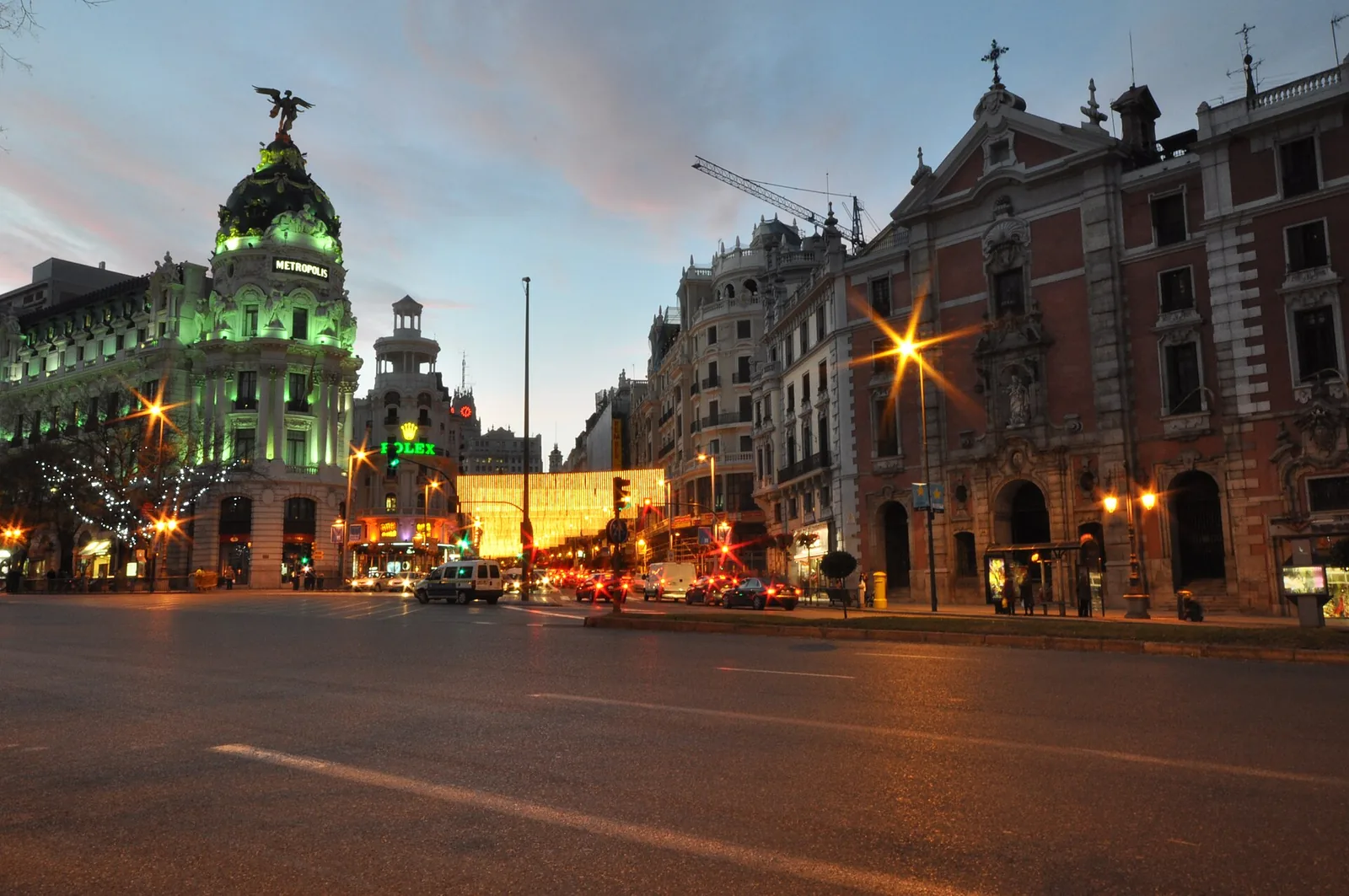
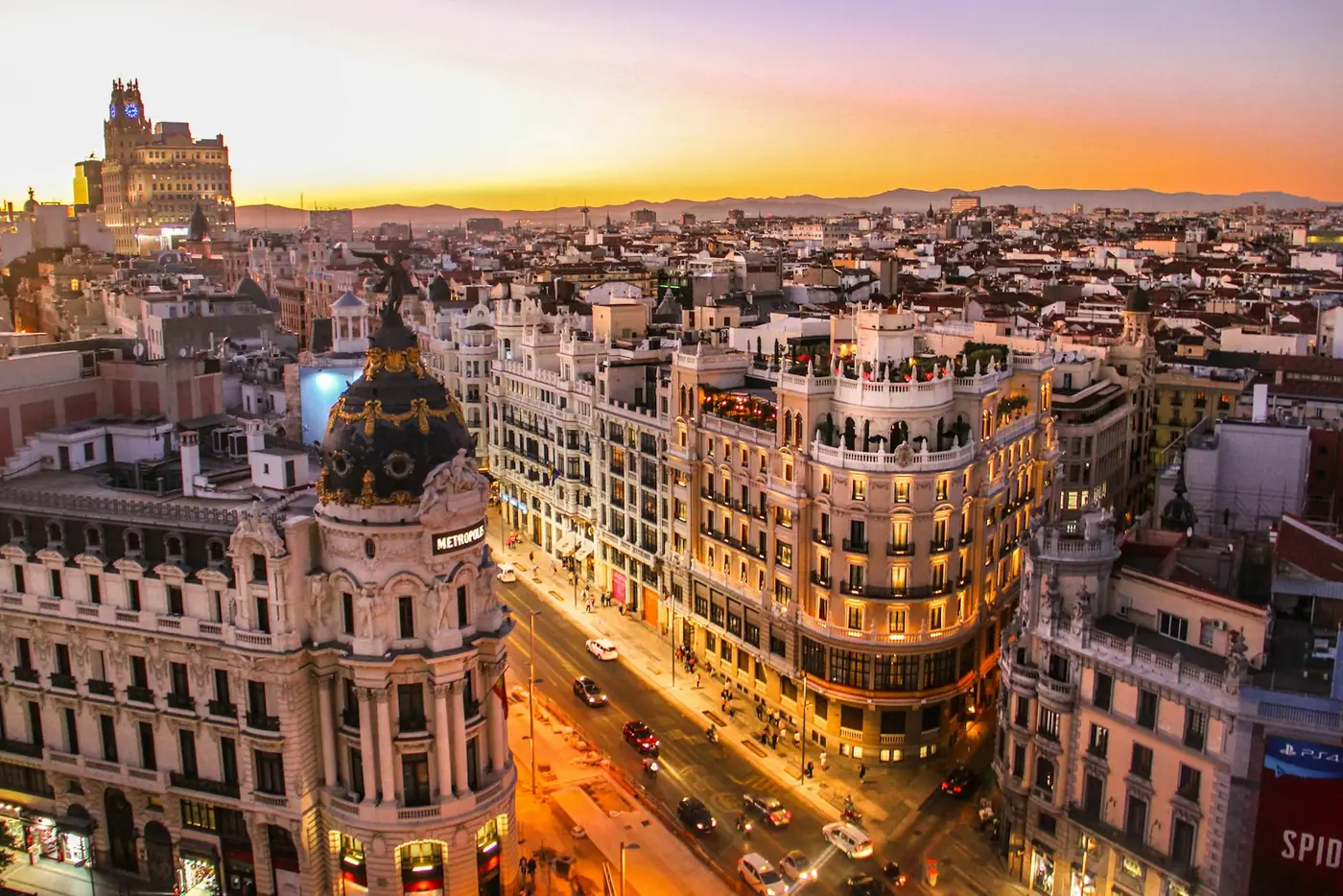
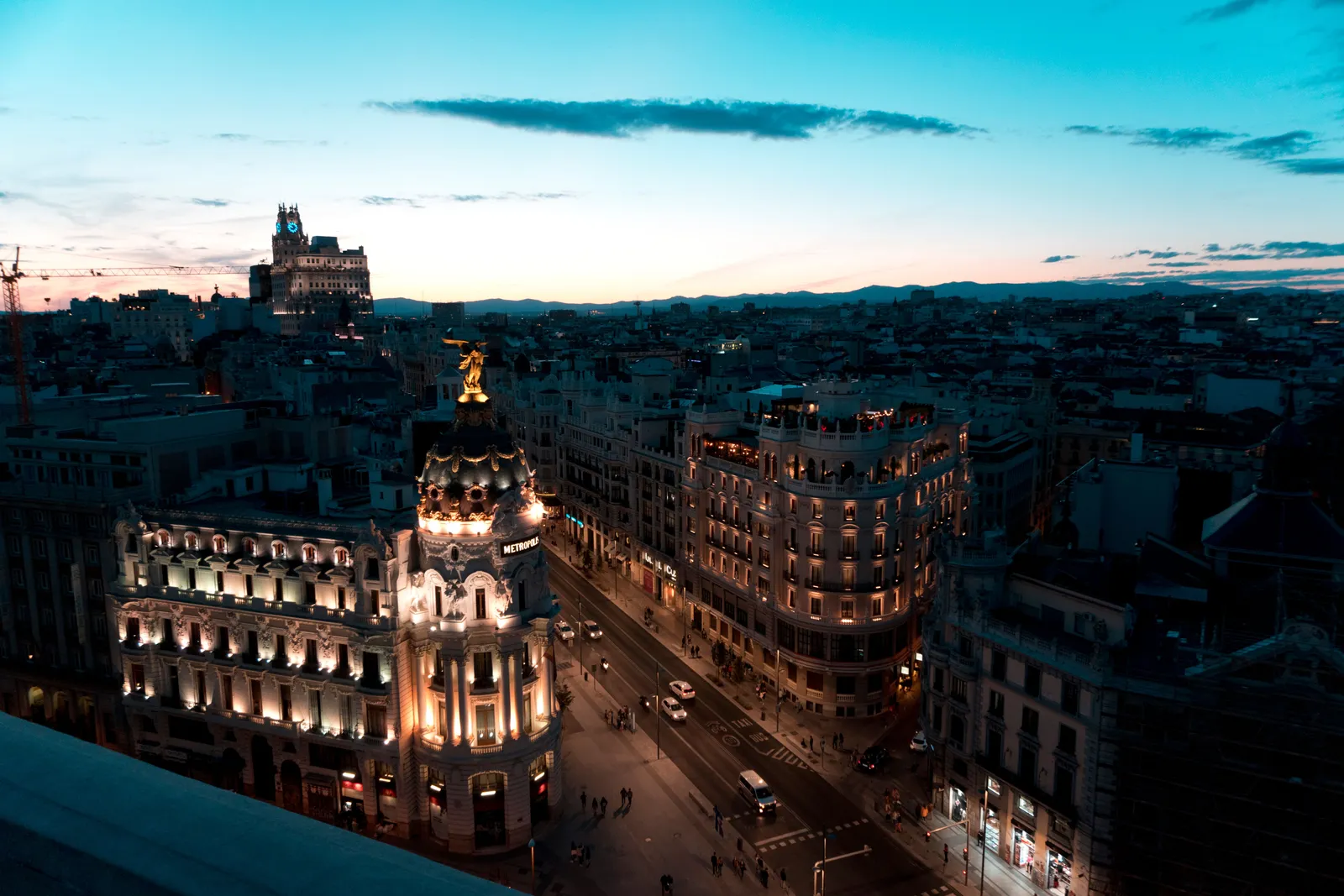
The Gran Via and Callao terraces look along the boulevard itself, at the early twentieth century towers and the neon, which is the most urban of the views and the most photographed.
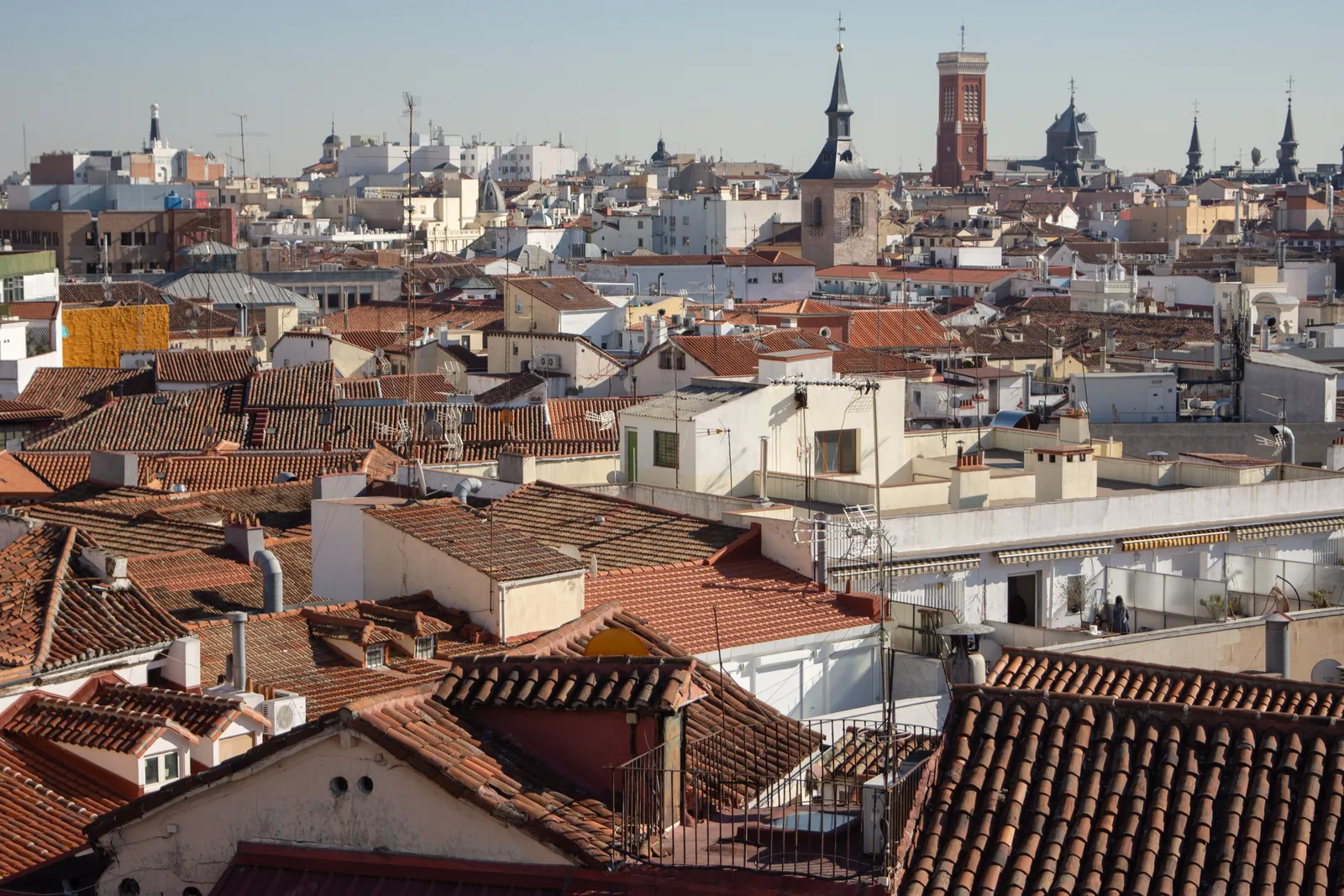
The terraces around Sol, La Latina and the Austrias look across the old low city, a dense field of tile and towers with the royal palace and the cathedral to the west, and on a clear evening the Guadarrama mountains behind them. This is the better sunset.
The terraces further north and east, above Salamanca and around the Paseo del Prado, are calmer, greener and more expensive, and look over trees rather than streets.
Our guide to Madrid viewpoints covers the free alternatives to all of these, including the terraces you can reach without buying anything.
Season, and the thing people get wrong
Most Madrid terraces are seasonal. They open with the warm weather, run hard from May to September, and close for winter. Some hotel rooftops stay open all year with heating and glass, but the majority do not, and a bar that is famous in August may simply be shut in February.
Summer brings its own complication. Madrid in July and August is genuinely hot, and a terrace in full afternoon sun is unpleasant rather than romantic. The city solves this in the way it solves everything else: by moving late. Sunset in high summer falls close to ten in the evening, the terraces fill after nine, and dinner follows at eleven. Turning up at seven expecting a busy rooftop is a misunderstanding of the timetable rather than bad luck. Our guide to the Madrid summer heat covers how the whole day shifts.
Hotel roofs and everything else
Hotel terraces are the reliable option: table service, a long drinks list, a dress code that excludes beachwear, and a view that is the whole product. They are also where the reservations and minimum spends live.
Beyond them, Madrid has an unusual number of terraces on top of department stores, cultural centres and museums, several of which you can reach without buying a drink at all. These are less about the evening and more about the view, they close earlier, and they are the answer if the rooftop is the point and the cocktail is not.
Fitting it into a Madrid evening
The Spanish rhythm does the work here. A rooftop drink is what happens before dinner, not instead of it, and Madrid eats late enough that a terrace at half past nine and a table at eleven is an ordinary Tuesday.
That also solves the price. One drink with the view, then tapas at ground level in La Latina or a neighbourhood you actually want to be in, costs a fraction of an evening spent entirely on the roof. Our guide to Madrid nightlife covers where that second half of the evening happens, and first time in Madrid covers where to base yourself so the walk home is short.
Practical points
Terraces are exposed, and a spring or autumn evening seven floors up is noticeably colder than the street felt an hour earlier. Take a layer.
Lifts in older central buildings are small, and a full terrace at sunset means a queue at the bottom rather than at the bar.
And weather closes them without much notice. Wind or rain shuts a rooftop, the booking moves inside or is cancelled, and in unsettled weather it is worth having a ground-floor alternative in mind rather than losing the evening.