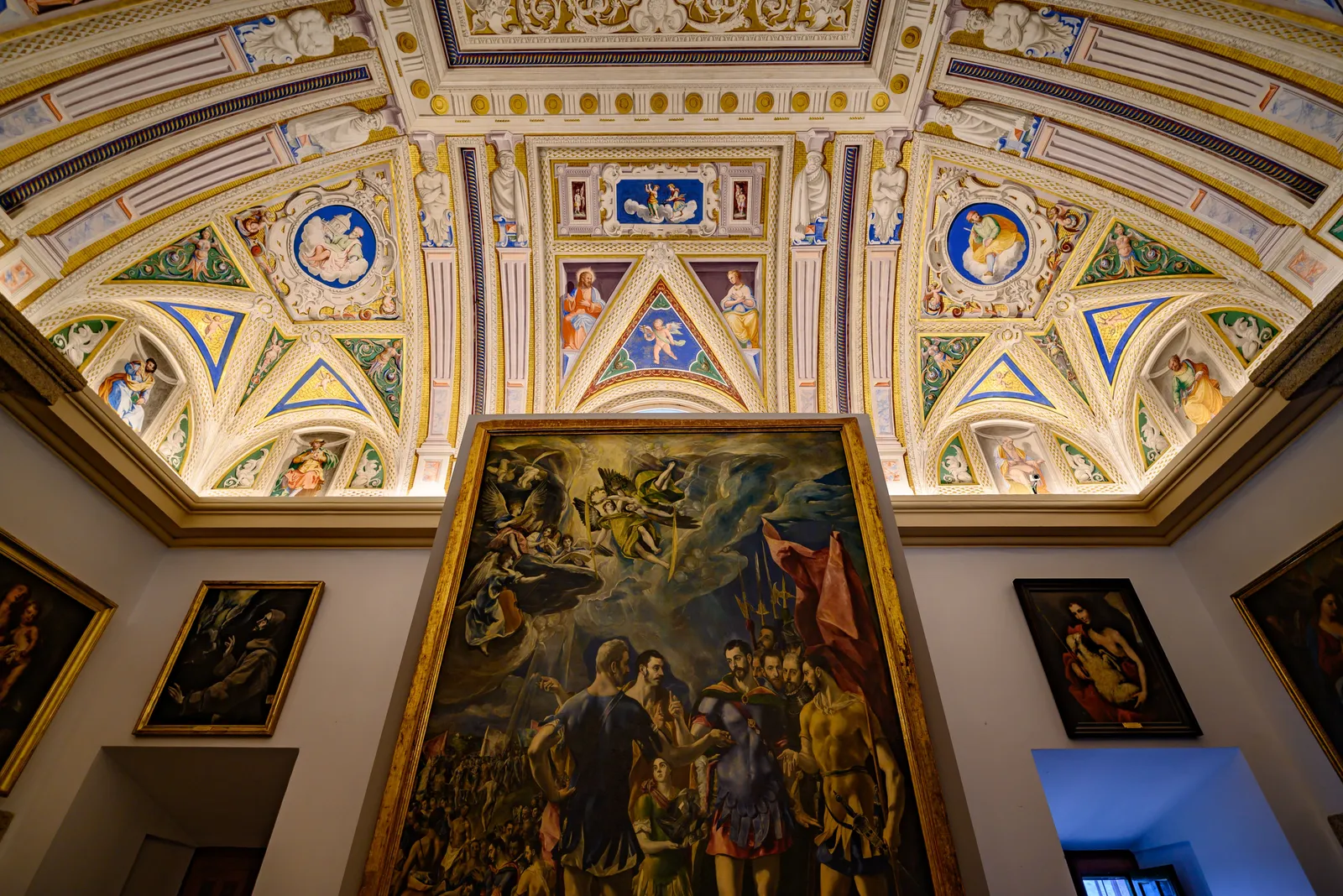
Of the three great museums on the Paseo del Prado, the Thyssen is the one visitors skip and the one art historians would tell you not to. It is the smallest, the easiest to walk in an afternoon, and the only one that tells the story of western painting from beginning to end rather than from one country’s point of view. Here is what it holds and how to see it properly.
Why this collection exists
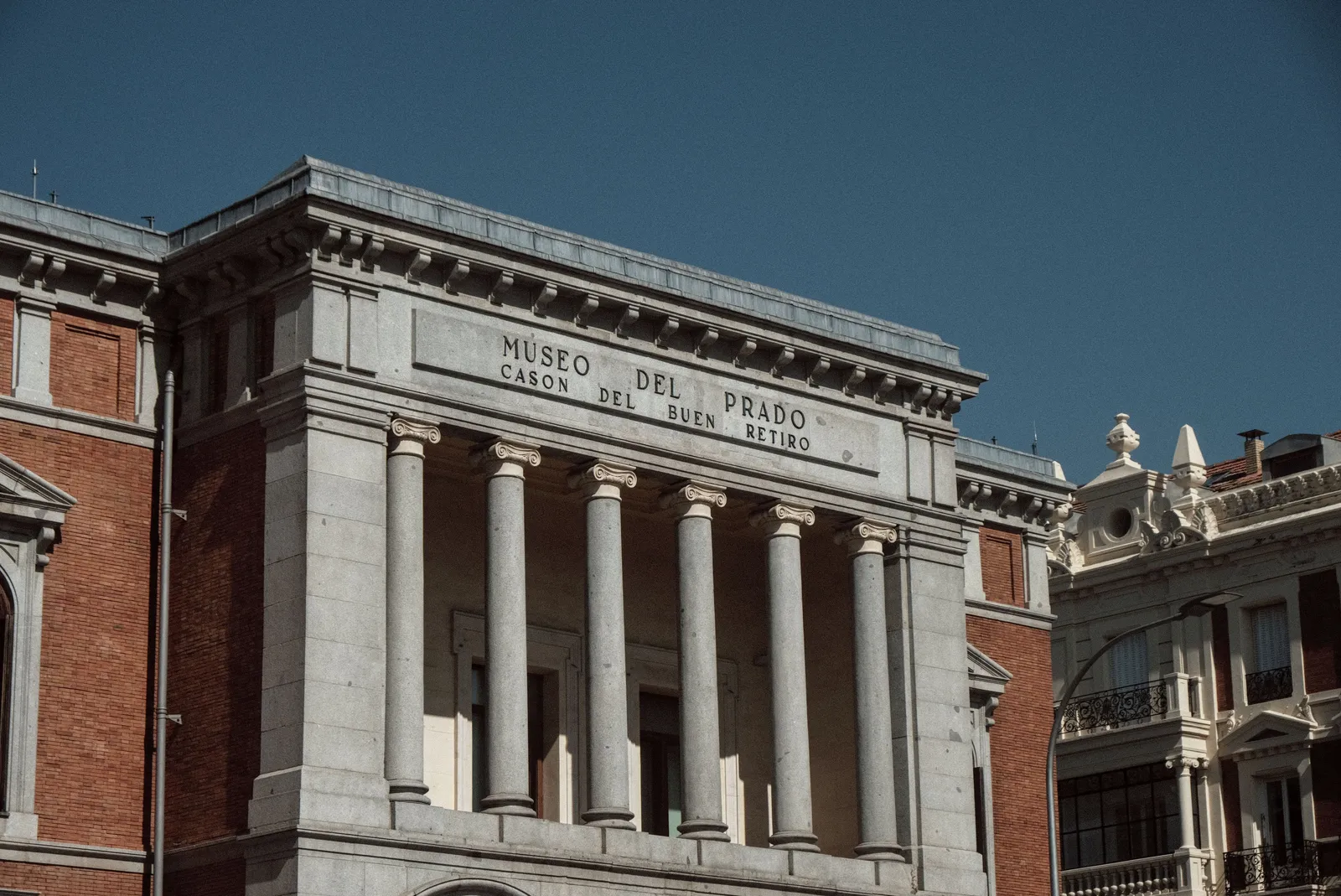
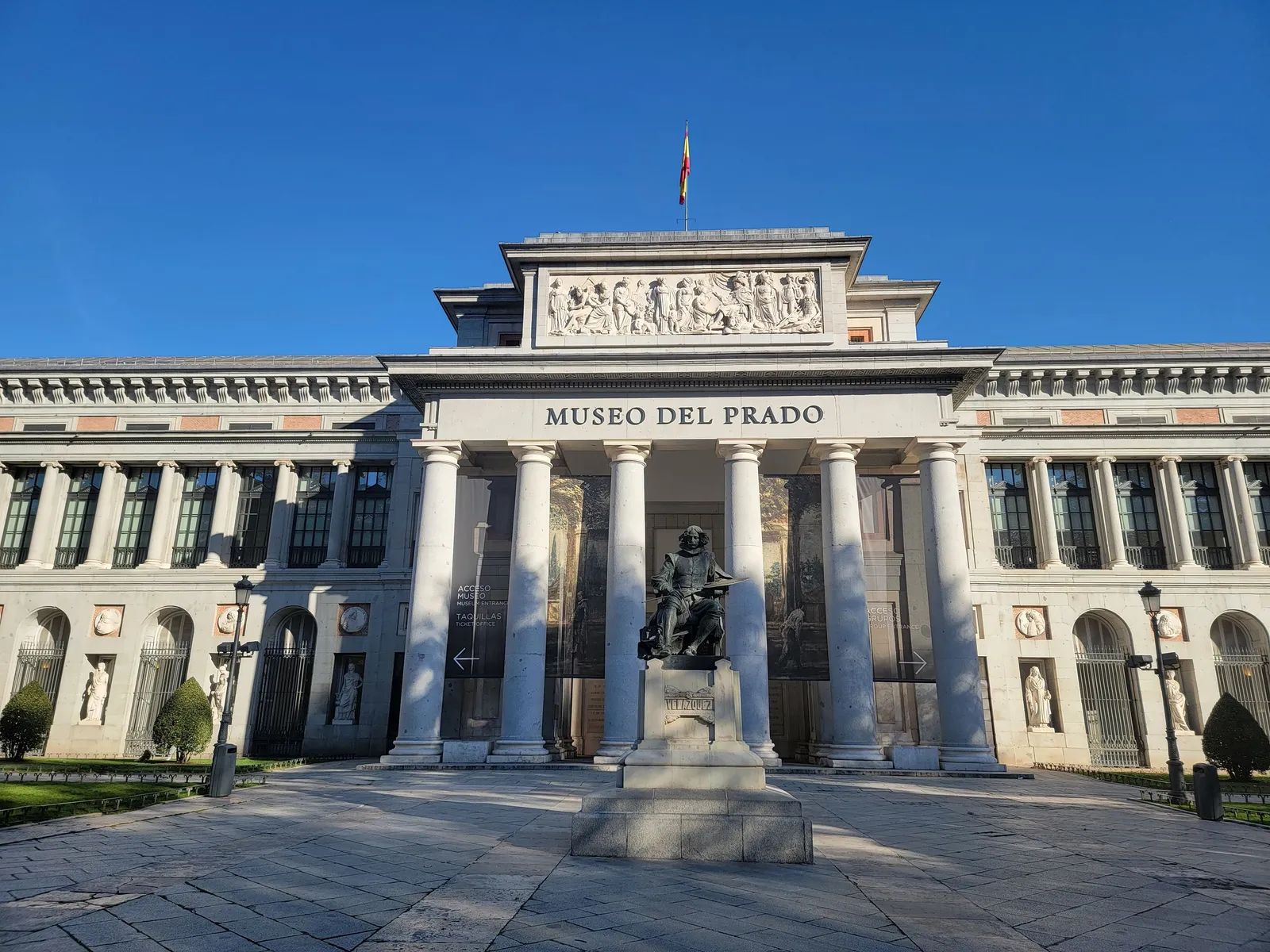
The Prado is a royal collection. Its extraordinary strengths, Spanish painting above all, along with Italian and Flemish work, reflect what Spanish monarchs actually bought over several centuries. Its gaps reflect what they did not.
The Thyssen was built to a different brief. Assembled privately across the twentieth century by two generations of the Thyssen-Bornemisza family and acquired by Spain in the early 1990s, it was put together with the deliberate ambition of representing the whole arc of western painting. That means early Italian gold-ground panels, Dutch interiors, German expressionism, impressionism, the Russian avant-garde and American painting, most of which is either thin or entirely absent across the road.
Set beside the Prado and the Reina Sofia, it is the connective tissue. Our guide to the golden triangle covers how the three fit together as a single itinerary.
Walk it from the top down
This is the one piece of practical advice that changes the visit. The collection is hung chronologically, with the oldest works on the upper floor and the twentieth century at the bottom.
Take the lift to the top and walk down. You get the history of western painting in order, in a single descending route, with no backtracking. Follow the entrance signs instead and you run the whole story in reverse, which is how a great many visitors experience it without realising there was an alternative.
Two to three hours covers the permanent collection comfortably. That makes it the least punishing of the three, and the only one of them most people finish without flagging.
What the floors hold
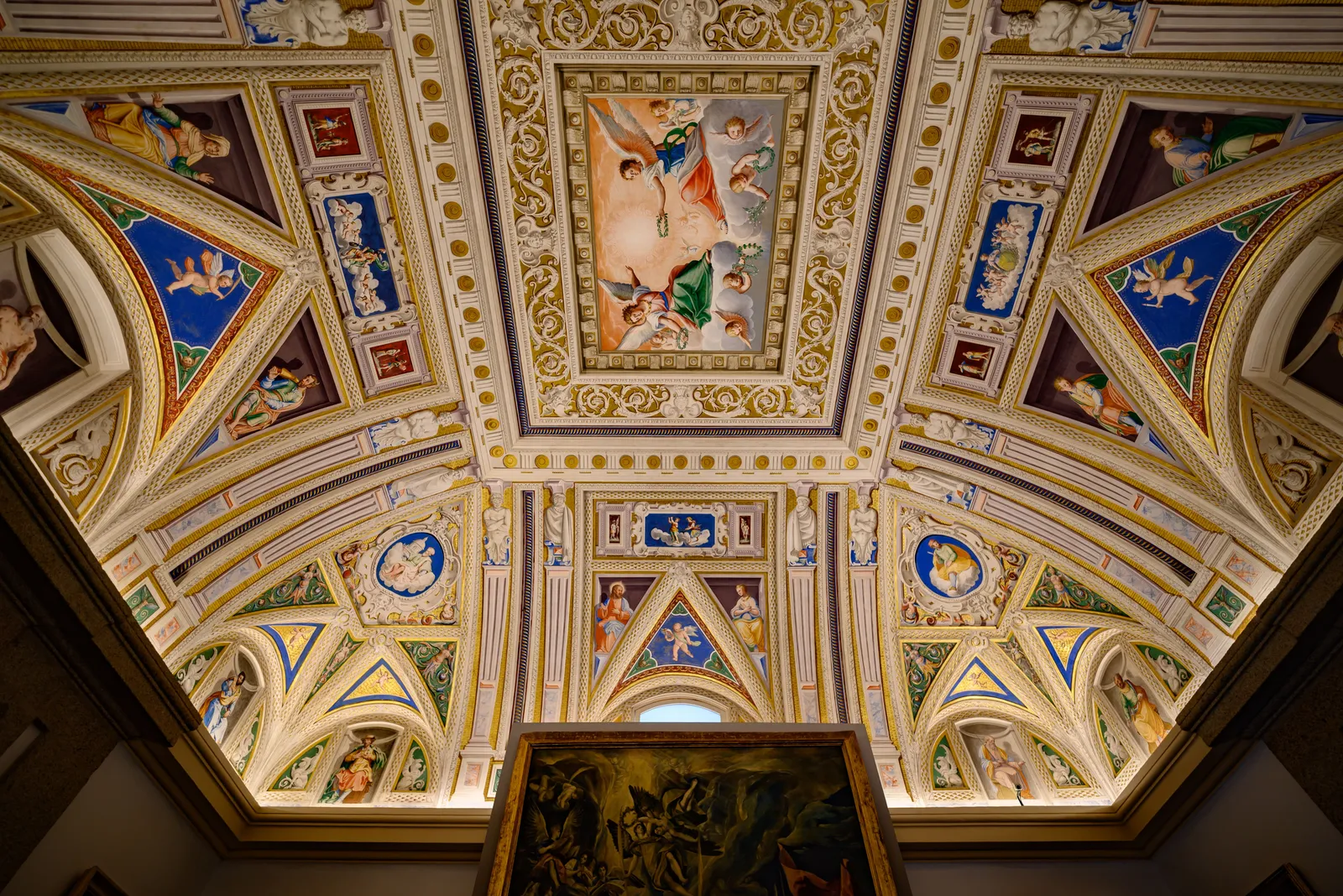
The top floor runs from the thirteenth century through the Renaissance: Italian panels, early portraits, and the material that is hardest to find elsewhere in Madrid. If your time is short, this is the floor that justifies the ticket.
The middle floor carries Dutch and Flemish painting, still lifes and interiors, then moves into the eighteenth and nineteenth centuries, impressionism and post-impressionism. This is the most immediately enjoyable stretch for most visitors.
The lower floor brings the twentieth century: expressionism, cubism, surrealism, abstraction and American painting through to pop art. It overlaps least with the Prado and sits chronologically just before where the Reina Sofia picks up.
The collection is deliberately broad rather than built around three or four famous images, and that shapes how it rewards a visit. There is no equivalent here of the crowd standing in front of Las Meninas or Guernica, and no single room that everyone funnels towards. What you get instead is the ability to walk from a fifteenth century Flemish portrait to a Monet to a Hopper in the space of an hour, watching the concerns of painting shift as you descend. Visitors who arrive with a checklist tend to leave slightly puzzled. Visitors who simply follow the rooms in order tend to rate it the most enjoyable of the three.
It is also, for what it is worth, the most comfortable of the big three to spend time in: the galleries are generally less crowded than the Prado, the route is legible without a map, and there is a cafe and terrace that make a natural break halfway down.
A guide earns their fee in a collection like thisA chronological hang across six centuries rewards someone explaining what changed between the roomsTickets, free hours and timing
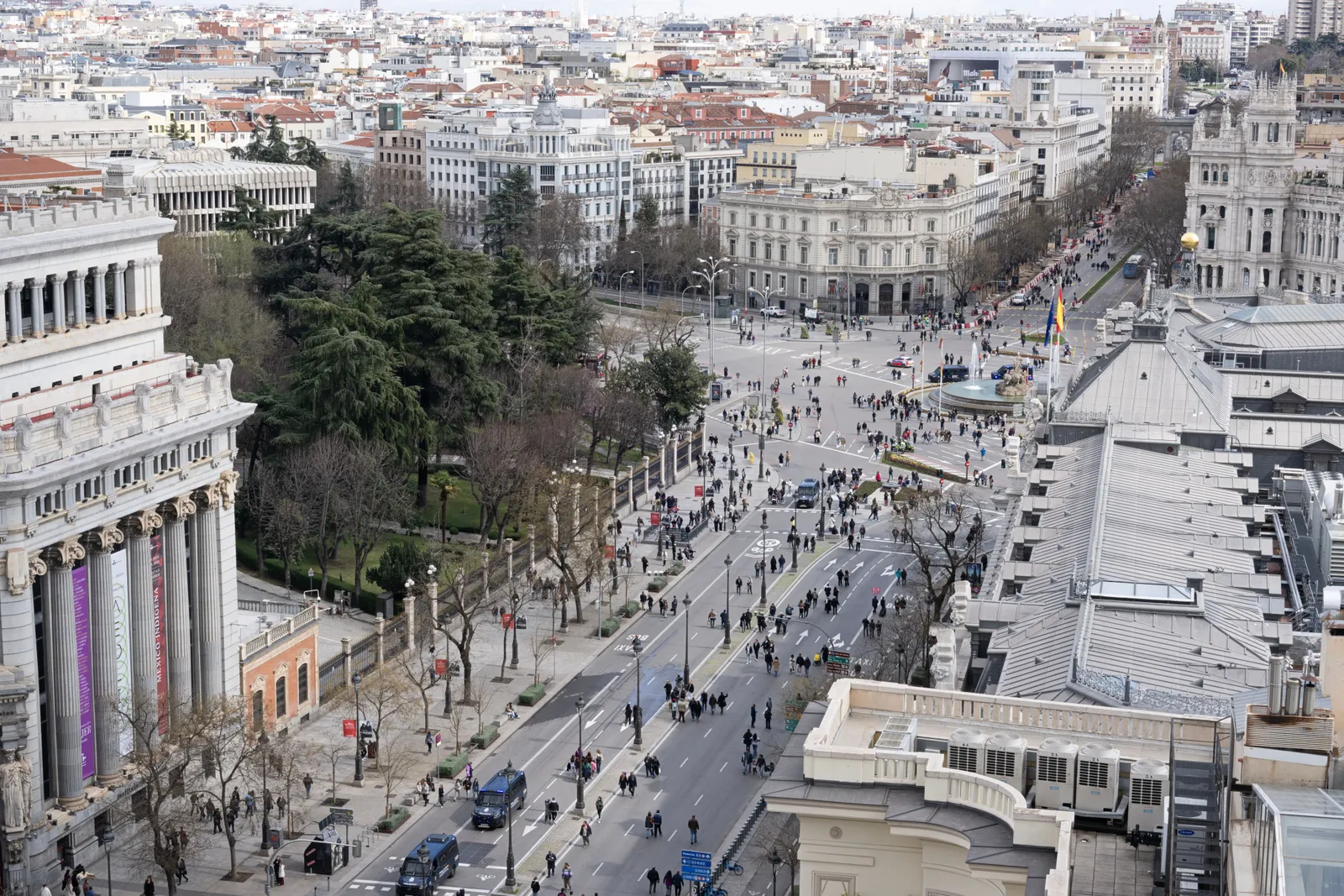
The museum has offered a free window on Mondays for the permanent collection, usually for a limited stretch of hours. It is genuinely popular and busy when it runs. Arrangements of this kind at all three museums have changed periodically and differ between permanent and temporary exhibitions, so confirm the current position before organising a day around it.
Temporary exhibitions are ticketed separately and are frequently strong here, drawing on loans the permanent collection is well placed to contextualise. Adding one pushes the visit towards half a day.
Pairing it with the others
The Thyssen is the natural partner to the Prado because it is short and they are a few minutes apart on the same avenue. The standard sequence is the Prado in the morning while you are fresh, a proper lunch, and the Thyssen afterwards.
What does not work is all three in one day. It sounds efficient, the museums are close together, and the result is reliably a blur in which nothing is remembered. Two in a day is the sensible maximum, and one a day is better if you have the time.
A final word for anyone hesitating over which single museum to choose. If you want the greatest paintings in Madrid, go to the Prado. If you want to understand how western painting actually developed, and to see a great deal that is not represented anywhere else in the city, this is the one.