Madrid is a hard, dry, dense city built on a plateau at six hundred and fifty metres, and Retiro is where it goes to breathe. It was a royal retreat, closed to the public until the nineteenth century, and it has been the city’s shared back garden ever since. There is a lake with a colonnade around it, a palace made of glass, a rose garden, and on any decent afternoon several thousand people doing nothing in particular, which is the correct way to use it.
What is in it
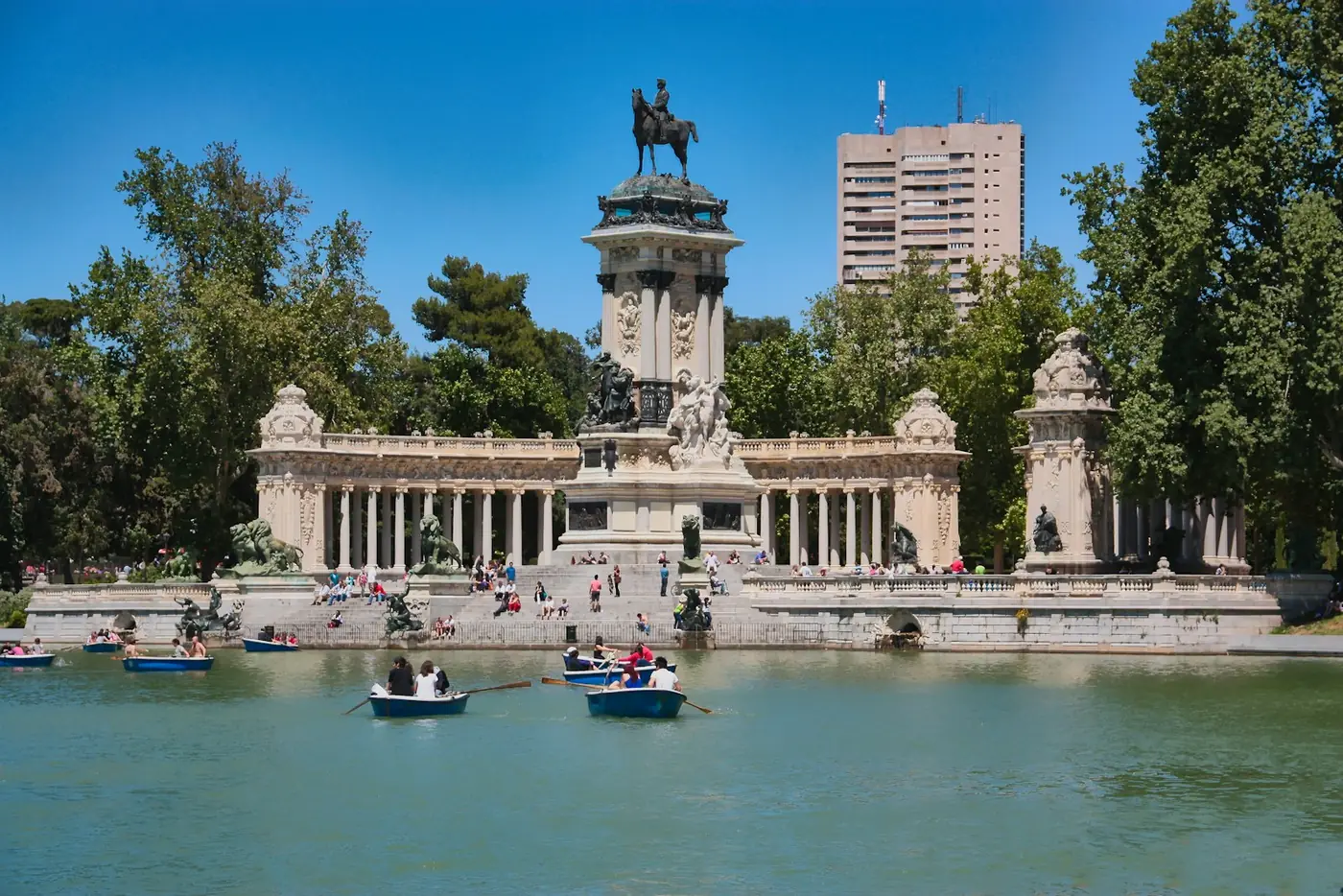
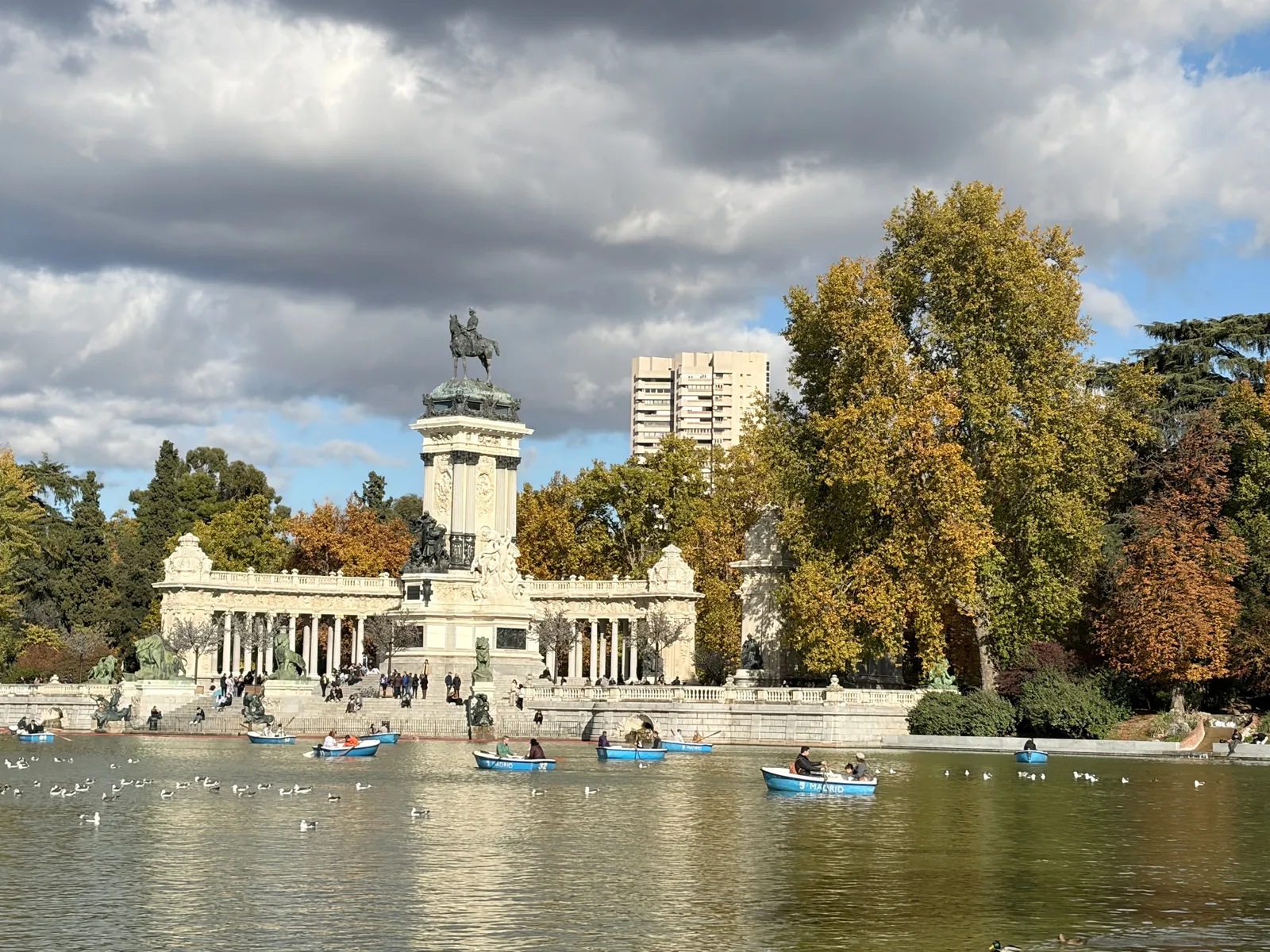
The lake, with the Alfonso XII monument curving behind it and rowing boats for hire.
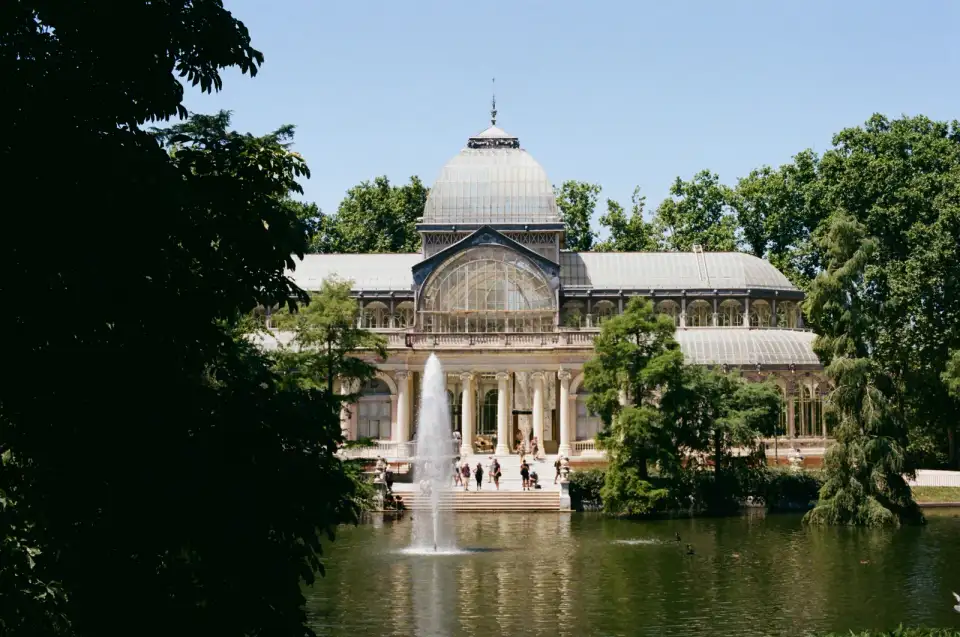
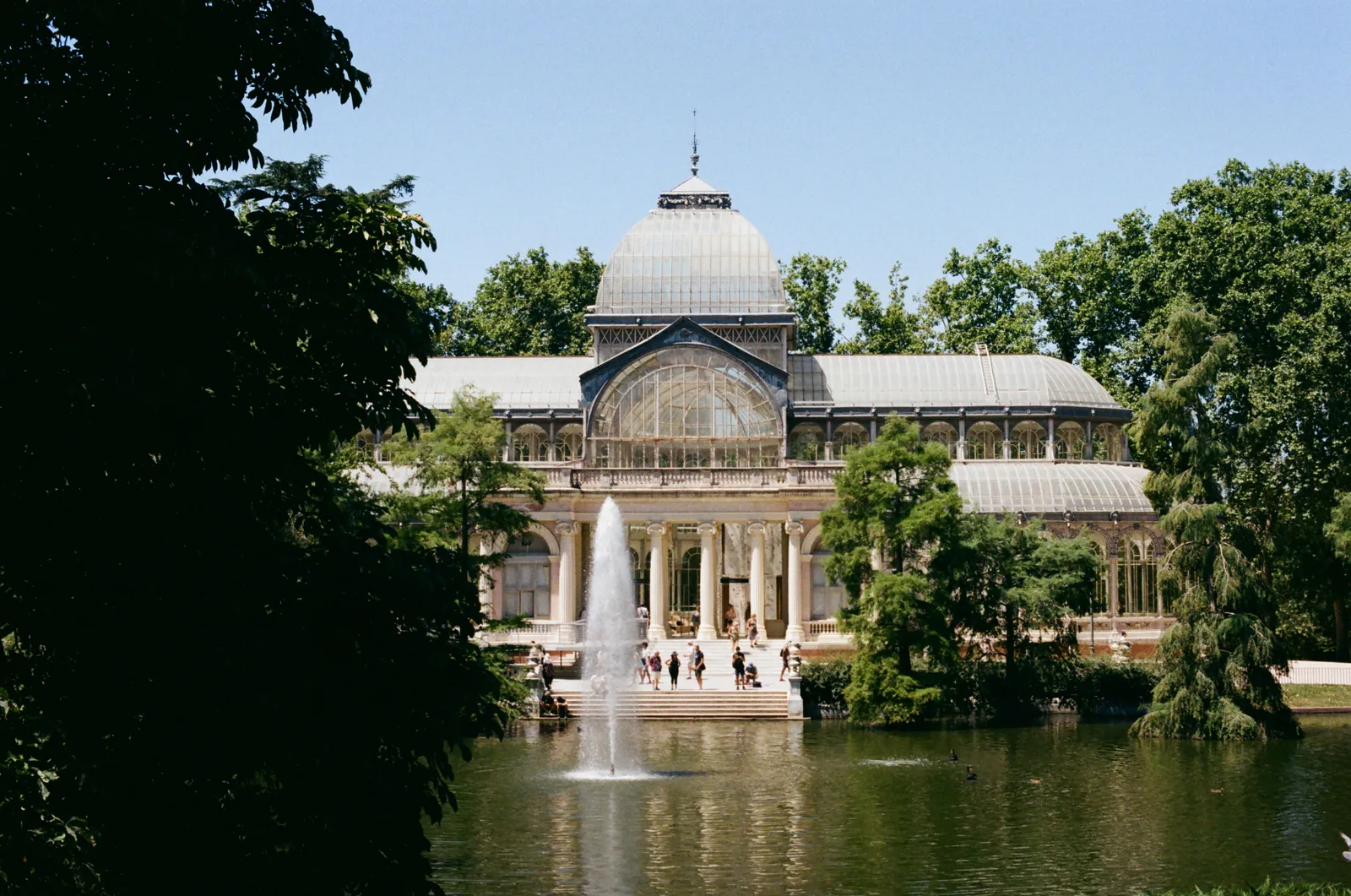
The Crystal Palace, glass and iron, from 1887, at the quiet end, shut to visitors for a long restoration and seen from the outside only.
The Velazquez Palace, brick and tile, beside it, also an exhibition space and also free.
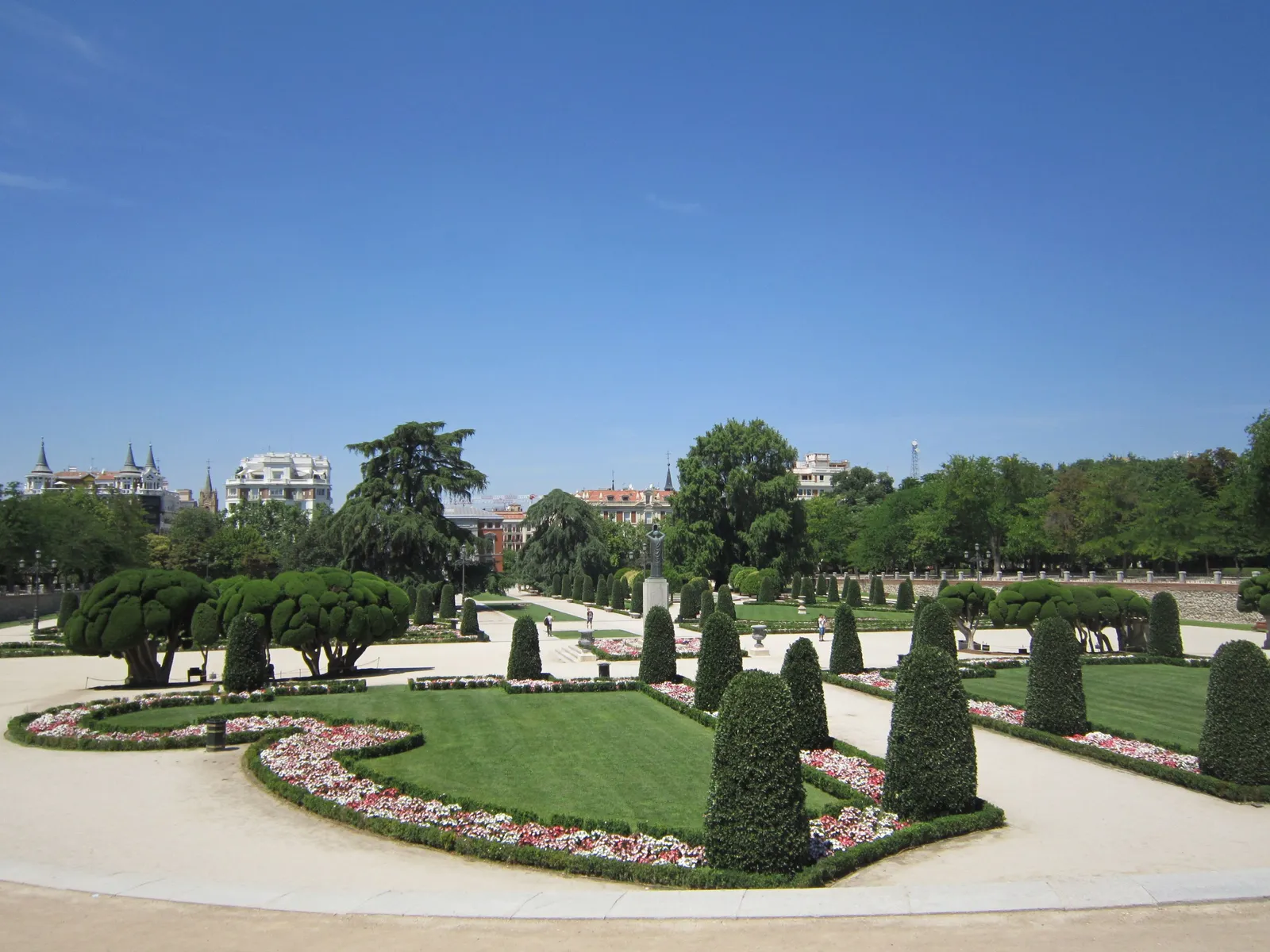
La Rosaleda, a formal rose garden, spectacular in May.
The Fallen Angel, a small nineteenth century statue said to be one of very few public monuments to Lucifer.
A cypress near the entrance believed to be the oldest tree in Madrid.
Kiosks and terraces, scattered through the park, for a drink under trees.
When to go
Late afternoon and early evening, which is when the city is actually in it.
Sunday, when the paths fill with families, drummers, buskers and tarot readers.
Early morning for runners and silence.
May for the roses, October for the light through the trees.
Not midday in July, when the plateau heat makes even the shade hard work.
Around the edges
The Prado and the museum row, immediately west, which makes a natural pairing.
The botanical garden, next to the Prado, small, paid and almost empty.
Puerta de Alcala, the triumphal arch at the northwest corner.
The Salamanca district, north, for expensive shopping and quiet streets.
Lavapies and Atocha, southwest, for cheaper eating and a completely different Madrid.
Practical notes
Gates close at night and the hours change with the season, earlier in winter.
Water fountains throughout, and they are drinkable.
Shade is plentiful, which matters from June to September.
Toilets exist and are limited; the kiosks are the practical answer.
Cycling is allowed on some paths and restricted on others, and signposted.
Wheelchair and pushchair access is good on the main routes and rougher on the gravel side paths.
Where this fits in a Madrid trip
Retiro is not a sight to tick off; it is where you go between the sights.
For the districts around it and which one to sleep in, our guide to Madrid’s neighbourhoods covers the map.
For how the park fits into a day with children and what else works at their pace, our family guide to Madrid covers the ground.
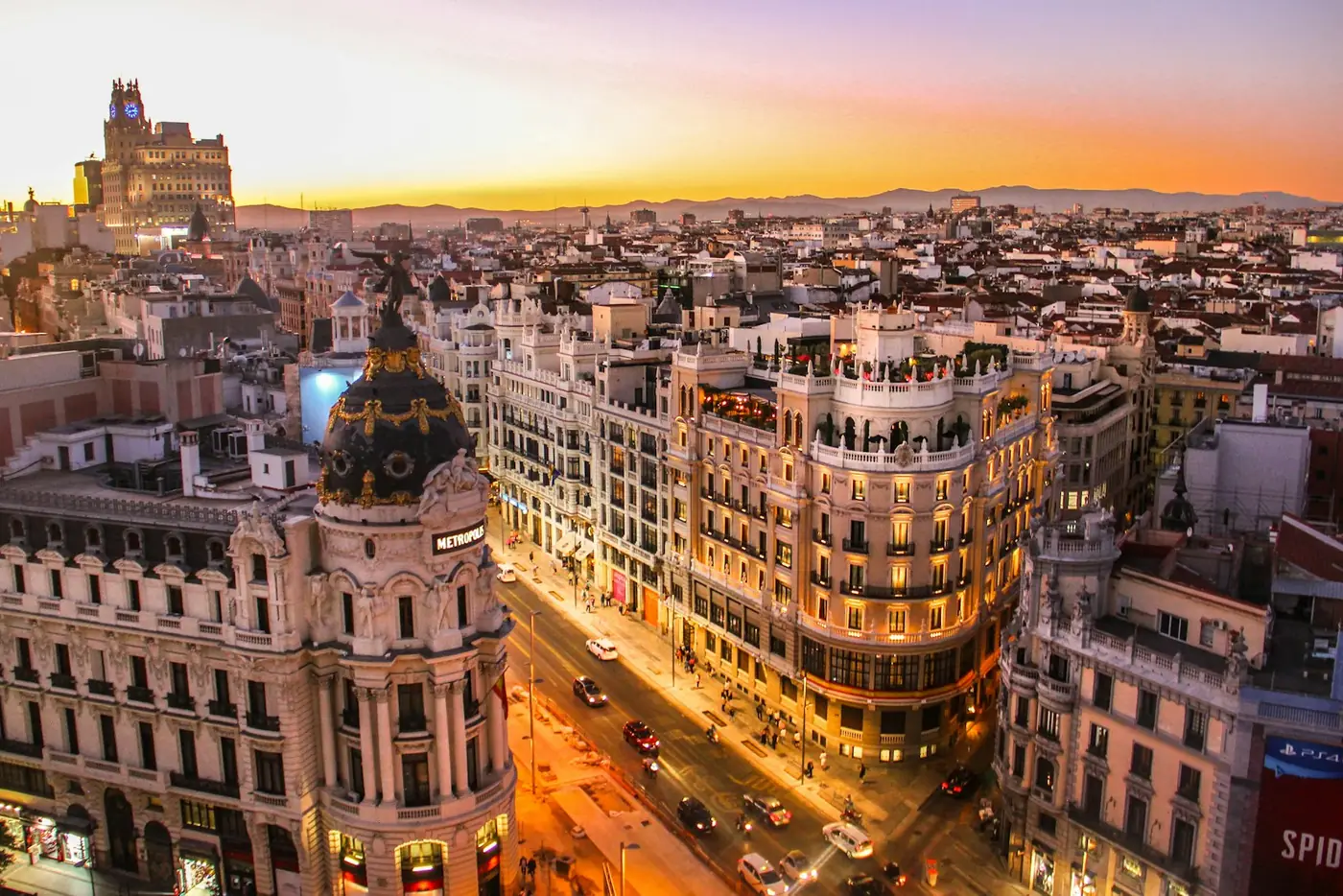
And for where to look at the city from above once you have looked at it from underneath the trees, our guide to Madrid’s viewpoints covers the rooftops.
The short version
Come in the late afternoon rather than at midday, and walk the whole park rather than stopping at the lake. Hire a boat once, because it is cheap and the view back at the colonnade is the reason people photograph it. Walk on to the Crystal Palace, which is beautiful from the outside and reached by a fraction of the visitors who reach the lake, though it is shut for restoration and you cannot go in. Come out at the southern end for lunch. And use it the way Madrid does, which is to say for several hours with no plan at all.