Almost every visitor to Madrid ends up at the Mercado de San Miguel, and almost every visitor leaves with the same slightly hollow feeling: the building is gorgeous, the food was fine, and the bill was larger than expected for what amounted to six small bites eaten standing up. That is not a scam, it is simply what San Miguel is now. The interesting part of Madrid’s market culture is elsewhere, in the municipal markets scattered across the neighbourhoods, where the fish counters still open at eight in the morning and the bar next to them serves the people who shop there.
In short: The best food market in Madrid for actually eating is Vallehermoso in Chamberí, a working produce market with a run of seriously good specialist counters around it. San Antón in Chueca is the central middle ground with a rooftop restaurant, and San Fernando in Lavapiés is the cheapest and most informal and opens on Sunday, which makes it the natural stop after El Rastro. The Mercado de San Miguel beside Plaza Mayor is a beautiful gourmet tapas hall aimed at visitors, worth a look and one bite rather than a full meal. Many produce stalls close for an afternoon break even when the bars inside stay open, so check each market’s own hours.
What San Miguel is, and what it is not
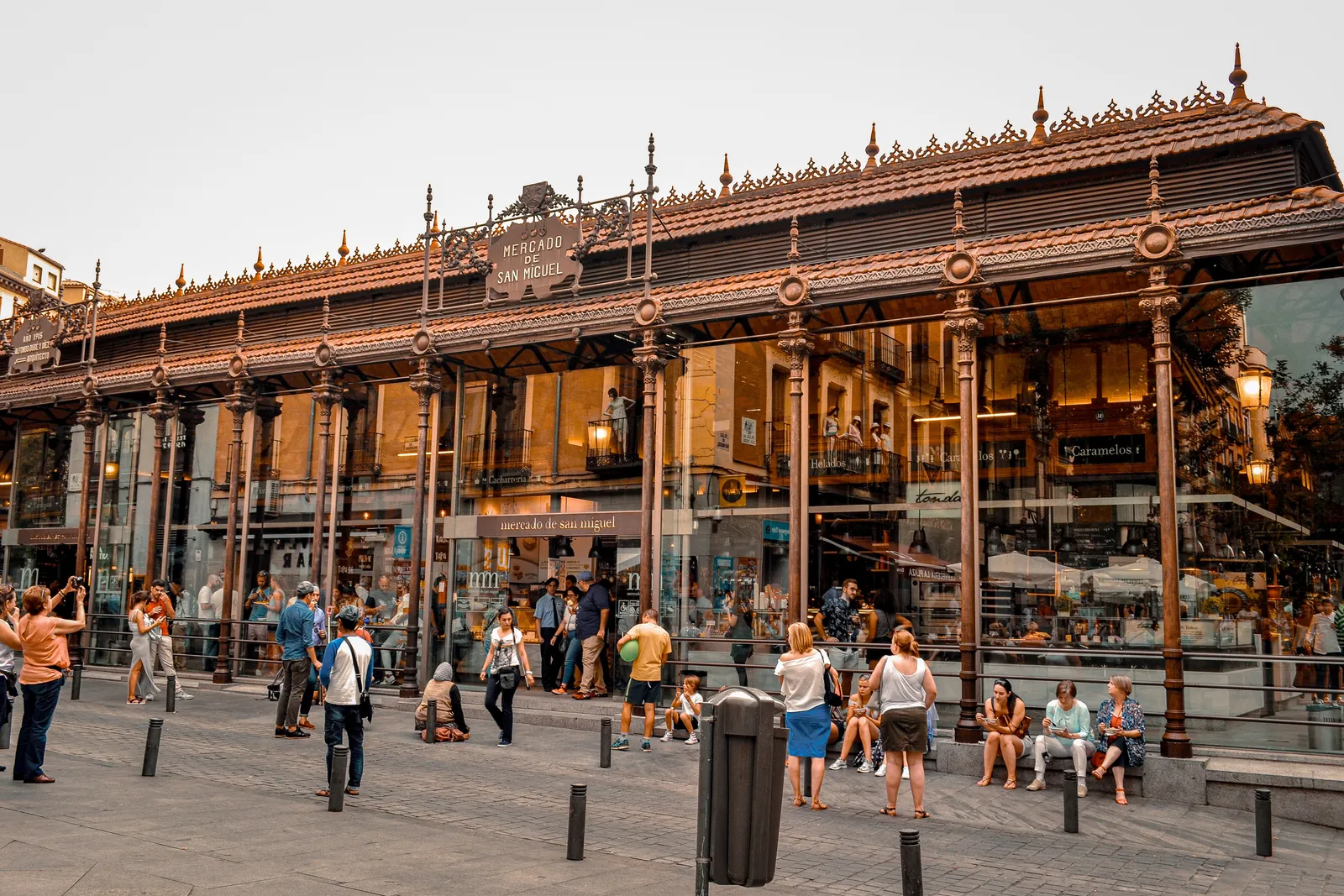
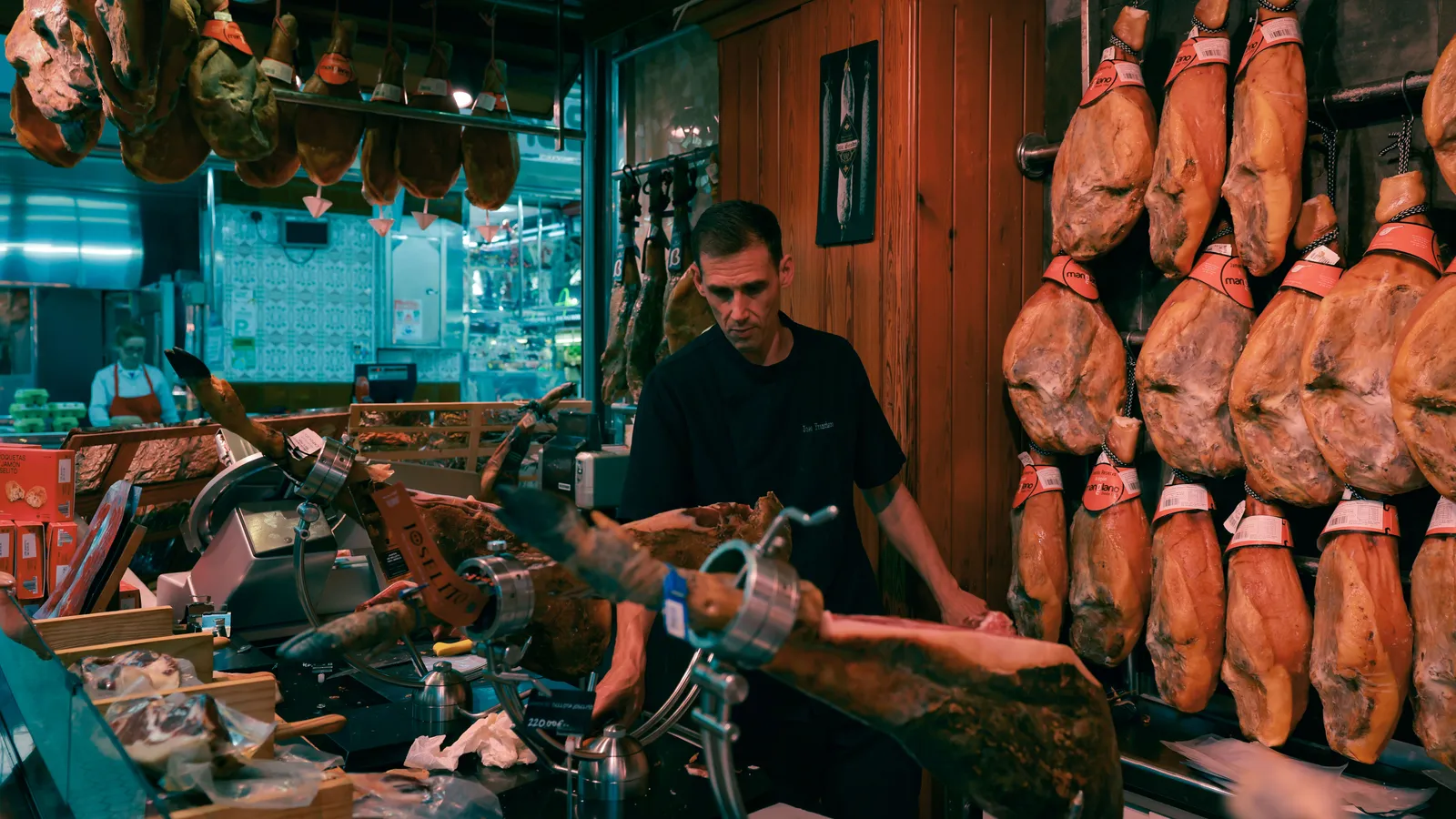
The wrought iron and glass hall beside Plaza Mayor has been standing since the early twentieth century, and it is genuinely one of the prettiest market buildings in the city. What it no longer is, is a market. The produce stalls were replaced years ago by a dense grid of small gourmet counters selling oysters, vermouth, croquetas, sliced jamón and glasses of cava, aimed almost entirely at visitors and open late into the evening.
Judged as a covered tapas hall it works. The quality is generally sound, the variety is real, and on a rainy afternoon it is a pleasant place to be. Judged as a window onto how Madrid eats, it is misleading, and the price gap with a neighbourhood market is the clearest evidence: a comparable plate and drink can cost roughly double what the same order costs a fifteen minute walk away. Go, look at the ironwork, have one thing, and then go somewhere else to eat properly. For the wider context on what to order once you are there, our guide to Madrid food and tapas covers the dishes worth seeking out.
San Antón, Chueca’s middle ground
Mercado de San Antón in Chueca is the easiest step away from the tourist hall without leaving the centre. It is arranged over several floors: a working market at ground level with fruit, fish and charcuterie, a middle floor of prepared food and tapas counters, and a restaurant with a rooftop terrace on top that stays open considerably later than the market below.
It is not a secret and it is not cheap by neighbourhood standards, but it is a genuine mix of shoppers and diners rather than exclusively the latter. The rooftop is the draw in the evening, and the market floors are more interesting in the morning. Typical opening runs from mid morning until late, with the rooftop later still, but the market and restaurant floors keep different hours, so check the market’s own site for the day you want.
Vallehermoso, the food lover’s market
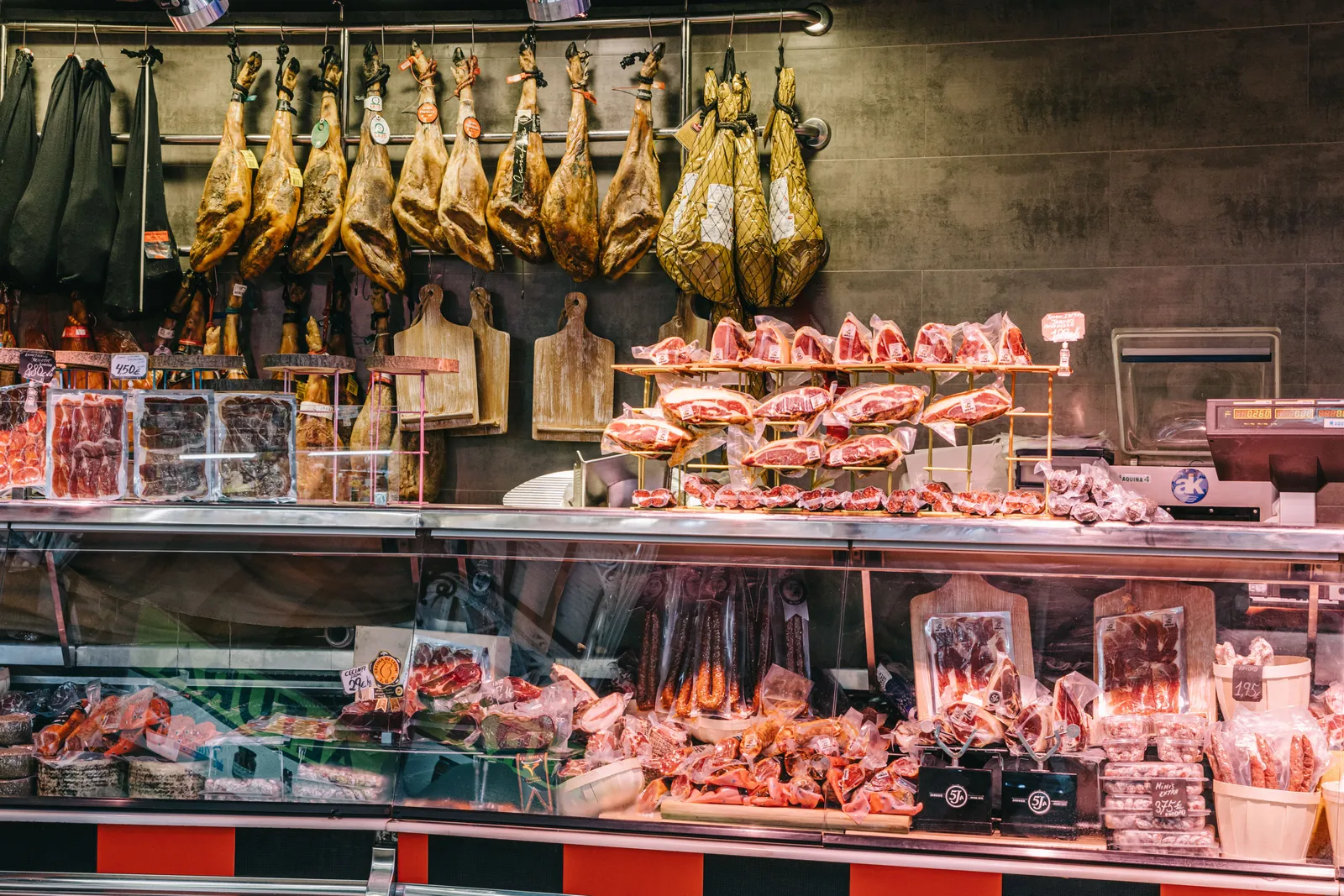
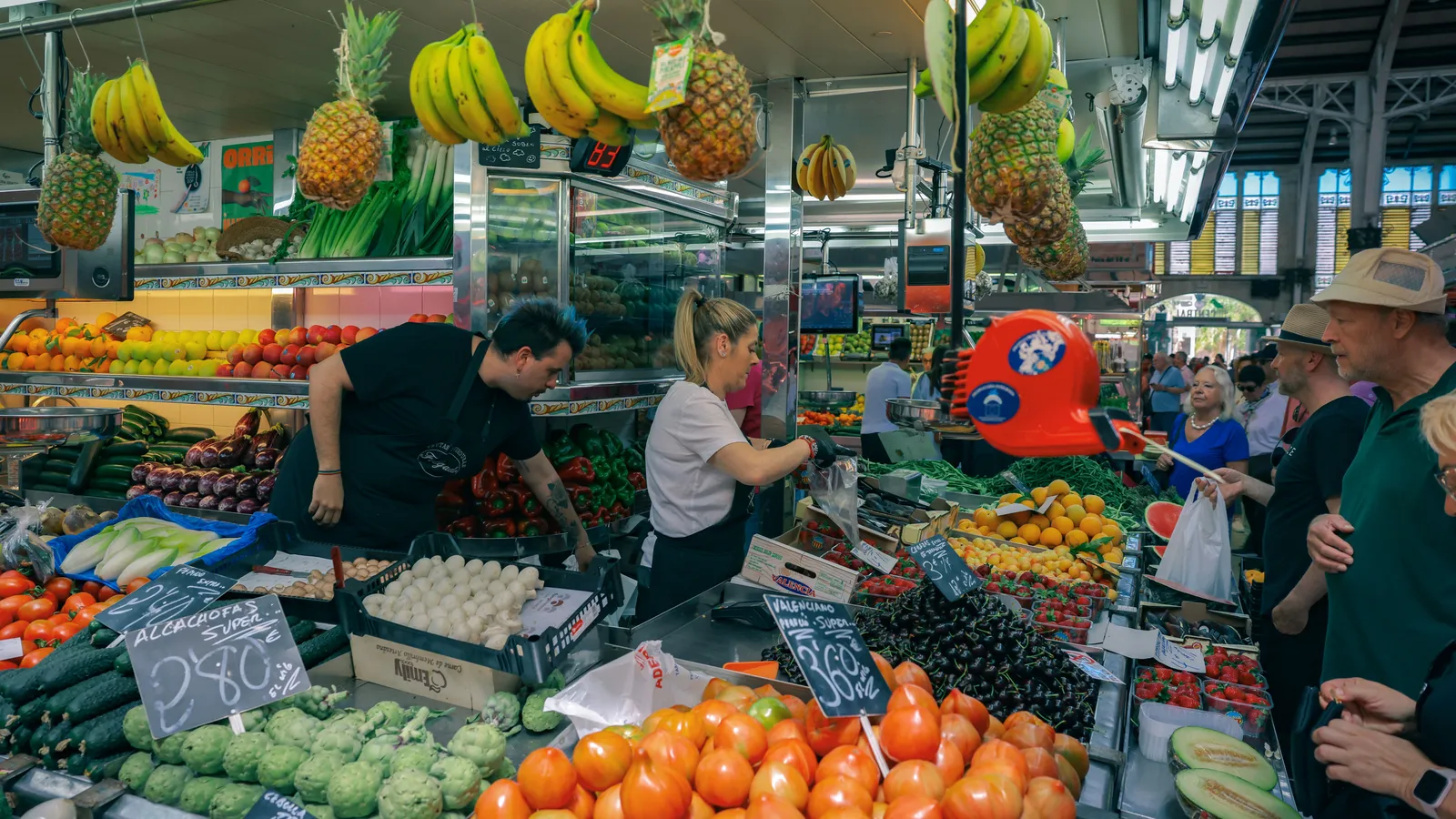
If you only make one detour, make it Vallehermoso in Chamberí, north of the centre and comfortably outside the standard tourist circuit. It survived the fate of San Miguel by going in the opposite direction: rather than being cleared for a gourmet hall, it kept its produce stalls and added a run of small, seriously good specialist counters around them.
The result is a market where you can buy a kilo of tomatoes and then eat some of the better casual food in the city at a bar three metres away, surrounded by people from the neighbourhood doing exactly the same thing. Come hungry, order across several counters, and expect to stand. It is the clearest single argument that Madrid’s market tradition is alive rather than preserved.
Eat your way through Madrid's working marketsSmall group food tours that skip the tourist halls for neighbourhood markets and their barsSan Fernando, Lavapiés and the Sunday option
Mercado de San Fernando in Lavapiés is the scruffiest of the group and the most fun for it. The neighbourhood is Madrid’s most mixed, and the market reflects that: Spanish produce counters alongside stalls cooking food from across the world, a secondhand bookseller, craft beer, and prices that sit noticeably below anywhere in the centre.
It also has one practical advantage that matters more than it sounds: it opens on Sunday, when a lot of Madrid’s municipal markets do not. That makes it the natural landing spot after a morning at the Rastro flea market, which finishes a short walk uphill and empties its crowds into the bars of La Latina at exactly the moment everyone wants to sit down. Confirm the Sunday hours before you go, since Sunday opening is the part of any market schedule most likely to have changed.
Antón Martín and Barceló, the everyday markets
Mercado de Antón Martín, between Lavapiés and the Barrio de las Letras, is the least reinvented of the group: a straightforward neighbourhood market with produce, fish and butcher stalls, a scattering of small food counters, and a dance school upstairs. It is typically open on weekdays and Saturday mornings and closed on Sunday, which makes it a weekday stop rather than a weekend one.
Mercado de Barceló, on the edge of Malasaña and Chueca, sits inside a modern municipal building with a sports centre and a rooftop above it. It is architecturally the least charming market on this list and one of the most useful, a genuinely functional food market in a very central location. Neither of these is a destination in the way Vallehermoso is. Both are worth knowing about if you are staying nearby and want to shop rather than be entertained.
How to use a Madrid market properly
A few habits make the difference. Go in the morning if you want the market as a market, with the fish and produce counters at their best. Go in the evening if you want the bars, and accept that some of the shopping stalls will have shut for the afternoon break in between: the traditional pattern is a morning session and a late afternoon reopening, though many food stalls now run straight through and some markets have moved to continuous hours.
Order at the counter and pay at the counter, stall by stall, rather than expecting a single bill. Standing at the bar is normal and often cheaper than a table. And if you are heading afterwards into the tapas streets around the Plaza de la Cebada, our guide to La Latina’s tapas crawl picks up where the market leaves off. Prices, hours and individual stalls all change, so treat any specific figure here as a guide and check the market’s own website before making a special trip.