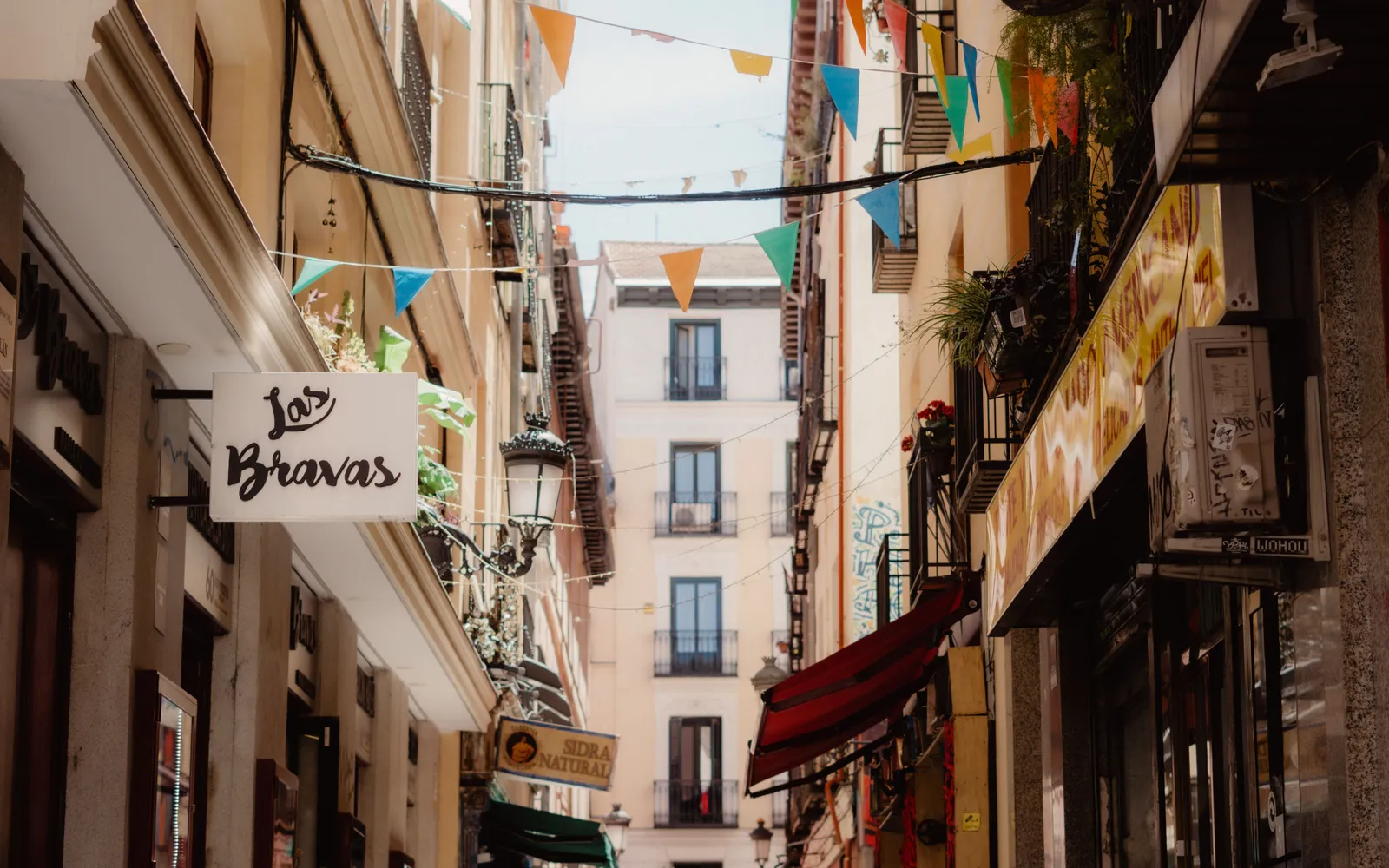
North of Gran Via there are two neighbourhoods that share a boundary street and almost nothing else. Malasana was the centre of the cultural explosion that followed Franco’s death, and it still carries the residue: record shops, vintage clothing, bars that have not been redecorated since 1983 and coffee that has been. Chueca, next door, spent decades in decline and was remade from the 1980s onwards into one of Europe’s great gay districts, and is now the smartest and most cheerful part of central Madrid.
Malasana
Plaza del Dos de Mayo, the square everything orbits, with people on the steps from six in the evening.
Calle Fuencarral, the shopping street on the eastern edge, pedestrianised and busy.
Vintage and second hand clothing, in genuine quantity, along Velarde and the streets around it.
Record and book shops, which have survived here better than almost anywhere.
Specialty coffee, of which this district has more than the rest of Madrid combined.
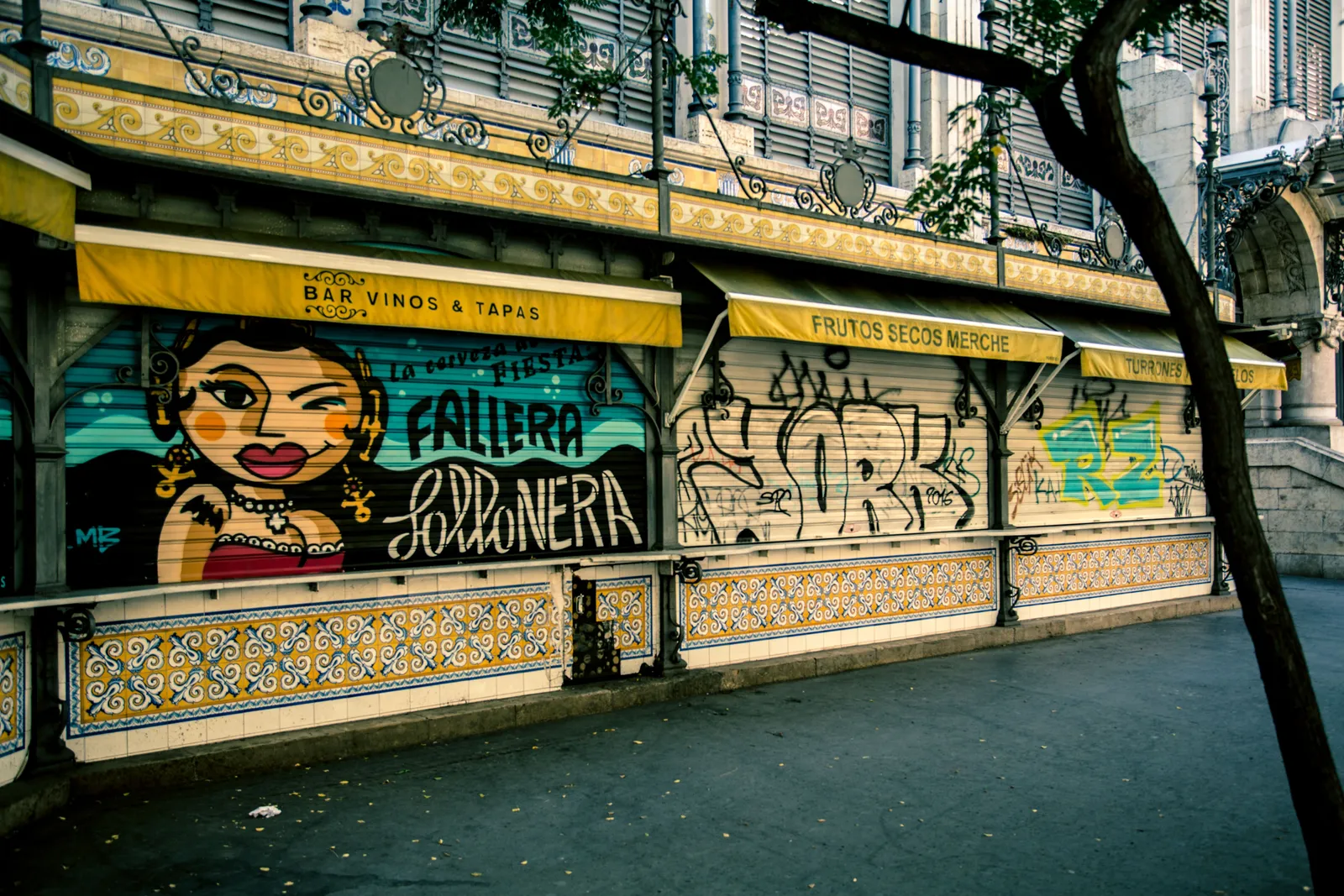
Old bars with tiled fronts that predate all of the above and have not changed.
Chueca
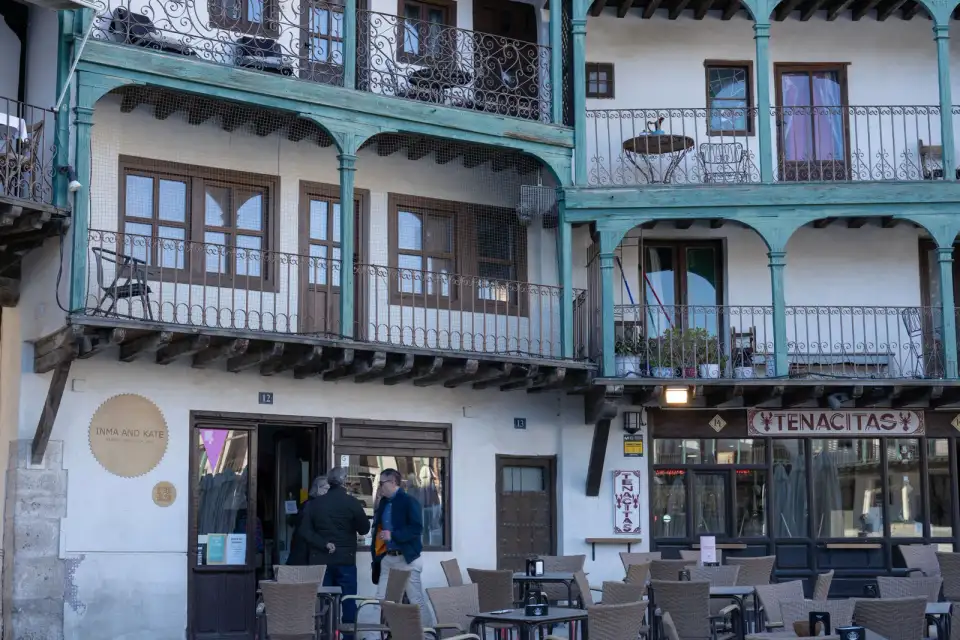
Plaza de Chueca, small, entirely surrounded by terraces, and full from the afternoon.
Mercado de San Anton, three floors of food stalls with a rooftop terrace.
Calle Hortaleza and Calle Augusto Figueroa, for shopping, the latter historically the shoe street.
A dense and welcoming nightlife, from quiet wine bars to very late clubs.
Pride at the start of July, which turns the whole district into a multi day street party.
Excellent restaurants, more modern and more polished than La Latina’s.
Shopping
Vintage clothing in Malasana, sold by the piece rather than the kilo, with real depth.
Independent designers in Chueca, particularly around Hortaleza.
Records, comics and books, which cluster in the Malasana side streets.
Concept and design shops, scattered through both.
Fuencarral, the pedestrian street between them, which is high street chains and always full.
Sunday closing applies to most of it outside the designated tourist zones.
Practical notes
Noise is the defining practical fact; ask for an interior room.
Metro serves both densely and everything is walkable anyway.
The squares fill with people drinking outside, which is legal in the sense of being tolerated and periodically policed.
Pride in early July doubles prices and fills every bed in the district.
Pickpocketing on Fuencarral and around the Gran Via metro entrances is a genuine and constant issue.
Residents live here, and the late night noise complaints are theirs.
Where this fits in a Madrid trip
These are the districts to spend an evening in rather than an afternoon.
For how they sit against the rest of the city and which area suits you, our guide to Madrid’s neighbourhoods covers the map.
For where the evening goes after dinner and how late Madrid actually stays out, our guide to Madrid nightlife covers the ground.
And because the shopping streets here are the highest risk in the city for street theft, our guide to pickpockets in Madrid covers the habits worth having.
The short version
Take both districts in one evening rather than either on its own. Start in Malasana around seven for the square, the vintage shops and an old tiled bar, walk over to Chueca at nine to eat, and then pick your register for the rest of the night. Shop for vintage on the Malasana side and for design on the Chueca side, and do not plan it for a Sunday. Sleep here if you want to be central, and ask for a room that does not face the street.
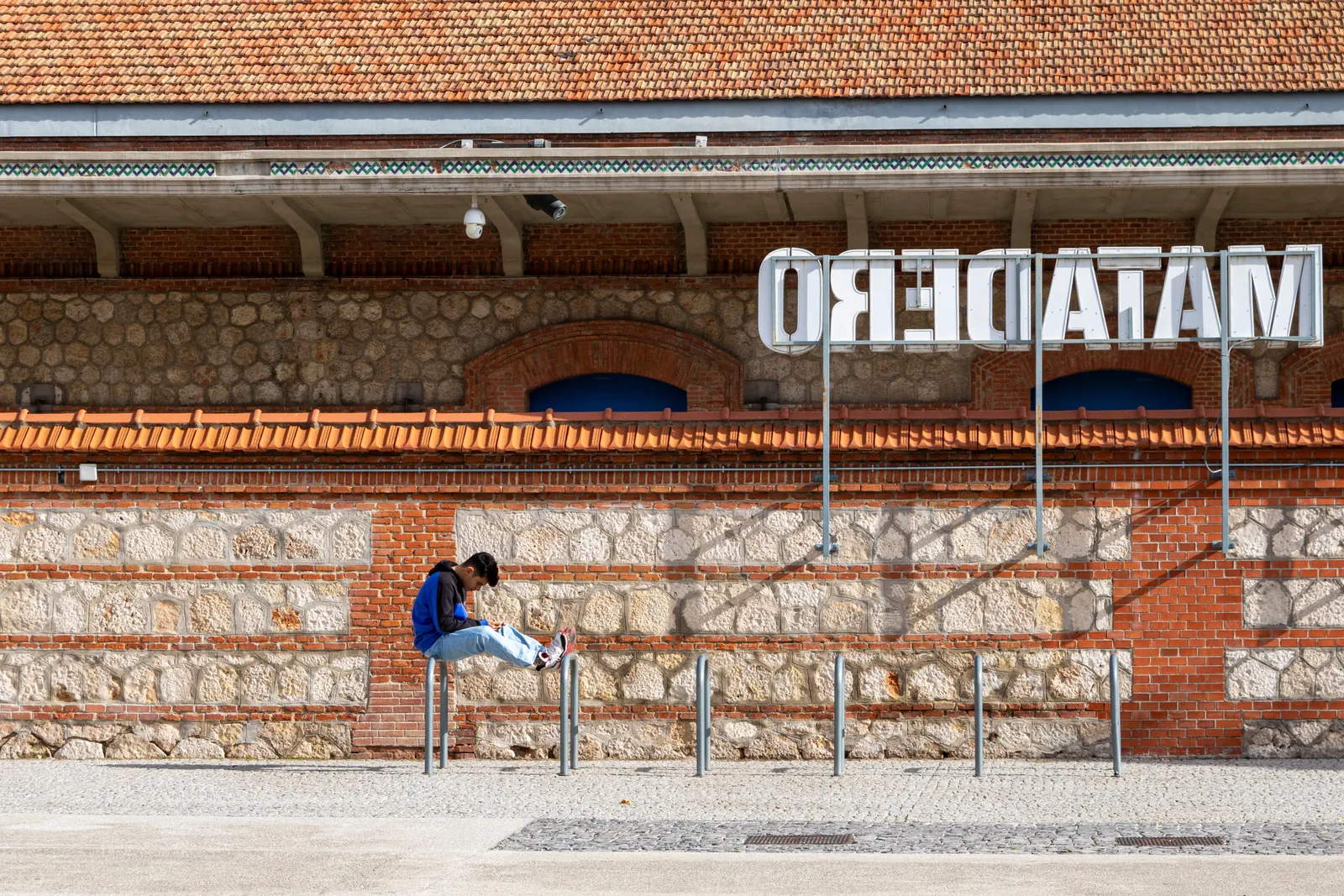
South of the river a former slaughterhouse has become the city’s largest cultural complex, and most of it is free to walk into. Our guide to Matadero Madrid covers what is in the halls and when to go.