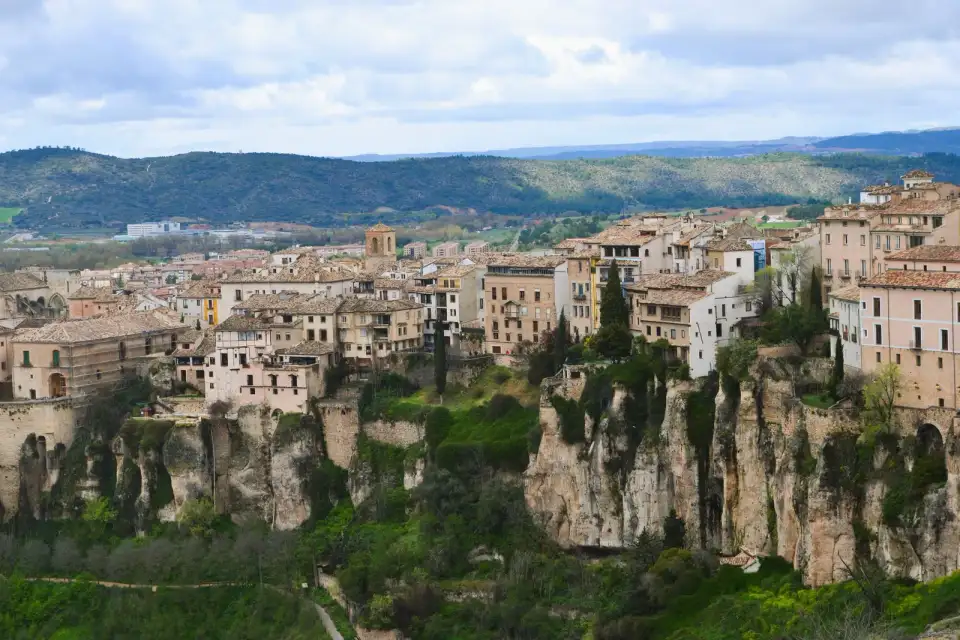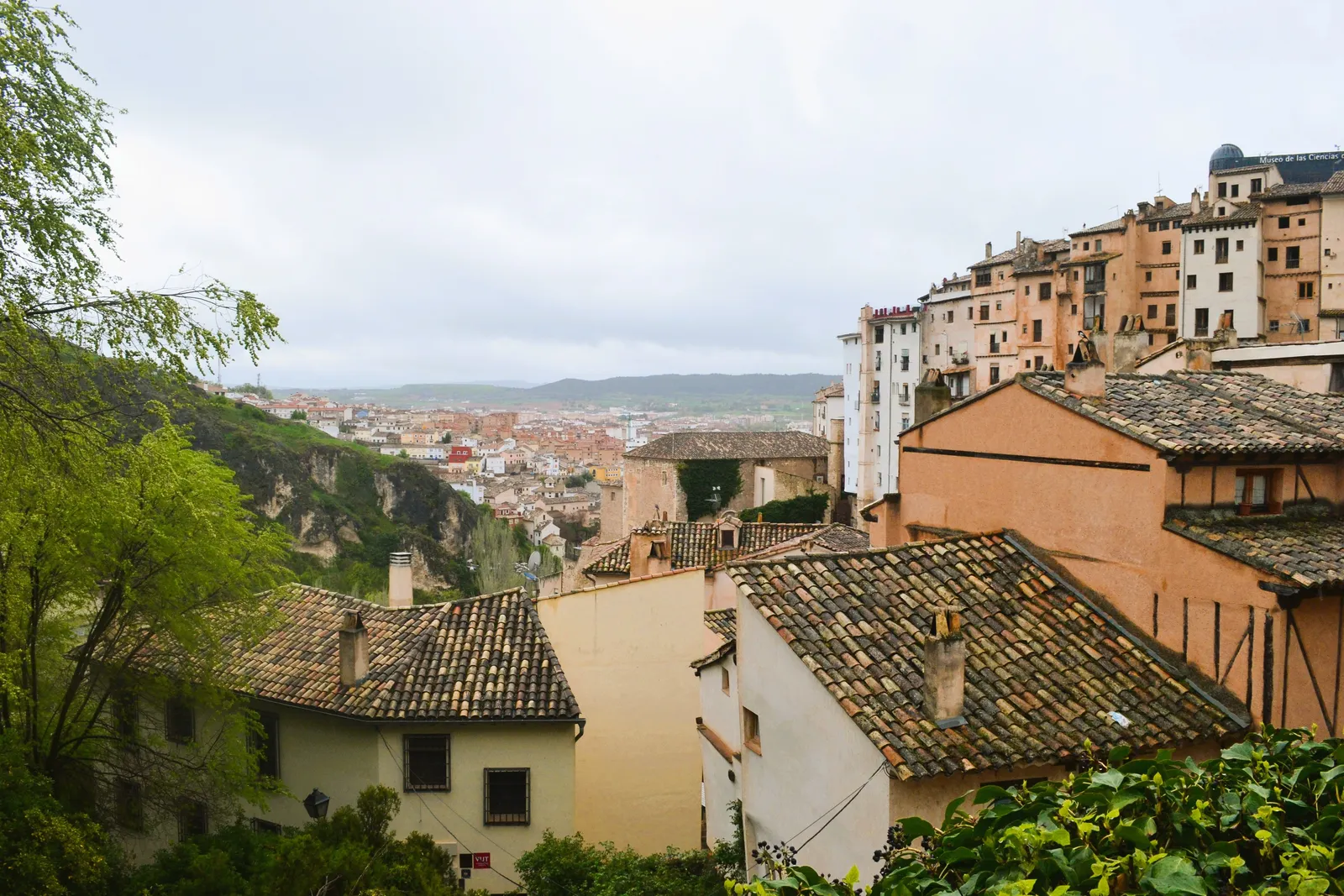
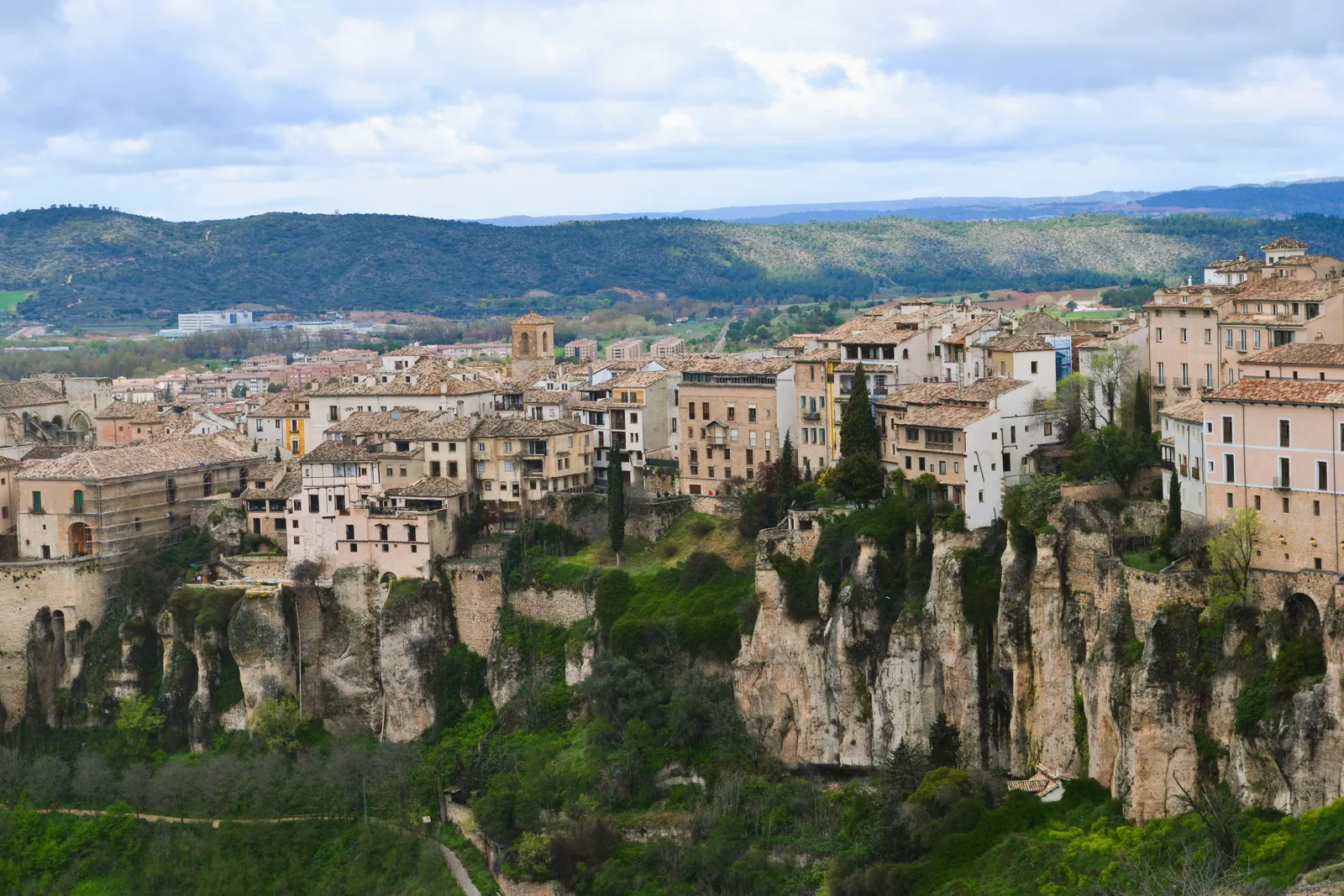
Everybody who spends a week in Madrid goes to Toledo. A good number add Segovia. Almost nobody gets on the train to Cuenca, which is under an hour away and is a medieval town built along the crest of a narrow ridge with a river gorge falling away on either side. There are houses whose wooden balconies hang out over the drop, a cathedral with a modern glass front where the collapsed towers used to be, and a footbridge across a canyon that people cross very slowly.
What you actually see
The hanging houses, a short row of buildings with balconies projecting over the edge of the Huecar gorge, which is the image of the town.
The Museum of Spanish Abstract Art, inside those houses, which is a genuinely good collection in an extraordinary building.
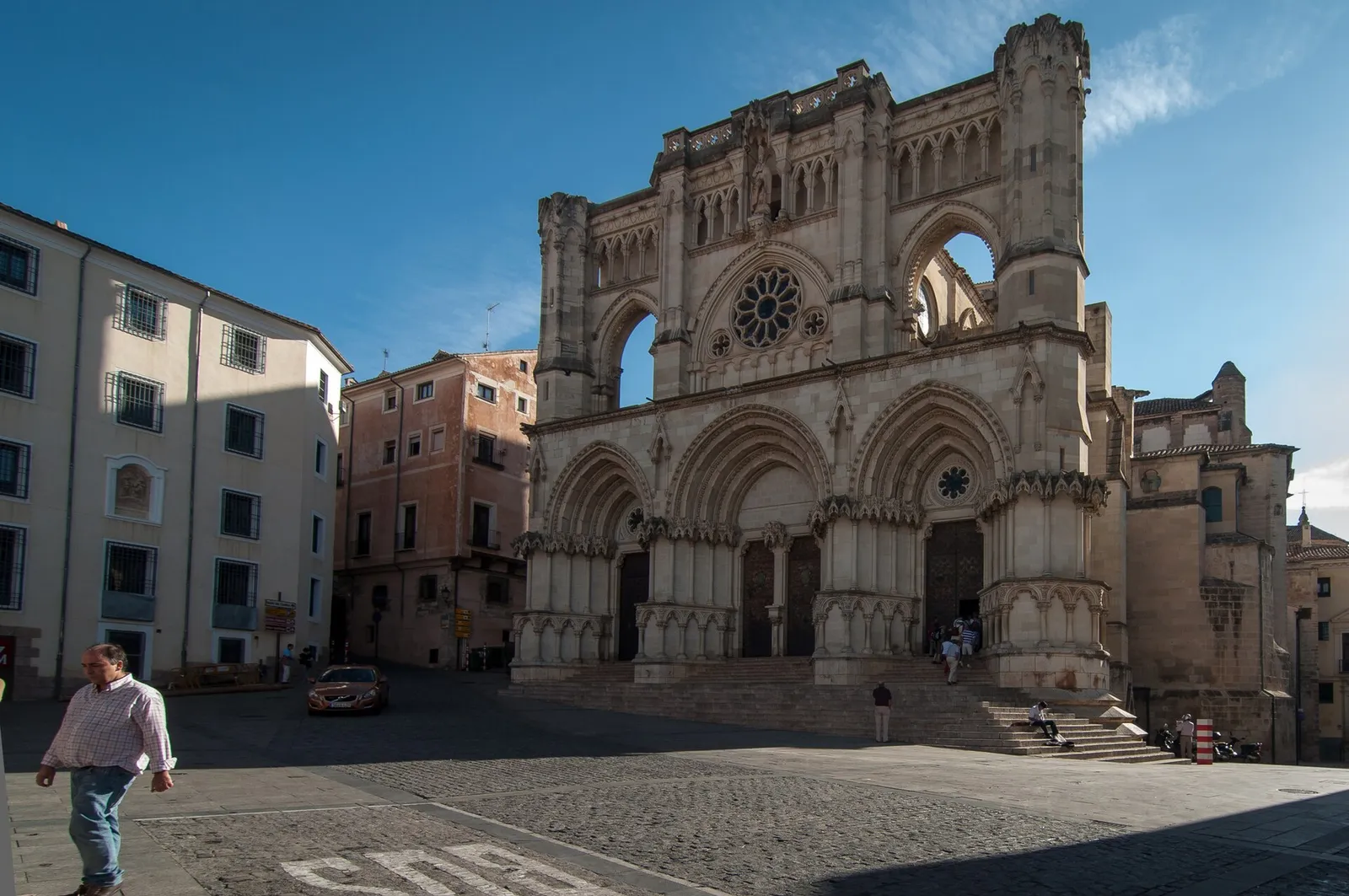
The cathedral, part Gothic and part twentieth century where the facade fell down, which divides opinion.
The footbridge, crossing the gorge at height, with the classic view back at the houses.
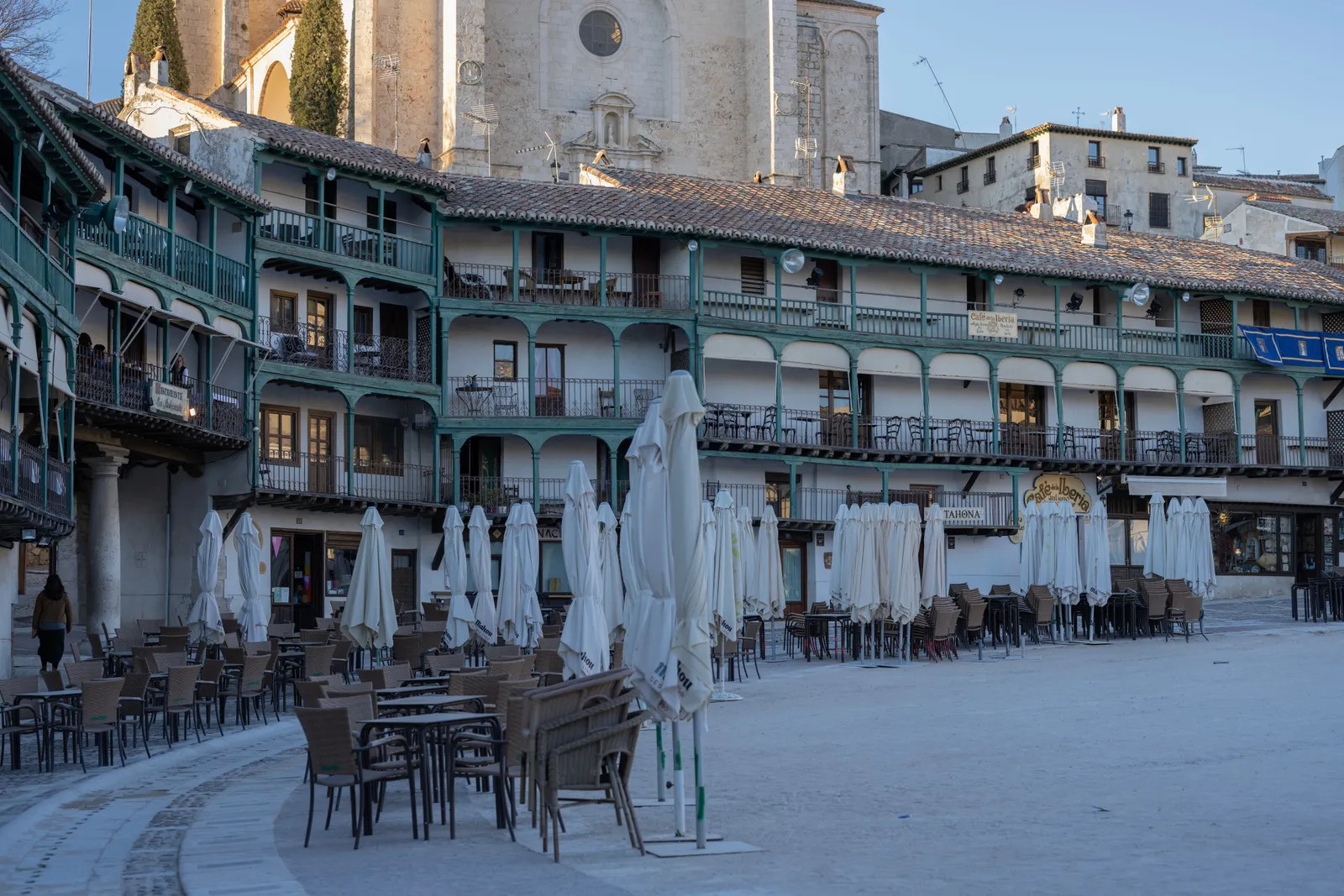
Plaza Mayor, small, arcaded and closed at one end by the cathedral front.
The gorges themselves, on both sides, walkable from the town.
Getting there and up
High speed train from Madrid, under an hour, which is the fast option.
The high speed station is outside the town, so budget a bus or taxi for the last stretch.
Coaches run too, arrive closer in and take longer.
By car, straightforward, and the only way to reach the surrounding landscape.
The old town is uphill from the modern one, with steps, steep lanes, and lifts and buses that help.
Eating here
Morteruelo, a warm rich pate of game and liver, which is the local dish and is not for everybody.
Ajoarriero, salt cod whipped with potato and garlic, better than it sounds.
Roast lamb and garlic soups, as everywhere in inland Spain.
Resoli, a local liqueur with coffee, orange peel and spices, drunk after lunch.
Set lunch menus, which are excellent value and where the traditional cooking actually lives.
Terraces on the Plaza Mayor, which are the tourist option and are pleasant anyway.
Practical notes
Comfortable shoes, genuinely, because of the gradient and the cobbles.
Altitude and wind make it colder than Madrid in winter and pleasanter in summer.
Monday closures apply to the museums; check before building a Monday around it.
Cash is still useful in the smaller places in the old town.
The last train back is the thing to check first, because the options thin out in the evening.
Rain makes the stone lanes slippery and the gorge paths muddy.
Where this fits in a Madrid trip
This is a second or third day trip rather than a first, and it is the one that feels least like a tour.
For how it compares with the other options and which fits your days, our guide to day trips from Madrid covers the field.
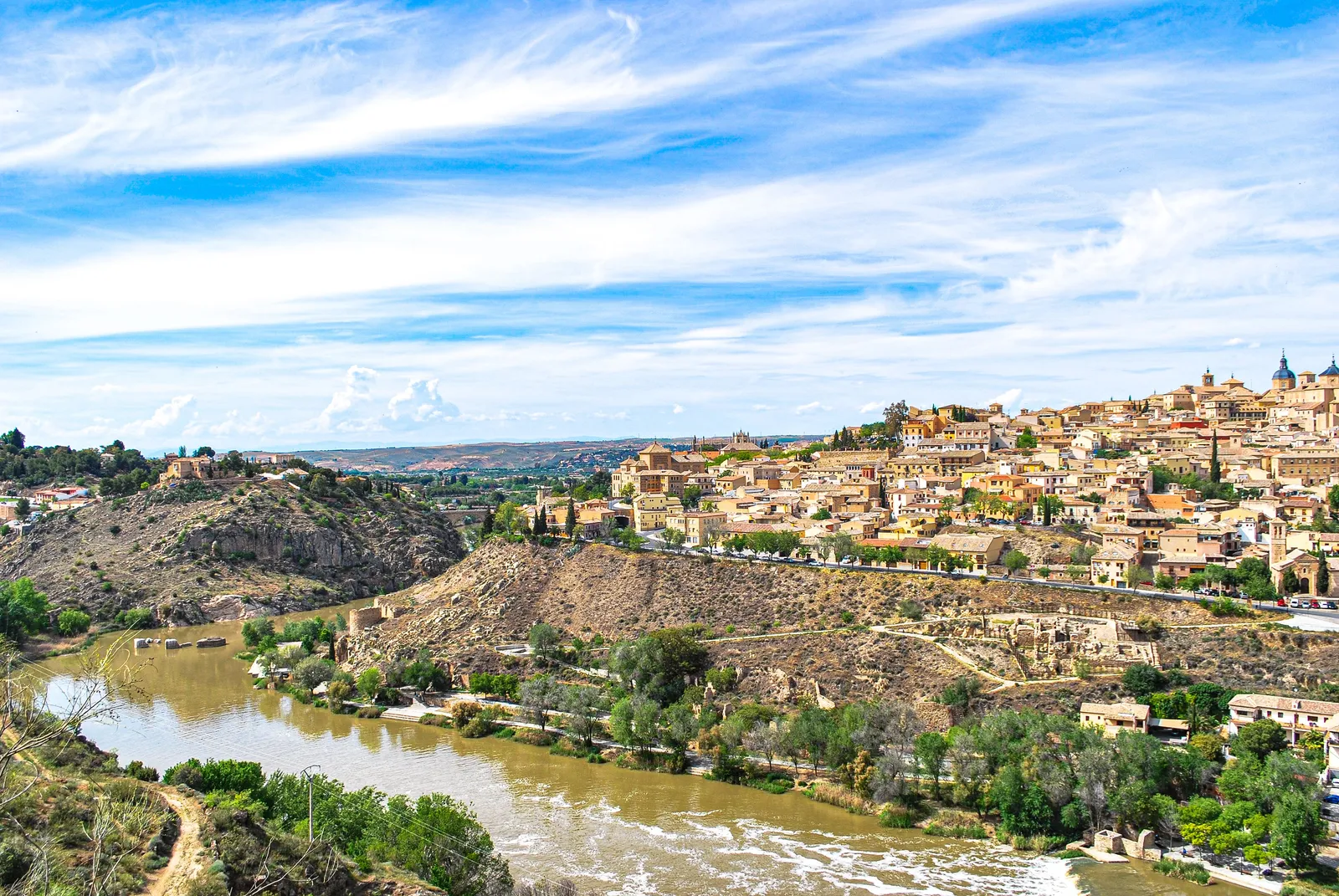
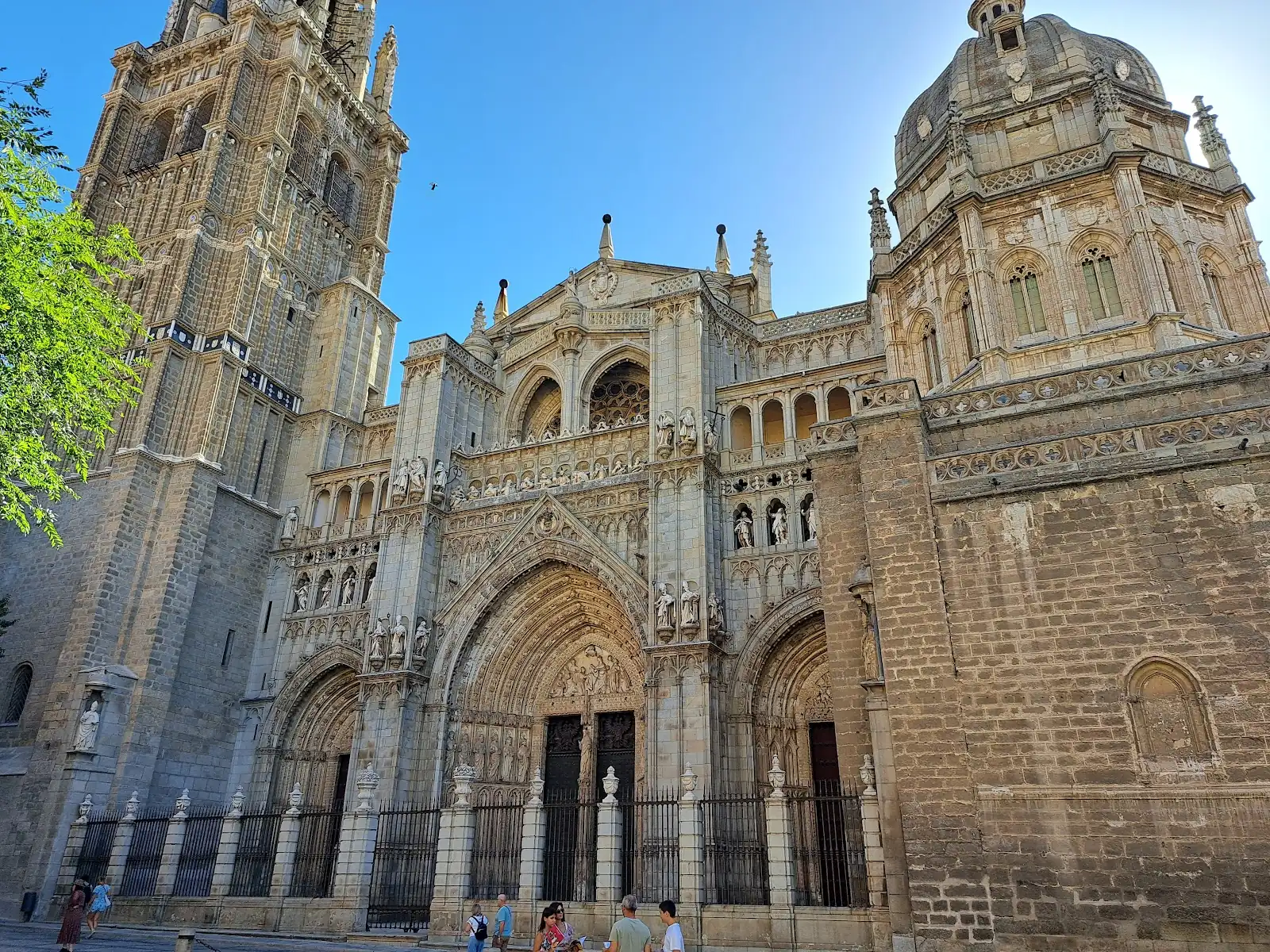
For the two obvious choices and how to pick between them, our Toledo or Segovia comparison covers the decision.
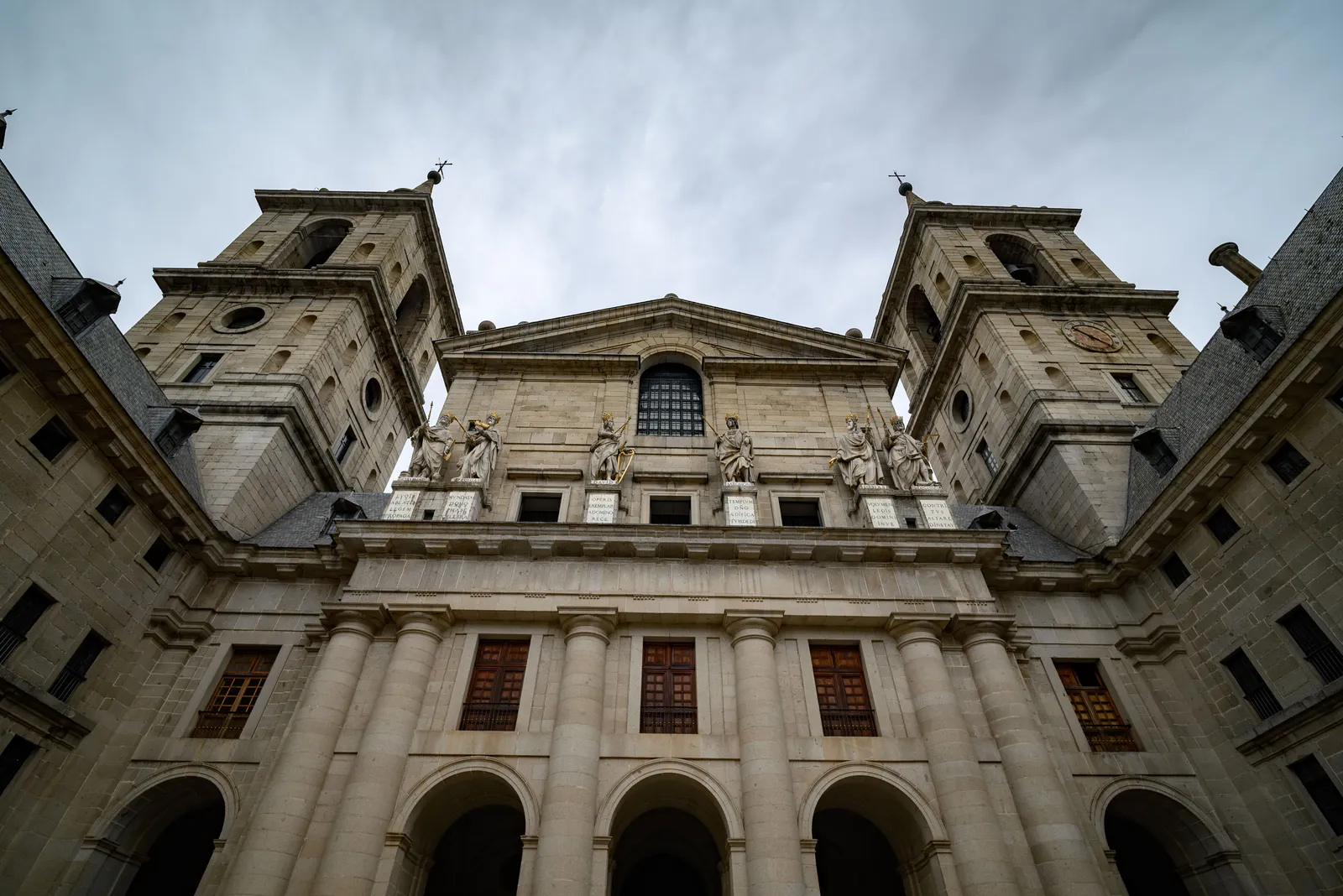
And for the day out that is a single vast building rather than a town, our El Escorial day trip covers the monastery.
The short version
Take the high speed train, allow for the transfer from the station to the town, and give yourself a full day rather than a half one. See the hanging houses from the footbridge rather than from the street, and walk back through the gorge instead of retracing the lane. Do the abstract art museum even if abstract art is not your thing, because the building is the exhibit. Eat the set lunch, try the resoli, wear proper shoes, and check the last train before you order a second course.