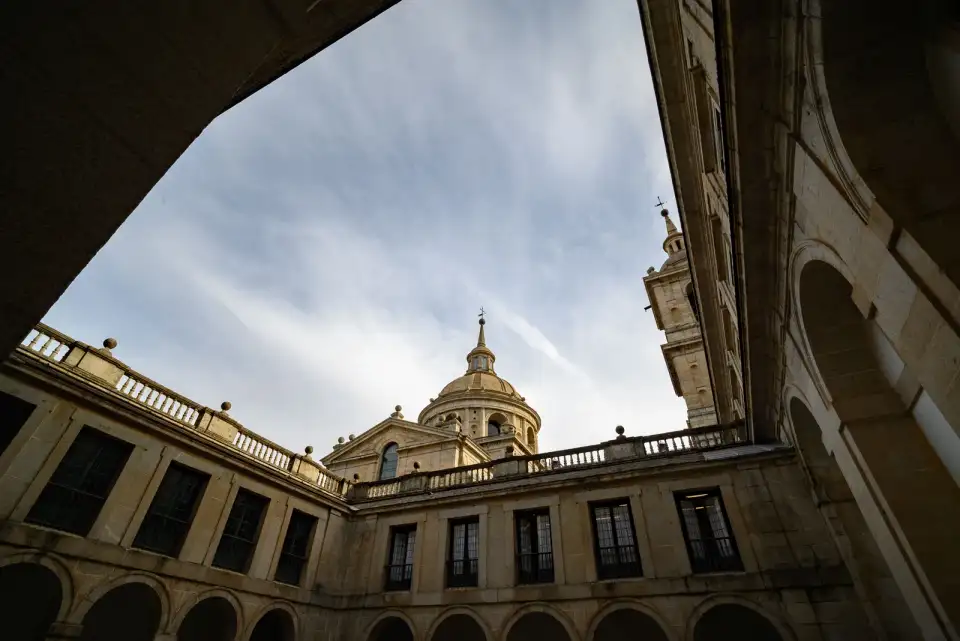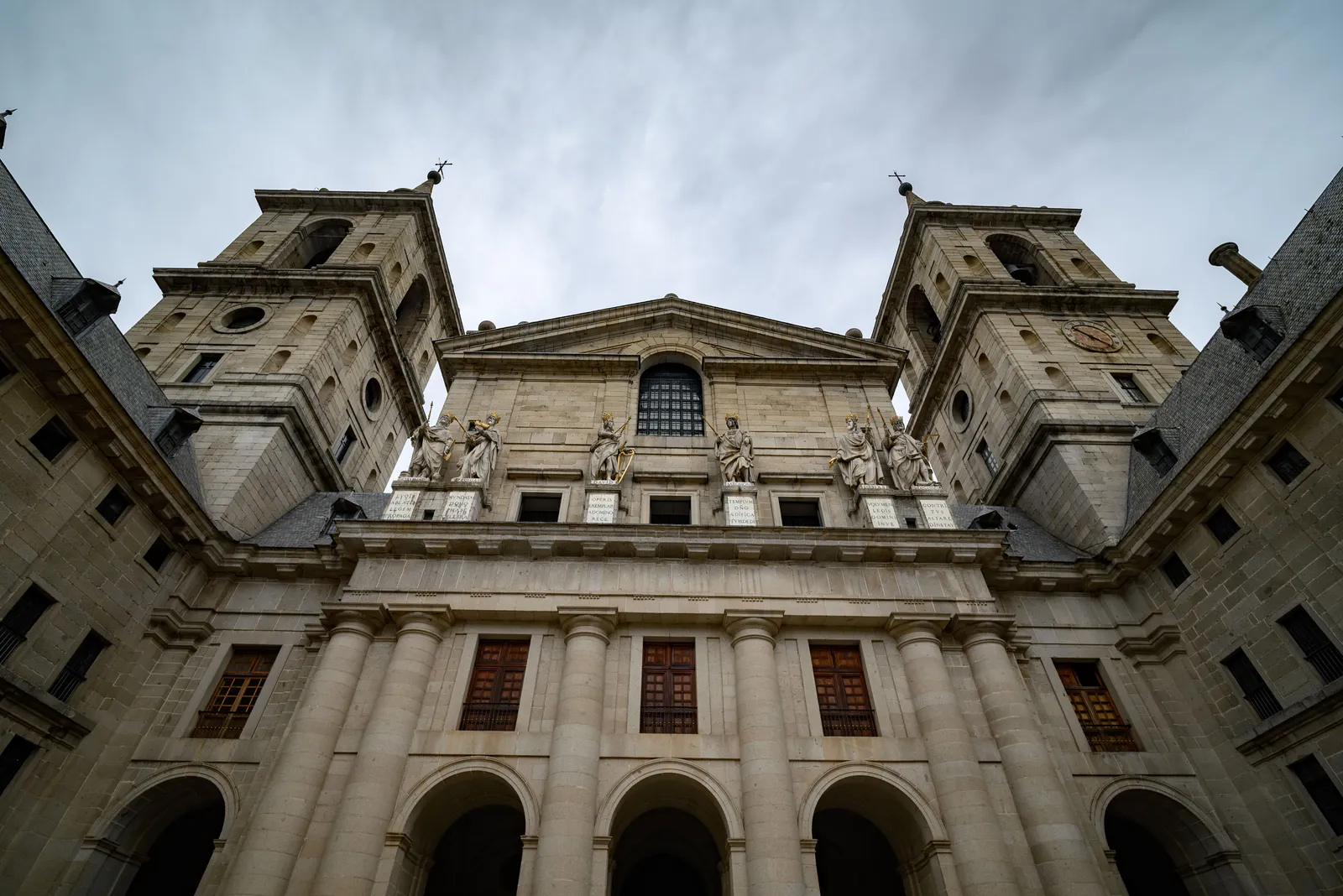
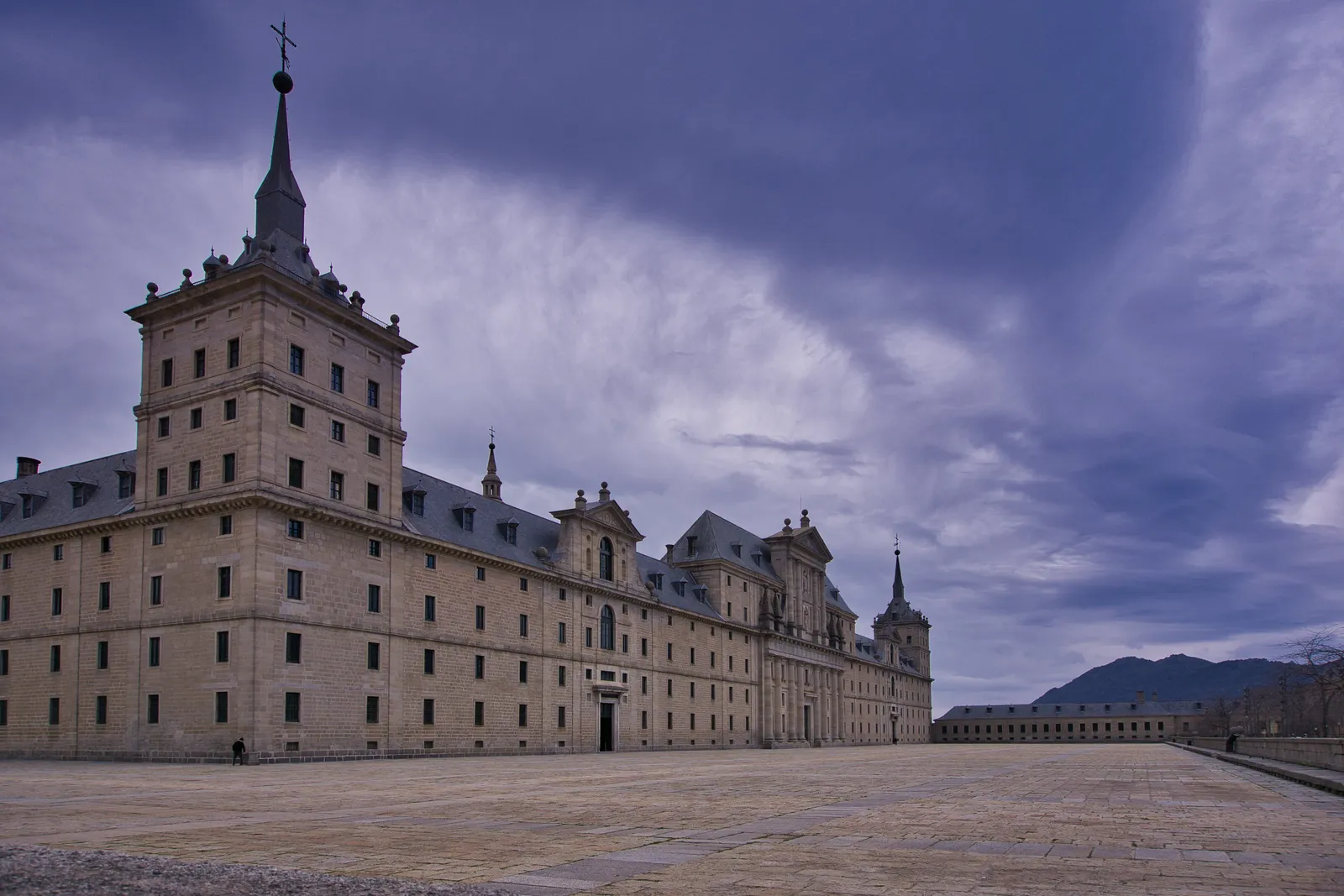
An hour northwest of Madrid, at the foot of the sierra, there is a rectangle of grey granite so large and so plain that first time visitors often assume they are looking at the outbuildings. They are not. El Escorial was built in the second half of the sixteenth century as a single object containing a monastery, a basilica, a royal palace, a library and the burial place of the Spanish monarchy, and its austerity is not an accident of budget. It is the whole argument of the building.
What you actually see
The basilica, at the centre, with a dome and a vast retable at the altar end.
The royal apartments, notably modest, arranged so the king could see the high altar from his bed.
The library, a painted barrel vault above sixteenth century volumes shelved spine inwards.
The royal pantheon, a circular marble chamber holding the tombs of most Spanish monarchs.
The chapter houses, hung with paintings, which most visitors walk through without stopping.
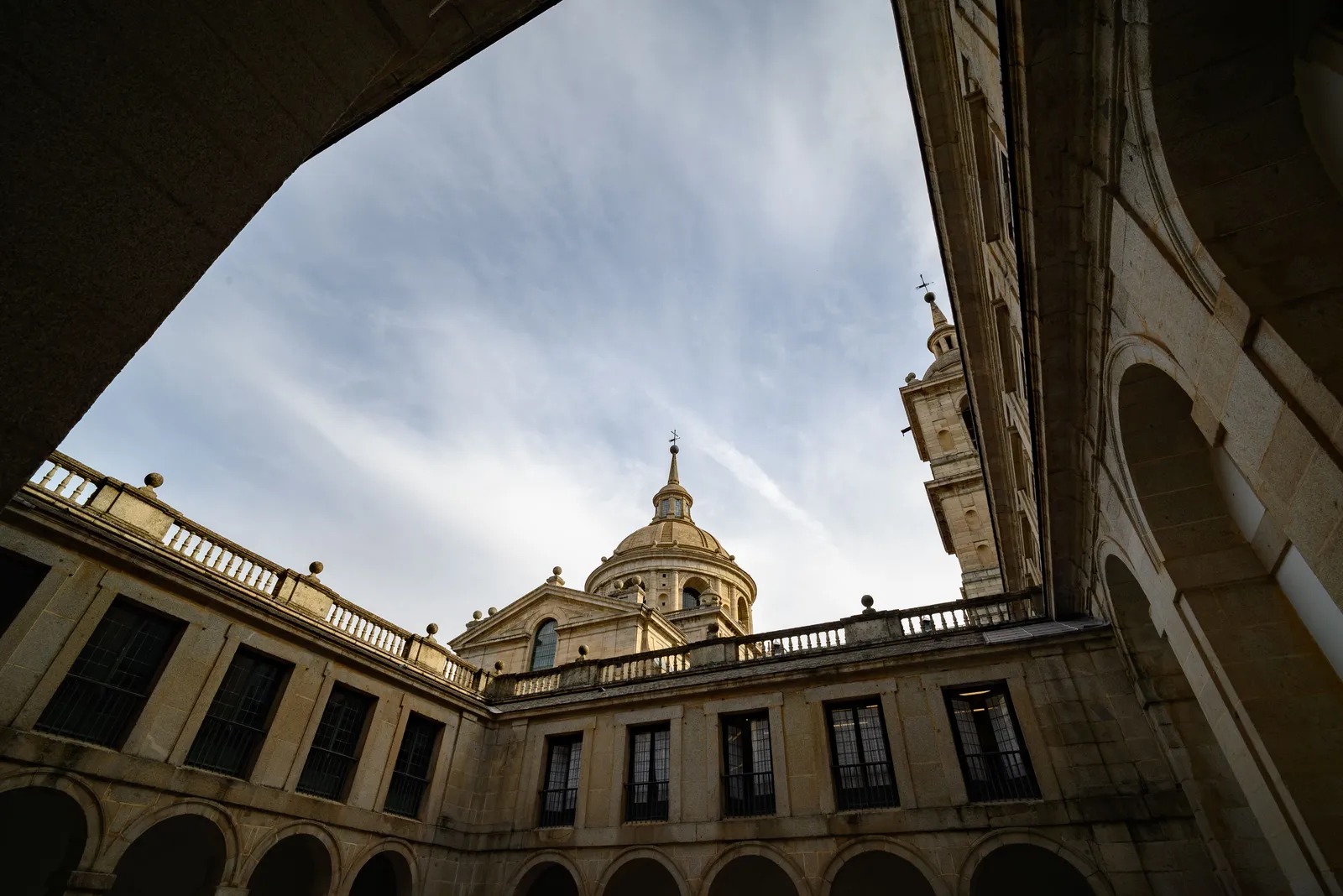
The courtyards, several, each enormous, which is where the scale of the thing registers.
Getting there
Suburban train from the central Madrid stations, roughly an hour, frequent.
Bus from the Moncloa interchange, comparable and sometimes quicker.
A fifteen to twenty minute walk uphill from the station to the complex.
By car, straightforward on the motorway, with paid parking in the town.
Mondays are the usual closing day at Spanish royal sites; check before you travel.
The town and the rest of the day
San Lorenzo de El Escorial, the town, small and pleasant, built to serve the complex.
Restaurants around the main square, where roast meats are the local speciality as they are throughout this region.
The gardens and the surrounding woodland, which are free and worth an hour.
The sierra behind, with walking routes for anyone who wants to make a full day of it.
The Valley of the Fallen, a few kilometres away, politically contested and with arrangements that have changed repeatedly.
Altitude, which makes the town several degrees cooler than Madrid in summer.
Practical notes
Book online to skip the ticket queue, particularly at weekends.
Photography is restricted in parts of the interior and the rules are enforced.
Wear something warm even in spring; the interior is stone and it holds the cold.
Allow two to three hours inside, plus travel and lunch.
There is a lot of walking on hard floors, over long distances.
Combined tickets with other royal sites exist and are worth checking if you plan to visit more than one.
Where this fits in a Madrid trip
This is a full day and it pairs badly with anything else in the city, so give it its own.
For how it compares with the other options and which to choose on a short trip, our guide to day trips from Madrid covers the field.
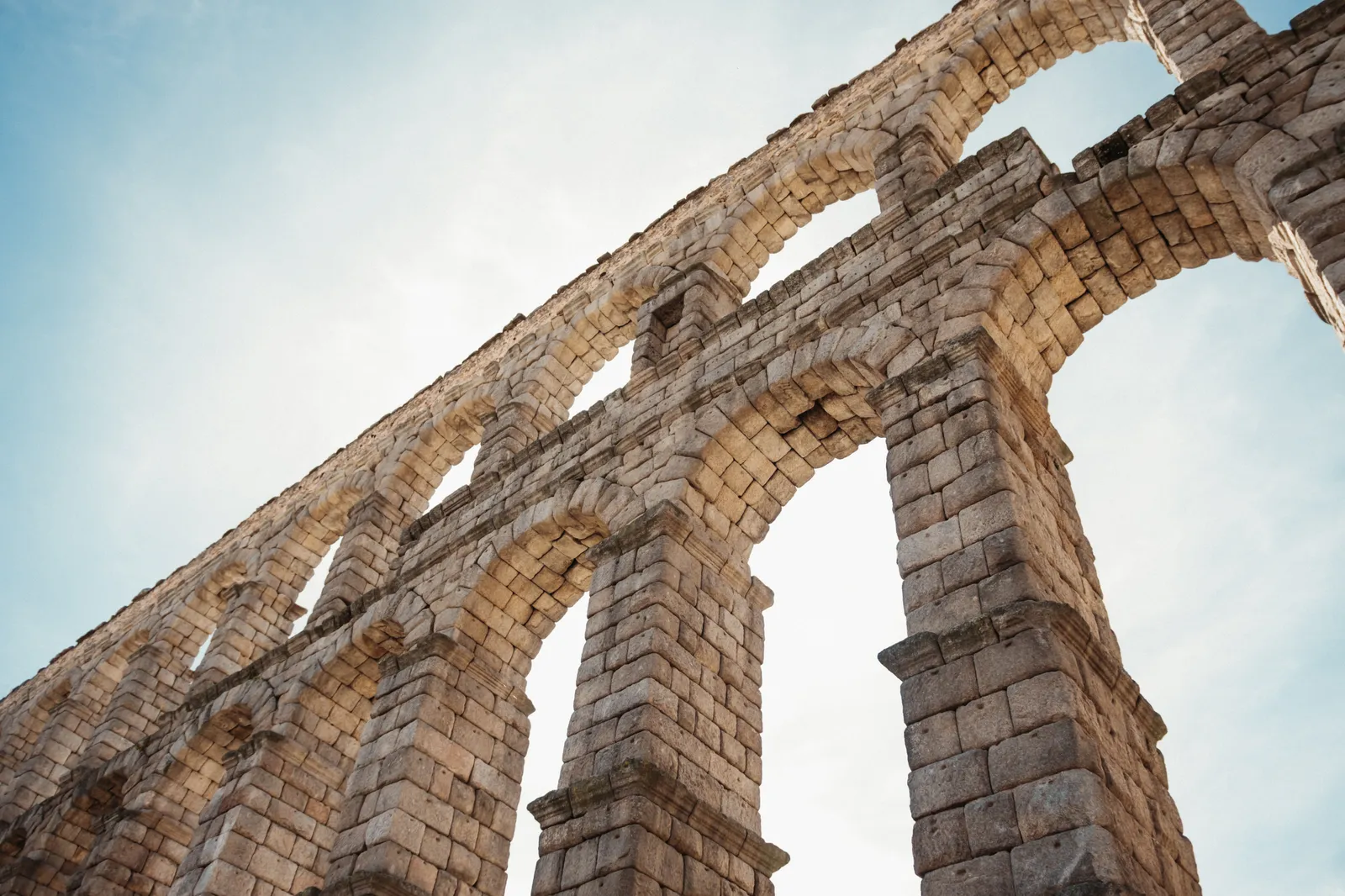
For the closest alternative, which is prettier and warmer and has an aqueduct, our Segovia day trip covers that direction.
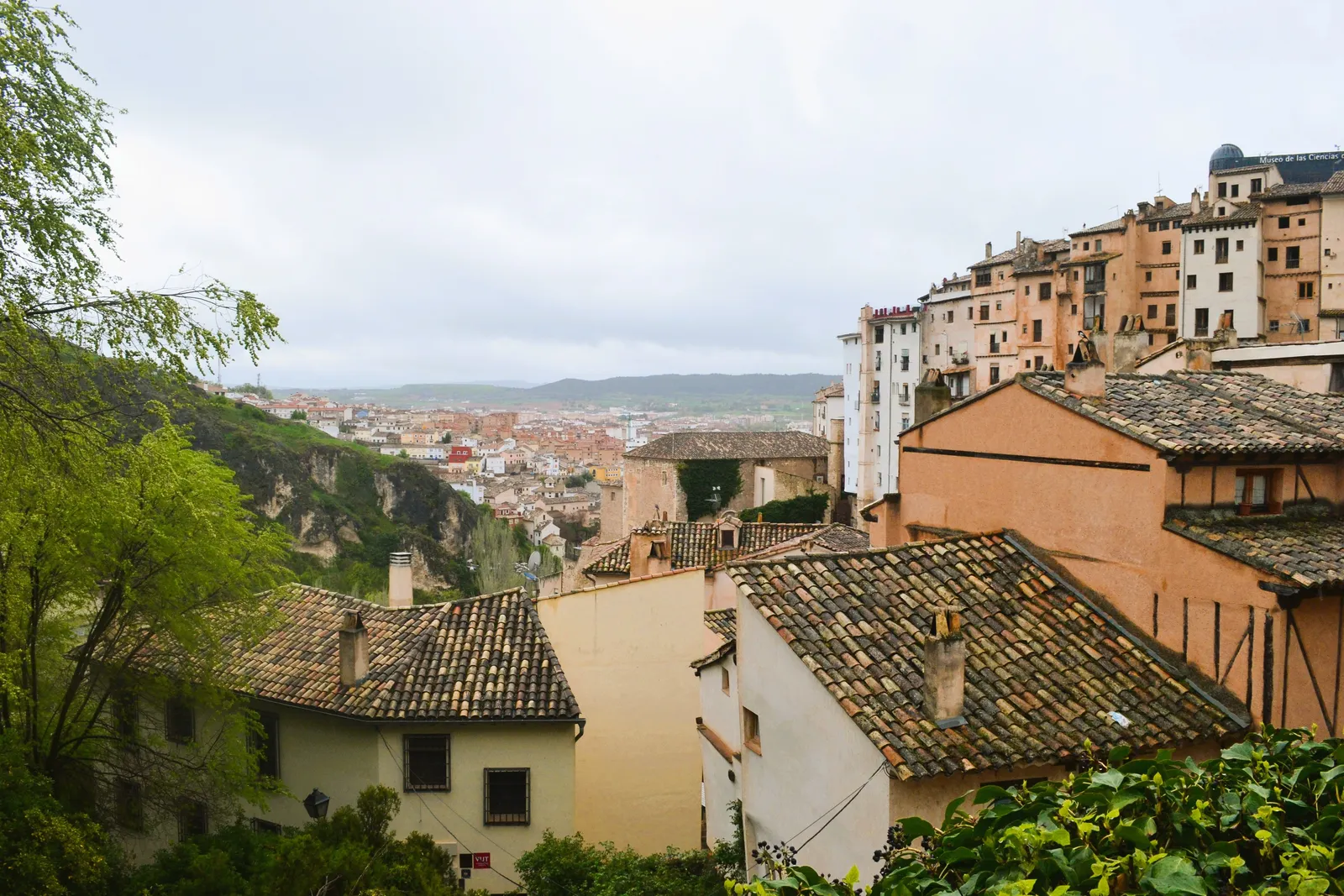
And for the least visited of the good ones, our Cuenca day trip covers the hanging houses and the gorge.
The short version
Take the suburban train or the bus, allow an hour each way, and give the complex two to three hours. Spend forty of those minutes in the library and the royal pantheon and walk the rest at a normal pace. Take a guide or an audio guide, because the building is about an idea rather than a view. Eat roast meat in the town afterwards and walk in the gardens. Avoid Mondays, book online, and bring a layer, because the granite holds the cold in every season.