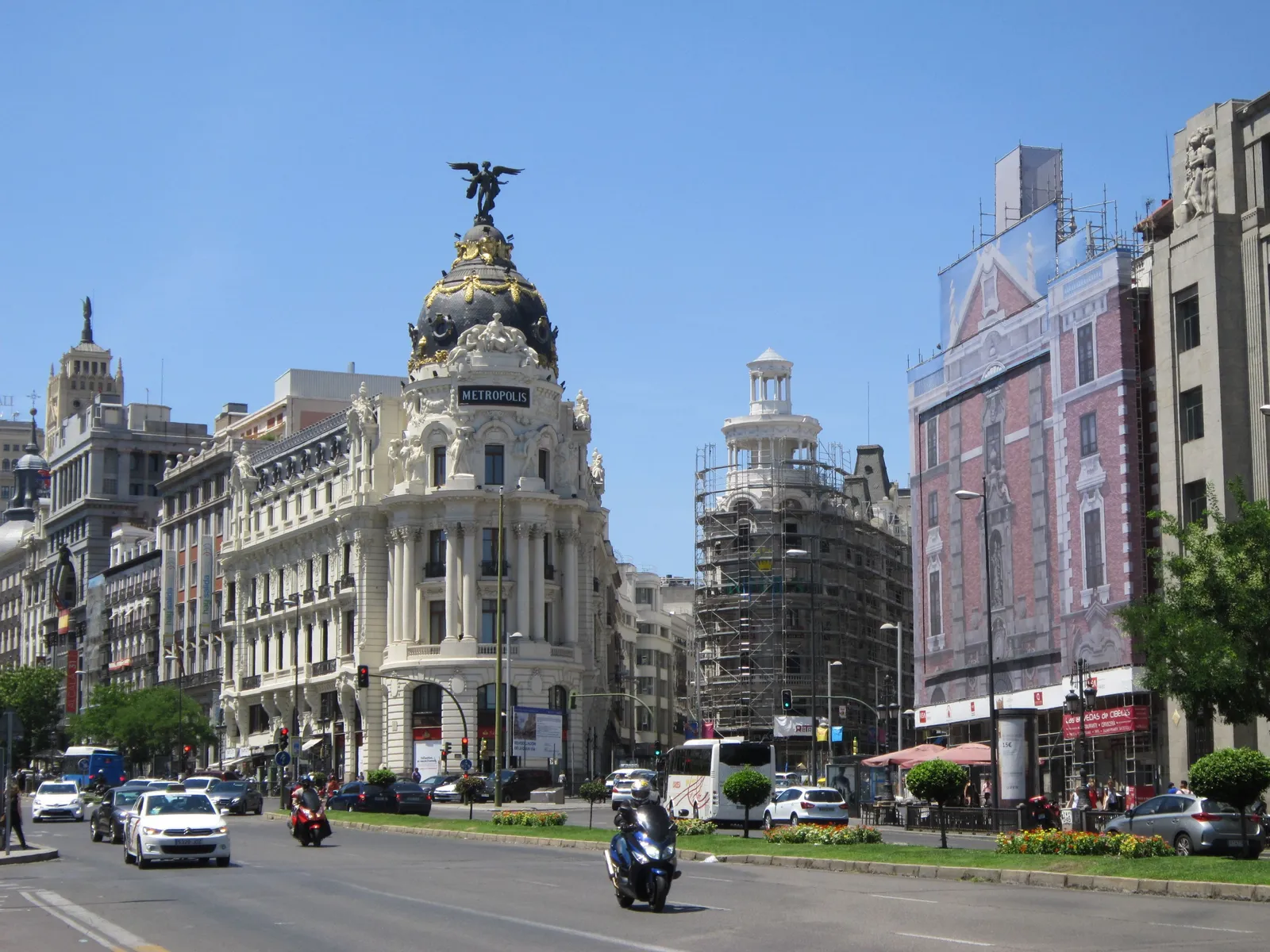
Gran Via exists because Madrid demolished a large part of itself to build it. Between 1910 and the early 1930s the city cut a wide avenue through a dense medieval quarter, flattening more than a dozen streets and rehousing thousands of people, and lined the result with the tallest and most confident buildings in Spain. Walk it from the eastern end and then drop south into the streets that survived, and you get the whole argument of twentieth century Madrid in about two hours.
The avenue, east to west
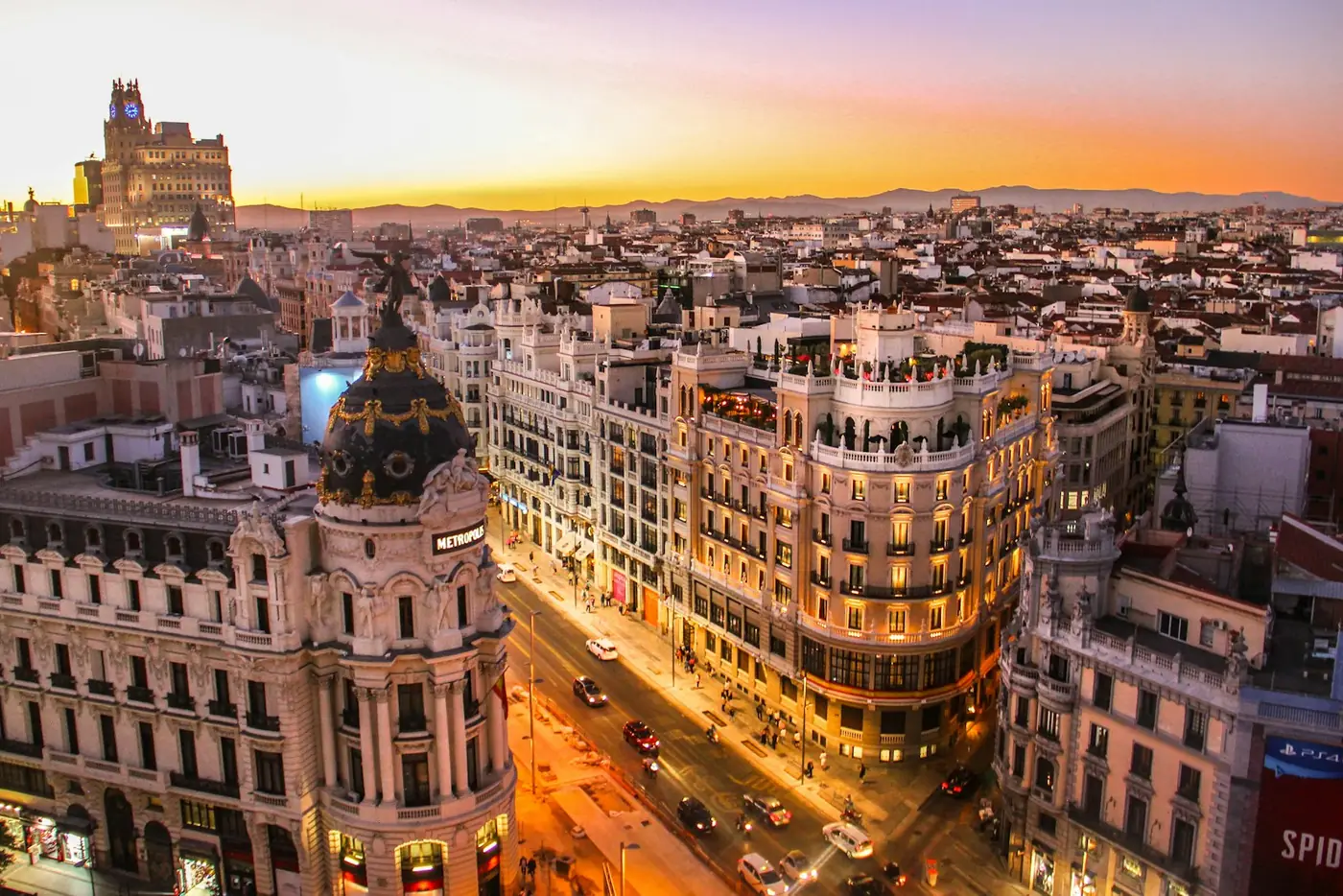
The eastern junction, where a domed corner building with a winged statue on top is the most photographed thing on the street.
The first stretch, Beaux Arts and heavy stone, banks and insurance palaces.
The middle, theatres and the old telephone building, which was the tallest in Europe when it opened.
The Art Deco section, with a curved corner tower that appears on every postcard of the city.
The western end, at Plaza de Espana, which was remodelled recently into something greener and more walkable.
Rooftop bars along the way, several of them in hotels and open to non guests.
Dropping into the old quarter
South from the middle of the avenue, through the streets around the opera house.
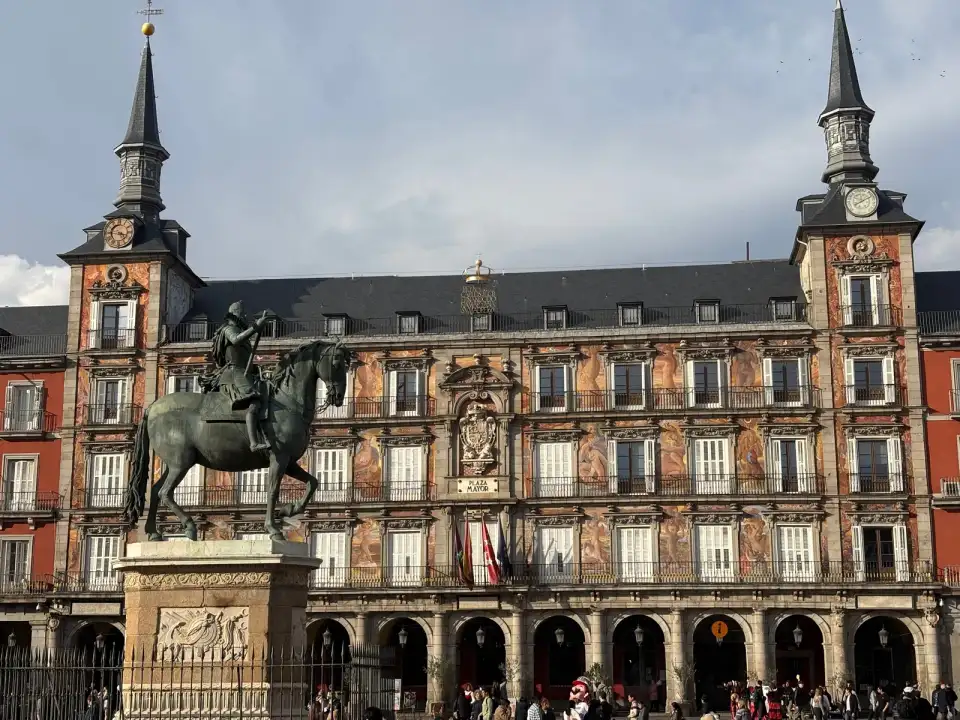
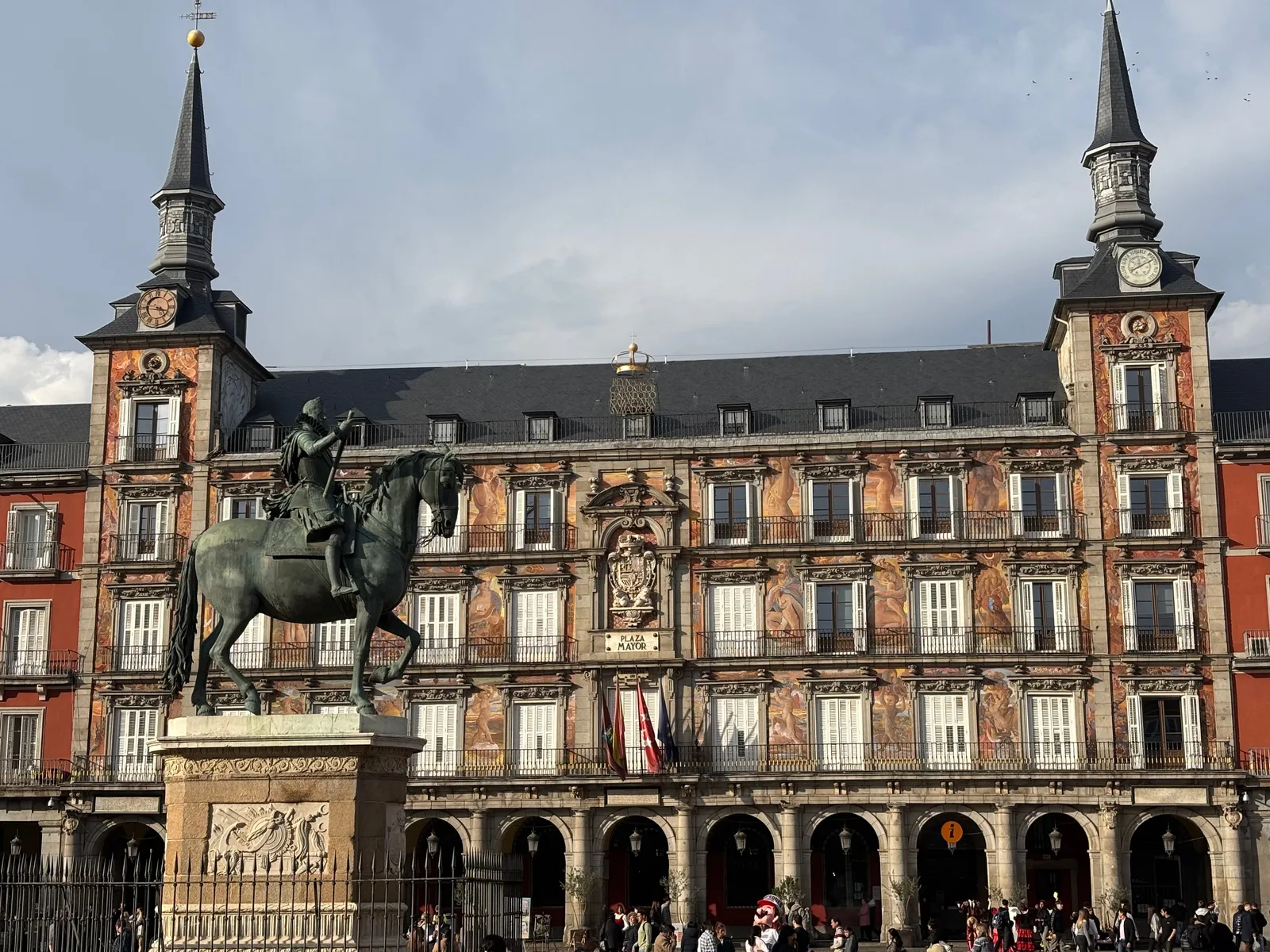
Plaza Mayor, the enormous arcaded square, entirely enclosed, with a statue of Felipe III in the middle.
The alleys off it, where the century old shops and the fried squid sandwiches are.
Plaza de la Villa, small and much older, with the buildings that used to run the city.
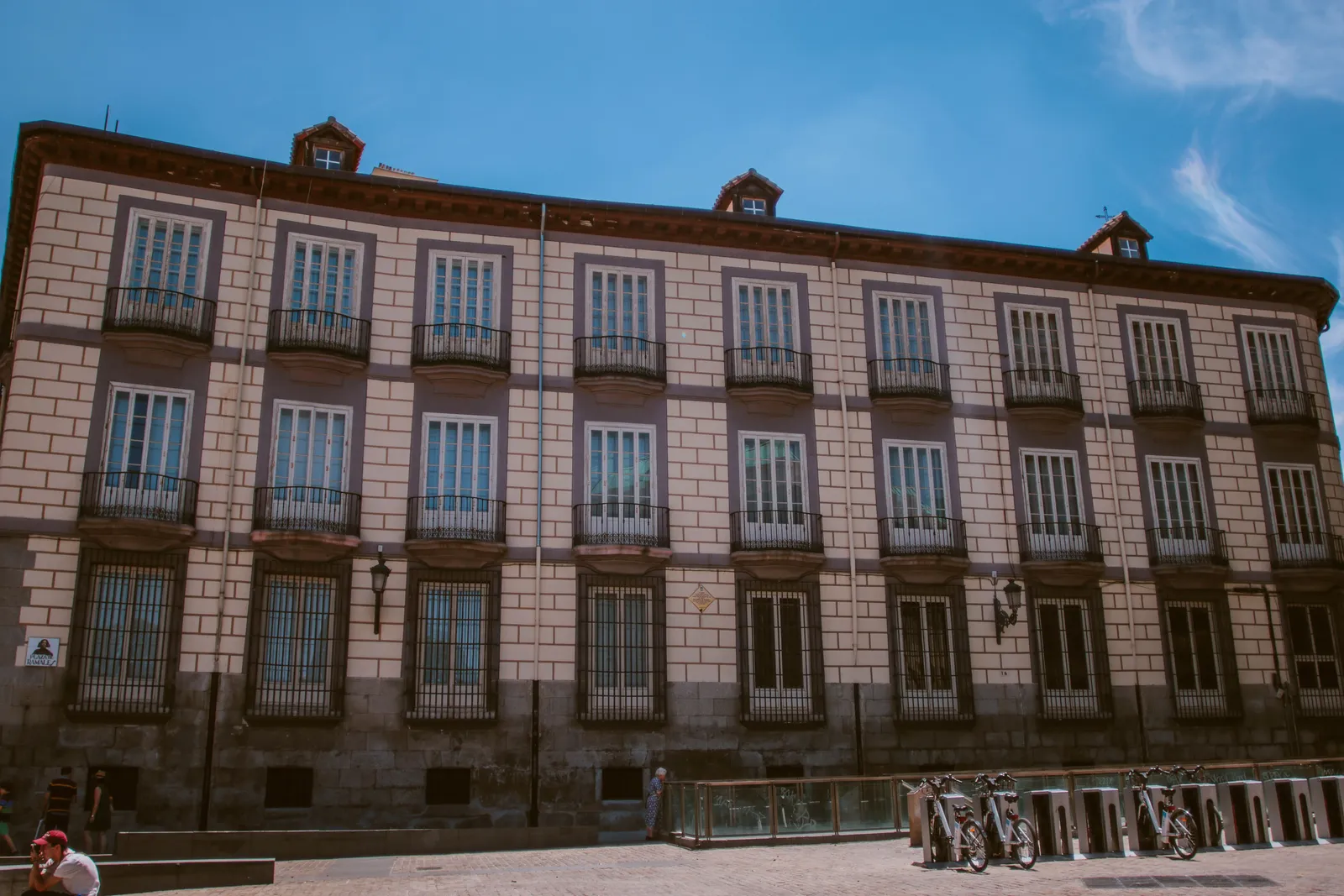
Plaza de Ramales, quiet, behind the palace, and almost never visited.
The royal palace and cathedral, at the western edge, where the walk ends.
What to stop for
A vermouth at a tiled counter in the old quarter, which is the correct pause.
A fried squid sandwich near Plaza Mayor, which is a Madrid speciality found almost nowhere else in Spain.
The rooftop of a department store or a hotel on the avenue, for one drink and the view.
The old shops off Plaza Mayor, several of which have made the same thing for a century.
A church or two, which are free, cool and largely empty.
Practical notes
It is flat except the last descent towards the palace.
Pickpockets work the pedestrian stretches; bag closed and in front.
Shade is scarce on the avenue and midday in summer is genuinely hard.
Metro stations along the whole route make it easy to cut short.
Sunday brings El Rastro to the streets south of here, which changes the atmosphere entirely.
Shops close in the middle of the afternoon in the old quarter, which affects what is open when you pass.
Where this fits in a Madrid trip
This is the orientation walk, best done on the first evening, and it makes the rest of the map make sense.
For choosing where to stay and what each district is actually like, our guide to Madrid’s neighbourhoods covers the ground.
For where to end a walk like this with a view over what you just crossed, our guide to Madrid’s viewpoints covers the options.
And for two small museums that sit slightly off this route and reward the detour, our guide to the Sorolla and Goya museums covers both.
The short version
Do Gran Via early in the morning for the buildings and the empty pavements, and the old quarter in the early evening when it comes alive. Look up on the avenue rather than into the shop windows. Drop south past the opera house into Plaza Mayor, then work through the alleys to Plaza de la Villa and out at the palace. Stop for a vermouth and a squid sandwich. Keep your bag closed on the pedestrian stretches, and avoid the whole thing between two and five in July.